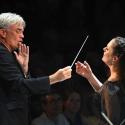
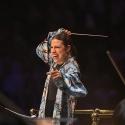
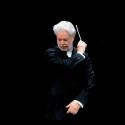
Out of innumerable Rite of Springs in half a century of concert-going, I’ll stick my neck out and say this was the most ferocious in execution, the richest in sound. Others may have wanted a faster, lighter Rite. But the two things that make every concert conducted by Klaus Mäkelä so extraordinary are that he inhabits the music to a visibly high level, and that he gets the fullest tone and urgent phrasing from every instrument.
This was a love-in between players and conductor, and an exciting first for the London Symphony Orchestra. I remember former tuba-player Patrick Harrild saying of Valery Gergiev that he would make a phrase out of two or three notes. Well, in Stravinsky, at any rate. But Mäkelä does that and more. He gave the opening bassoon solo to Daniel Jemison as a gift to sing, subtly starting to shape from the moment the second horn entered. The opening wind chorus, which Stravinsky apparently imagined as pipers (dudki) on a hill, was astonishingly fresh as we heard not just the melodic lines but everything going on underneath, from undulating lower-register clarinets onwards, in equal expressive definition.
String articulation was feral but focused in the explosions and exultations, the polyrhythmic Procession of the Sage pounding with hallucinatory clarity; by the end of the first part, one was ready to laugh at the sheer joy in the dissonances. 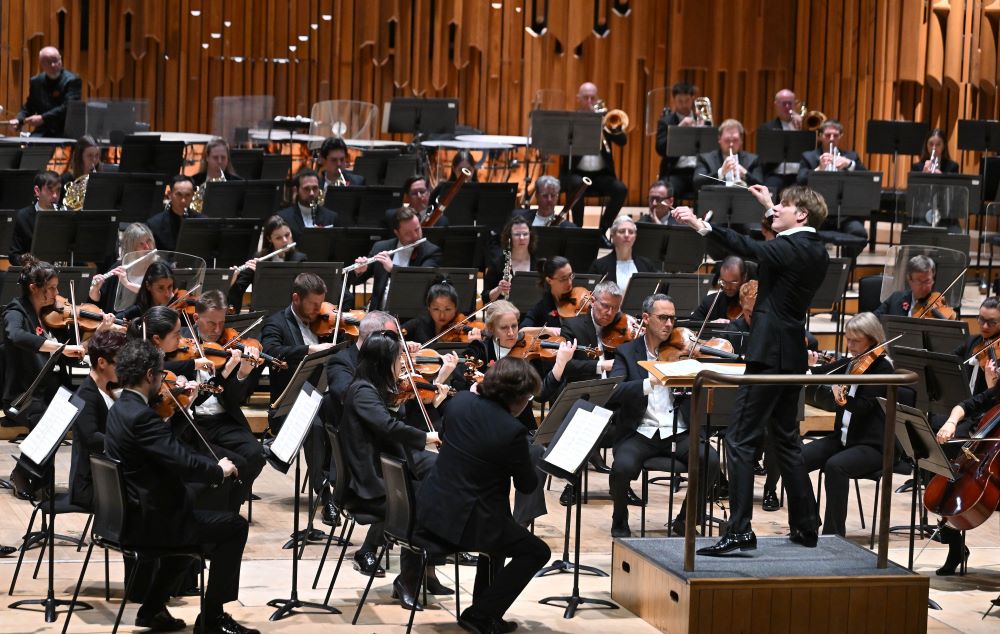 Part Two, if possible, was even fiercer, once past the jungly atmospheres of the introduction (muted trumpets especially magical). The Barbican may tend to amplify the louder end of the dynamic scale, and the hall reverberated, but everything was in such balance, every line so clear, that the precision matched the passion right up to the Chosen One’s last gasp and collapse.
Sibelius’s deeply disturbing ode to the dark forest god Tapiola inhabits a very different world, still primeval but brooding and distressed – a paradigm of our present fear. First gasp was for the sheer fullness of the string chords after the opening timpani tattoo, gripping us in an iron vice which didn’t let up even in Mäkelä’s very slow, hypnotic way between the two scherzos that flank the central outburst (in so many ways this is the grim counterpart to the radiant one-movement Seventh Symphony). The storm blistered and its aftermath discombobulated, the final let-up of an infinitely reassuring major chord at last deeper and richer than I’ve ever heard it.
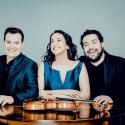
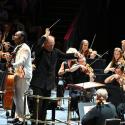
Alas, there was only one musician characterising less vividly than the rest in the entire concert: LSO co-leader Andrej Power, granted the role of soloist in Prokofiev’s Second Violin Concerto. The tone he produces from his Stradivarius is unceasingly warm and rich, yet paradoxically he seemed too much the virtuoso when Prokofiev calls for a team player. The sad, numb songs of an exile yet able to rise to lyric radiance at times needed more inwardness, while the Spanish-inflected rondo-finale could have done with more acid demonism (think Lorca’s “death moves in and out of the tavern”). 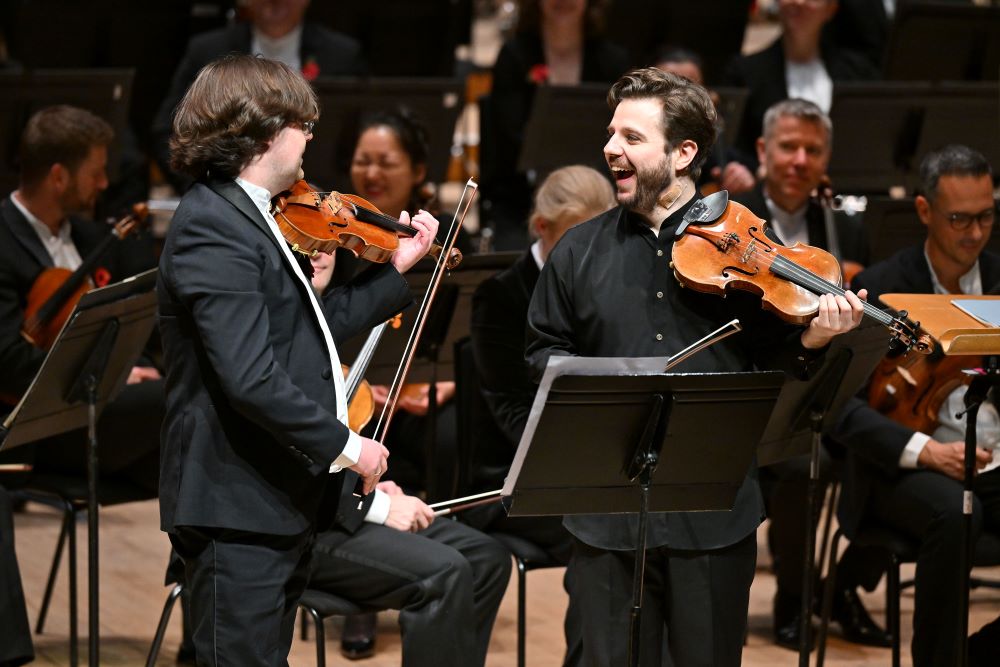 It was left to Mäkelä to reinforce the extraordinary strangeness of Prokofiev’s unusually lean orchestration at every point. The encore was a gem: as co-leader Benjamin Gilmore (pictured above on the left with Power), an effortlessly imaginative soloist, rose, it looked as if we’d get a movement from Prokofiev’s Sonata for Two Violins. No, it was something sweeter and simpler: the Larghetto from Spohr’s Duo Concertante, with multiple stopping giving the impression of a whole group of violins. Enough, along with the Sibelius and Stravinsky, to make this a concert in a thousand - and, given the electriying start to the LSO's season with its chief conductor Antonio Pappano, that's saying something.