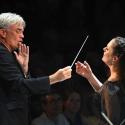
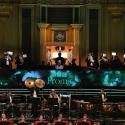
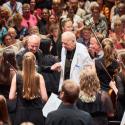
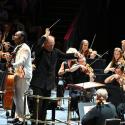
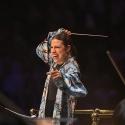
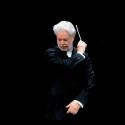
It was a huge irony that the focus of last night's Proms programme was the musical duet: the concerto, the waltz, the visual-aural duet of a Ravel tone poem. For the one duet that really mattered - the dance of necessity between conductor, Jonathan Nott, and orchestra, the BBC Symphony - was of the two-left-feet variety.
The relationship wasn't quite as dissonant as that between the two notes of Ligeti's Musica ricercata No 2 - part of a cycle of works for piano that deal with one note, then two, then three, then four and so on - which reared its intensely stand-offish two heads in the first half, the E sharp and F sharp destined never to see eye to eye.
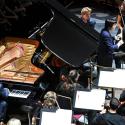
And it wasn't nearly as troubling as the internal war that seemed to flare up early on in Mozart's Piano Concerto No 27 in B flat major, K 595, between pianist Pierre-Laurent Aimard's memory, technique and fingers. The graceful, energetic conversation that piano usually engages in with orchestra was thin on the ground in the opening Allegro. Taking its place was some spitting and spluttering, and percussive chills.
Bareness and boldness was always going to predominate in this cave of an acoustic. Even when the sun did come out in this concerto, the rays were often too weak to reach out to us by the cave walls. Still, there was an attempt at warmth from Aimard in his sweet rendition of the Larghetto and his bucolic pacing of the third movement Allegro. The croaky horns sounded sozzled from a late midday burst of orchestral heat.
Even in George Benjamin's Duet, a single-movement concerto for piano and orchestra, there wasn't much duetting of the regular sort, the lonely but dominant piano line leaving wispy orchestral trails behind it. Only around three minutes from the end do the two forces begin to square up, a series of percussive orchestral rooks, appearing suddenly to peck away at this lonesome piano figure with increasing ferocity to the finish in what is less of a duet and more of a mugging.
But it was the second half that saw the least intentional breakdown between two partners. The listlessness that riddled Ravel's Valses nobles and sentimentales could be excused, even blamed, on Ravel's diffident tempi instructions: "Moderately", "Quite slow", "Moderately", "Quite lively", "Almost slow", "Quite lively", "Less lively", "Slow". And there wasn't much wrong - or right - in the rare performance of the orchestral version of Une barque sur l'océan, from Ravel's piano cycle Miroirs, which captures the rock of the water and the bob of the ship quite magically.
But the breakdown in communication in La valse was no-one's fault but Nott's. Late entries, funny balancing and strangely lazy shaping riddled the piece. The orchestra seemed not to be paying Nott or his (at times haphazard) rhythmic and dynamic instructions any attention. The violent depiction of decay that ends the work can still just about survive in these conditions. It was the sensual appeal of the rest of the work that really suffered in this frosty deadlock. Neither budged. And the victim was La valse, which, lacking the sexy ardour of a fin-de-siècle dance or the biting disintegrative terror of the apocalyptic end, came across, in its new poster-paint colours, very Bedknobs and Broomsticks.
- Listen to this concert on the BBC iPlayer for the next 7 days
- Read theartsdesk's recommendations for the 2010 BBC Proms