

I got my contract to write Season of The Witch: The Book of Goth just as the first Covid lockdown began in March 2020. During that time of plague and alienation, I time-travelled back to the era I had pinpointed as the beginning of this suitably dark and prophetic musical subculture: the 1978-9 Winter of Discontent.
I planned to chart the course of Goth's rise from the ashes of punk and the economic crisis that paved the way for Margaret Thatcher's Conservative government to take power on 4 May 1979. Then follow its course through the coming decade of Cold War, Miners' Strike, privatization, The Troubles and AIDS, to the Iron Lady's departure from Downing Street on 28 November 1990. I wanted to show how this music had been shaped by the politics of a supremely divisive era, when the Monetarist notion of The Individual supplanted the post-War Consensus about Society as a whole.
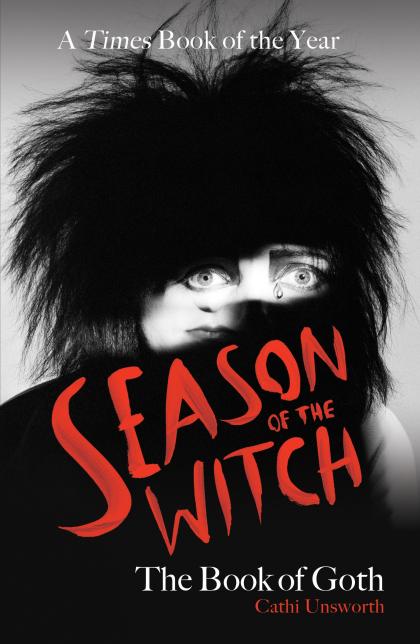
I started with two dominatrices. In the blue corner: Mrs Thatcher, in her tweeds and pussy bow, ready to whip the country to heel. In the black: Siouxsie Sioux, in shiny boots of leather, distilling and dissecting the fears of a generation with her band The Banshees. Despite their ideological differences, both women hailed from suburban provincial backgrounds and their unlikely progress represented a massive disruption of the status quo. No one like them had ever been Prime Minister or on Top of the Pops before.
Or so I thought. Of course, the Gothic strain of music that created the greatest Style Tribe of the Eighties had its antecedents. Siouxsie told me in a 1992 interview about her love for the enigmatic Julie Driscoll, whose cover of 1969 Donovan's "Season of the Witch" with Brian Auger and The Trinity I stole for my book's title. Driscoll, who for one Modernist moment between 1967-8 became the Ace Face of Swinging London, was the first in a series of Gothmothers and Gothfathers I recorded in each chapter. Singers, writers, actors, artists and occultists whose style and influence reached across the decades – sometimes, even centuries. Because they had told the story of their own hard times in ways that were so startlingly original and yet universally relatable that their impact never faded.
Below: Cathi Unsworth in Kensal Green Cemetery in 1988, photographed by Mark Webb
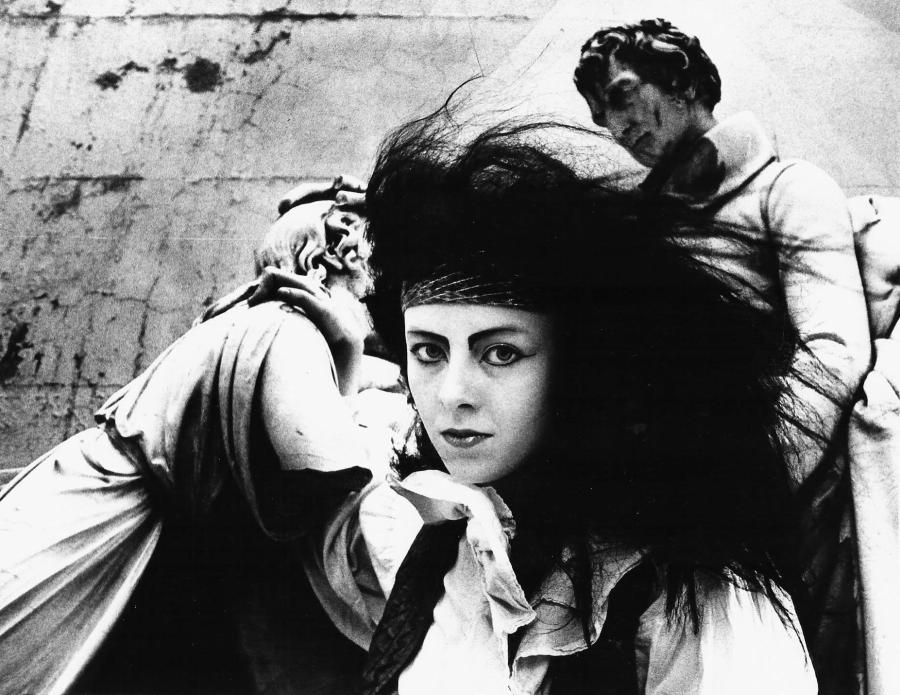
I came to realize how deeply embedded the Gothic was in our cultural DNA and how the musicians I had grown up loving in the 1980s were carrying on a much older tradition. Writers like the Brontës and Mary Shelley appeared at the dawn of the Industrial Revolution that split the city from the country and sent the working class to infernal toil. By the time of the 1984-5 Miners' Strike, their spiritual descendants Joolz Denby, The Sisters of Mercy and New Model Army were recording the end of it from the same battlegrounds that had previously witnessed the Harrying of the North, The Wars of the Roses and The English Civil War: Goth's Own County of Yorkshire.
Not that this lineage is unique to Britain. In America, teenage runaway Lydia Lunch began documenting life in the "City of Fear" that was Seventies New York with her first band, Teenage Jesus and The Jerks, whose music was once memorably described as "unremittingly nightmarish". She went on to work with veteran Tommy Dorsey arranger Billy VerPlanck, channelling Billie Holiday's 1941 version of the notorious "Hungarian Suicide Song" "Gloomy Sunday" on her 1980's album The Queen of Siam. While in Los Angeles, Greek-American soprano sfogato Diamanda Galás drew upon the demotiki tradition of her forebears in the hills of Sparta when she came to write her epic Masque of the Red Death triptych of albums that confronted the ignorance surrounding HIV-AIDS sufferers – of which her late brother, playwright Philip-Dimitri Galás, was one.
French Gothmother Juliette Gréco looked the Devil in the eye and survived internment by the Nazis during World War II to become the Noir Goddess of Montparnasse, entrancing the greatest thinkers and artists of her generation. "Black provides space for the imaginary," she said of her dress-code, the creed of every subsequent Goth. While Nico – whose presence on 1967's The Velvet Underground and Nico marked another formative Goth influence – recalled a nightmarish 1940s childhood in the Spreewald Forest near Berlin, witnessing the trains bound for Auschwitz passing by on “a ribbon of death”. Both these women, in their different ways, recorded personal responses to the darkest days of the 20th century that go on resonating.
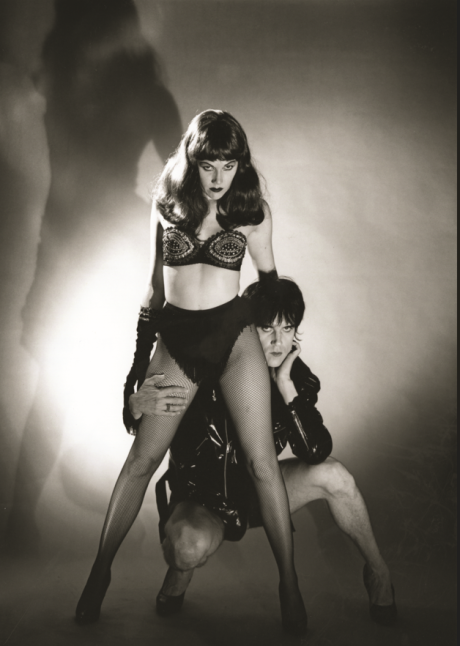
When I was approached by Mick Patrick of Ace Records to compile an album of the greatest Goth Divas, I couldn't have felt more honoured. The label has a starring part in my book, for both giving a platform to premier Hellfire rockabilly revivalists The Cramps (pictured above, left); and their sterling work in reclaiming the back catalogues of so many roots, blues, rockabilly, soul and pop labels. Our double-album Dressed In Black sets treasures from Goth's Eighties heyday alongside contemporary soulmates and the further reaches of the past.
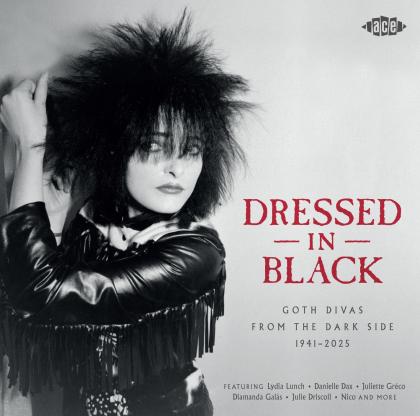
The oldest song is Shirley Collins' "Death And The Lady", which, she believes, goes all the way back to the global pandemic of 1348-9: The Black Death. The most recent is MUMMY's "Idiot Milk", recorded last year but linked in theme and intention to both Banshees offshoot The Creatures and Death Disc songstresses The Shangri-La's, whose Amy Winehouse-inspiring 1965 B-side gave our compilation its title. Anna Calvi's Southern Gothic "Ain't No Grave" continues this tradition by repurposing a 1930s gospel tune with a Suicide-style 1970s electro beat for an audience of Peaky Blinders fans. This was also the title track of original Man in Black Johnny Cash's final album – and he was the Gothfather who coined the phrase about sticking to his monochrome threads: "Until things get brighter", an outlook that lasted his lifetime.
All these artists somehow manage to not only make sense of the worlds they are reporting from, but to cast a glamour of inventive genius around their work that remains immune to the passage of time. I hope you will find illumination within.
- The compilation album Dressed in Black: Goth Divas from the Dark side 1941-2025 is released this Friday via Ace Records
- Cathi Unsworth's Season of the Witch: The Book of Goth is available via Nine Eight Books
- More Book Reviews on theartsdesk
- More New Music Reviews on theartsdesk
Below: watch the video for Shirley Collins' "Death and the Lady"












Add comment