

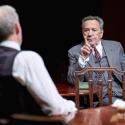
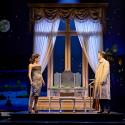
“The whole world is just tilting at the moment,” we’re told near the end of Wild, the Mike Bartlett play from summer 2016 that is available (through Sunday) online to help get us through these wild times right now. The first of three Hampstead Theatre titles, each one streaming online for a week (Beth Steel’s prize-winning Wonderland is next), Wild surely contains the most directly pertinent physical scenario to our own upended society in its story of a 28-year-old American, Andrew (a sympathetic Jack Farthing, pictured below), experiencing the equivalent of lockdown in a Moscow hotel room.
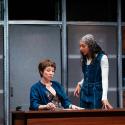
Andrew, we soon learn, is an Edward Snowden-like whistleblower who has done something “massive” and risks annihilation by his own government – if, that is, he doesn’t do himself in first. Separated from his girlfriend and the culinary comforts of KFC, he exists in limbo without either human rights or a passport: Andrew’s only reality are the four walls of a hotel room that, in Miriam Buether’s cunning design, prove no less slippery and illusory than any other aspect of his newly confounding life.(Buether's accomplishment on this play has become the stuff of scenic design legend but also sets the bar precariously high for Wild to be performed elsewhere.)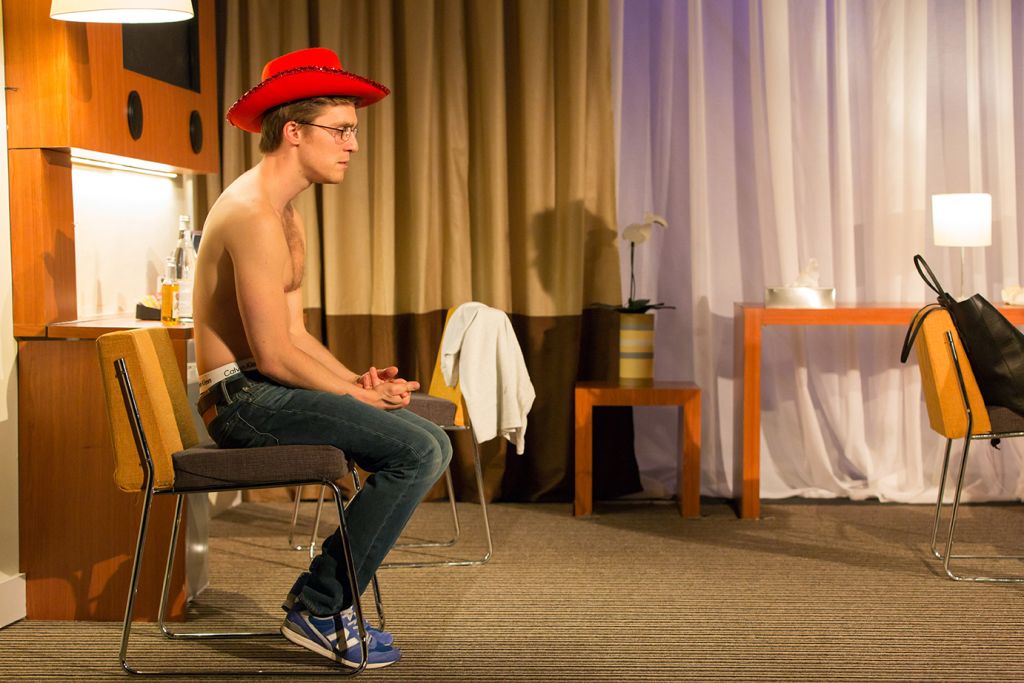 How to explain the identities of the two people who keep invading Andrew’s self-isolation, both claiming to be called George? Caoilfhionn Dunne’s distaff interrogator tosses off references to Graham Greene and Oscar Wilde – in that respect, Bartlett ’s title is a tease – all the while keeping a bewildered Andrew on edge. Driving the first 45 minutes of an 110-minute play (no interval), an overemphatic Dunne can be a bit much, especially glimpsed up-close: one welcomes the change of pace afforded by the quieter John Mackay, playing a second interlocuter who could well have strayed in from a Pinter study in the insidious dynamics of power. Dunne's grandstanding Woman, by contrast, is a sufficiently aggressive know-all to make one recognise in a flash the virtues of solitude.
Bartlett raises important points about the slippery nature of freedom as Andrew is seen to fall down a rabbit hole of his own devising, however much one is aware on this second, inevitably more intimate viewing of the play slightly struggling to sustain itself, which is where Buether's design really comes into its own. James Macdonald’s production ends with the scenic coup de theatre much-celebrated at the time that is no less astonishing even when you know what’s ahead, its visual cunning at occasional odds with a script that can be repetitive and hectoring, especially early on. But as a bespectacled Andrew conveys a gathering alarm at the stripping away of all certainties, who amongst us won’t feel a pang of recognition as a play called Wild comes to describe our own lives as well?



Add comment