

A few days after two Taliban rockets had quivered in the Afghan skies above us, I found myself looking up at an altogether different set of heavens in the Sistine Chapel. Moments of reflection on this tour were, out of necessity, brief; our schedule, out of necessity, hectic. Contrasts were commonplace. Vatican City was our 191st country, and our two-year tour to play Hamlet to every nation in the world was rolling rapidly to its conclusion.
A friendly priest who'd enjoyed our performance the night before had been showing us round, jumping queues and hopping barriers and peeking into closed-off rooms. But in the Sistine Chapel we were back with the crowd, herded into a cultural pen and neck-aching at the exquisite, exalted ceiling. It was too much to take in. I understood why postcards and pictures never attempt to recreate the whole, but instead distill it down to the single, manageable image of God and Adam. Or even just a pair of outstretched fingertips. Reductive and fragile and absurdly contextless, but manageable.
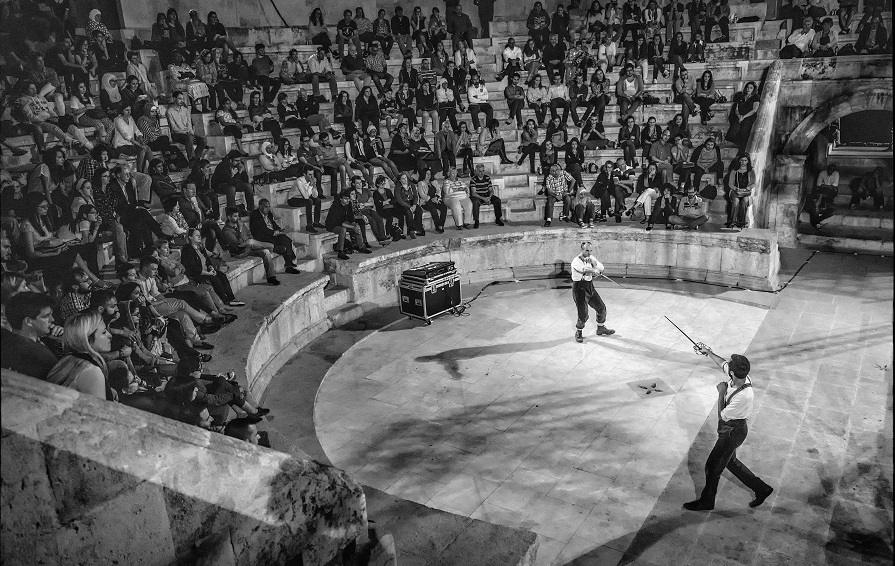
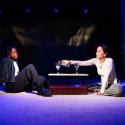
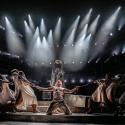
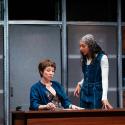
Coming back down to earth after the end of this elephantine tour, one of the biggest challenges remains: how to explain it to people. How to describe the last two years of our lives, recount the uncountable experiences gleaned from every pocket of the world? It has been unfathomably rich with memories, Sistine Ceiling-ed in its fullness. The question we are asked more often than any other, than all the others put together, is, "What was your favourite country?" Every time, unfailingly. It is the God-Adam fingertips of understanding the whole, a single image to represent a masterpiece. It is a way in, and, in most cases, it is enough. (Pictured below: Tom Lawrence as Laertes and Matthew Romain as Hamlet in the Odeon Amphitheatre, Amman, Jordan. Photograph by Bronwen Sharp)
But, though I've had no shortage of practice at answering, I've not yet been able to answer it satisfactorily. Because the beauty of the tour is in its variety, its constant newness and endless juxtapositions. The snow of arctic Norway, the sand dunes of Qatar; the jungle of Madagascar, the metropolis of New York; the bath-warm sea of the Caribbean, the mountains of Nepal. Swimming with wild dolphins in the Solomon Islands, snorkelling through jelly fish in Palau, splashing elephants in Sri Lanka, safari-ing in Kenya and Botswana, tussling over a water bottle with monkeys in Indonesia. The Great Wall of China, the pyramids at Giza, the Victoria Falls, the Parthenon of Athens, the western wall in Jerusalem; Mayan temples and ancient ruins. The great European capitals, the tiny Pacific islands. Meeting dignitaries, royalty, presidents; workshopping with students and drama game-ing with children. A day trip helicopter tour over Rio de Janeiro, a military helicopter transfer within war-zone Kabul. Embassies and palaces and refugee camps.
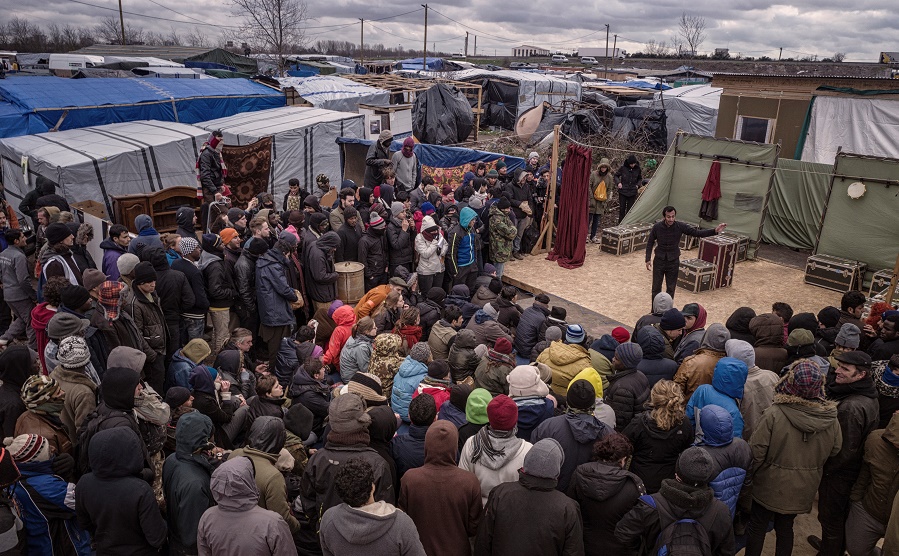
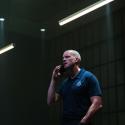
We have played in the magnificent national theatres of South America; we have played in ancient Greco-Roman theatres in Macedonia, Cyprus and Jordan. We have played in the Calais "Jungle", in Elsinore Castle, in the United Nations building, in a shop front on a busy street in Cameroon. We have played on the beach with our backs to the sea and in the pouring rain for a Romanian street theatre festival. We have played at an altitude of 2,850 metres, taking gulps of air from oxygen tanks in the wings. We have played in a bustling square in Mexico to over 2,000 people, some climbing trees to get the best view; we have played to an audience of 20 in a smaller, quieter square in Cabo Verde, some leaving their seats in the interval, never to return. (Pictured below: Naeem Hayat as Hamlet in the Jungle camp in Calais. Photograph by Sarah Lee)
 We have been the first theatre company to visit Somaliland since the country's inception; we have been the first to play Hamlet, the first Shakespeare in a number of nations. After the events of Maidan Square, we performed on the eve of the elections before the about-to-be-determined president of Ukraine. We played to the Queen of Denmark. We did a wee turn for Barack Obama.
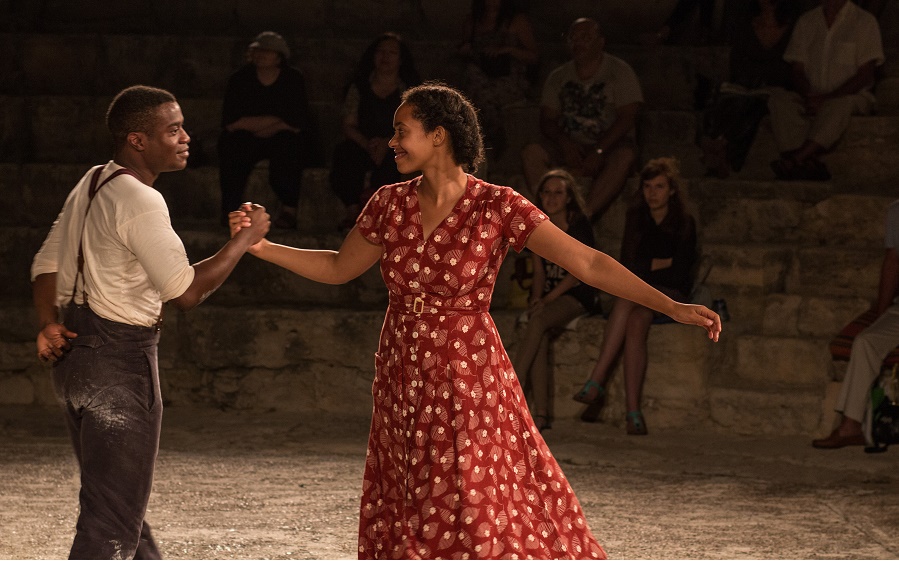
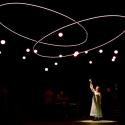
And our audiences have felt different resonances in the same story we've told 300 times. It has been a play about revenge in Sudan, about women's rights in Uganda, about political upheaval in Ukraine, about ghosts in Singapore, about filial duty in Iran. The audience in Peru roared with laughter, in Russia you could hear a pin drop, in Belize they called out to the characters in response to the scene. In Cambodia, in Rwanda, the symbolism of the skull transformed. In Tuvalu we used a rock for a skull and fought with snooker cues – our props and set and costume somewhere several countries behind us. (Pictured below: Ladi Emeruwa as Hamlet and Amanda Wilkin as Ophelia in the Kourion Amphitheatre, Cyprus. Photograph by Helena Miscioscia)
 We've suffered altitude sickness, dengue fever, pneumonia, Chikungunya, a hernia, a broken foot and rarely settled stomachs. Four relationships have bitten the dust. Another has been kindled. We've become a family, we sixteen. You don't choose your family, and no one irks you more than they can...and invariably do. But there's also a special forgiveness reserved for family, a thread of closeness not easily removed.
We've witnessed the extraordinary kindness of strangers. We've walked among the ashes of humanity's horrid shame.
It'll take a while for it all to sink in. The assault of time will steal details from our memories and sift our experiences until some stand out over others. Some countries will sharpen into focus as others recede into a blur and our highlights will get more and more concise. And something will be lost but something will be gained. And one day, perhaps, I'll be able to name my favourite country.
- Read all Matthew Romain's reports from the Hamlet tour for theartsdesk
- Read more guest features in theartsdesk's First Person column
- Hamlet: The Greatest Theatre Tour on Earth is an inside account of Globe tour written and produced by the company to raise money for Mary’s Meals. To purchase a copy send a cheque for £10.50 to Mary’s Meals c/o Keith Bartlett, 32 Gap Road, Wimbledon, SW19 8JG


Add comment