Who was Stefan Zweig? It's likely that it's mostly older folk who studied German literature at A-level who have encountered this superb Viennese writer in his native language, though his short story from 1922, Letter to an Unknown Woman, eventually emerged as a starry Hollywood film in 1948.
Christopher Hampton, who was one such German student, has decided to bring this novella to the stage, first at Theater in der Josefstadt in Vienna, where the story is set, and now at the Hampstead. It’s a bold move, but one that raises key questions about the material’s suitability for this treatment.
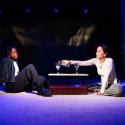
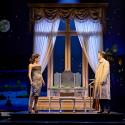
It’s a slim piece, just 70 minutes long, with a mystery at its heart: why does Stefan (James Corrigan) not remember the slinky unnamed woman (Natalie Simpson) who picks him up in a nightclub and comes home with him? Her proximity to his life slowly emerges, both in the past and in the year after their brief time together.
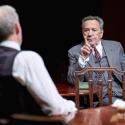
We discover certain things about Stefan: that he is Jewish, a fortysomething writer and well heeled enough to employ a manservant, Johann (Nigel Hastings), a solid sort of chap who silently goes about his duties, noticing all but saying nothing until asked. But why does Stefan receive an anonymous bouquet of white roses on his birthday each year? The answer to this last question is a quite shocking revelation. As to Stefan’s inability to recognise the woman in his bed (we later learn she is called Marianne), what to make of that?
Hampton has moved the timing of the play up to the 1930s, so that Stefan’s jitters about encroaching anti-semitism are wholly justified. Given that Zweig himself was acutely sensitive to the threat to his glittering cosmopolitan world from political developments in Germany – exiling himself, first to Paris, then London and Bath, New York and finally Brazil, where he and his second wife committed suicide in 1942 – this time shift seems to be inviting us to see Stefan as an autobiographical figure. He has also been named after the author here, whereas he is simply "R" in the original. Stefan's angst is explained, but what does it have to do with his relationship with Marianne?
Does Marianne represent the memories Stefan will have to jettison as his world shrinks and he finds ways to abandon it, here, for example, by going abroad on a three-month lecture tour (as Zweig himself did)? Or is she standing in for a character from his fiction, plucked from his life, shaped and articulated on the page, then forgotten as he moves on with other characters and other stories? It’s clear Stefan inhabits a world of his own: is this a metaphor for the necessary isolation, even selfishness, of all writers?
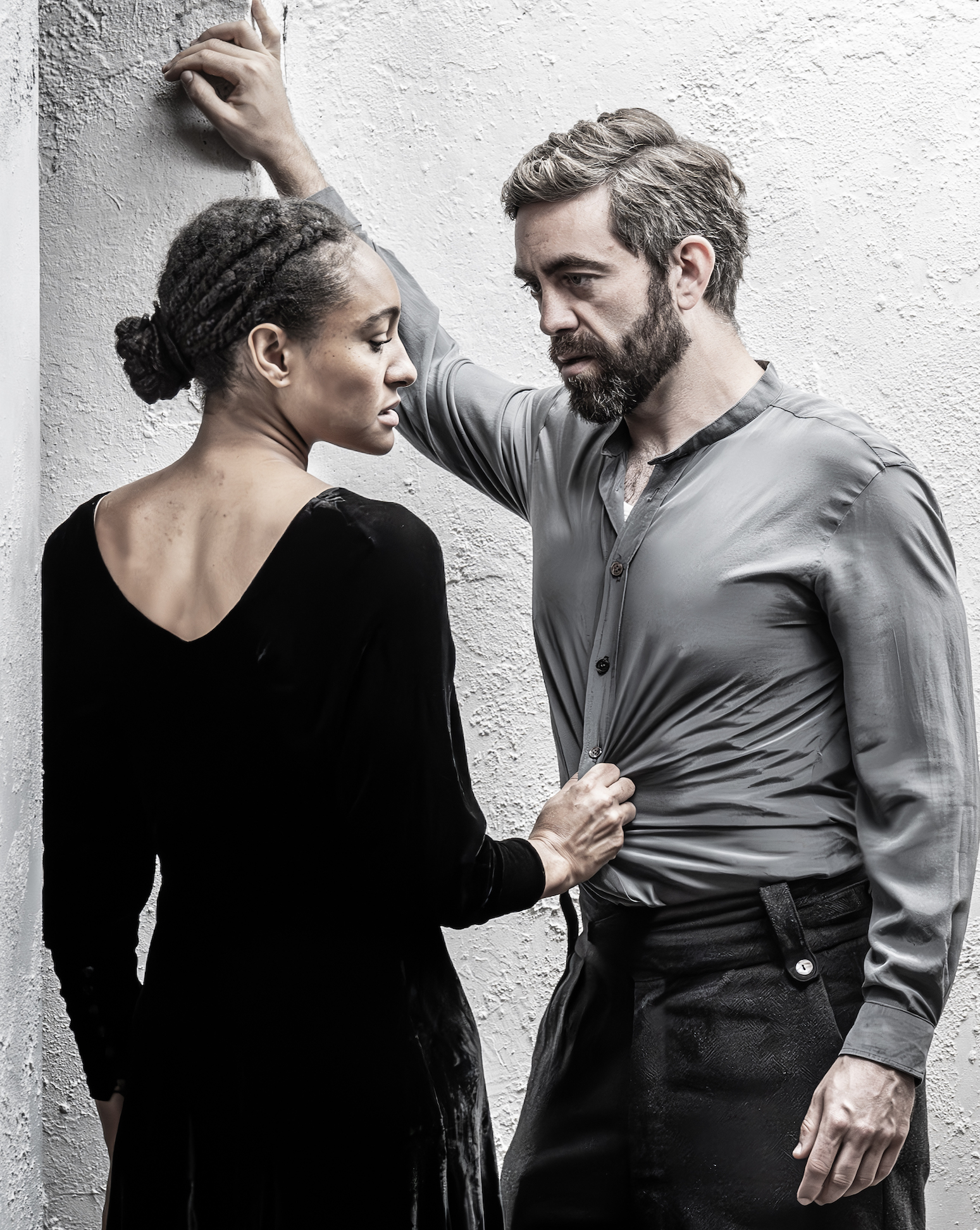 This ambiguity should be hugely fruitful, but it isn't here; the play feels earthbound. Would the material have been more engaging if approached, for example, as a film, where editing could play tricks with the chronology and narrative layers could be unpeeled visually, without the concreteness of being projected in swathes of dialogue? There was a reason Zweig chose to put the bulk of his short story in a letter, where its loquacity would seem perfectly reasonable – and Hampton, to his credit, tries to simulate that approach by communicating the contents of the letter Marianne leaves Stefan in a voice-over. But before we reach that point in the proceedings, Stefan and Marianne talk, she typically in perfect paragraphs as the bones of the novella's letter-text show through.
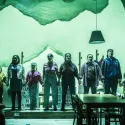
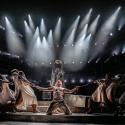
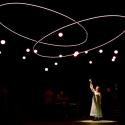
Even so, their dialogue is essentially realistic, whereas more of what’s not being said could usefully register (Zweig was a friend of Sigmund Freud, after all, as well as a colleague of the poet Rainer Maria Rilke). Even though Young Marianne (Jessie Gattward) lends a kind of dreamlike quality to the piece, already onstage looking at Stefan’s flat when we enter, silently drifting through scenes dressed exactly like her older self, this potentially surreal touch doesn’t really ignite, and things stay earthbound. For once I yearned for characters to break into choreographed movement that mirrored their emotional state, not to be told about it by the playwright. Chelsea Walker pulls out the stops in the final scenes, but more surrealism is needed if the piece is to break free from seeming an odd period puzzle-play.
The cast do what they can – Natalie Simpson in particular is a strong stage presence, vocally impressive, plausibly seductive and doing her best to make the text resonate with unspoken secrets; hats off, too, to James Corrigan for stepping in at a late stage when the actor playing Stefan had to withdraw – but they seem trapped in the wrong medium. Heretically, perhaps, I even pondered whether a radio version of the material might work better, where the two lead voices could drift in and out, disembodied and abstract rather than rooted to a specific time and place. It’s a frustrating evening, trying to process what’s onstage and being distracted into thinking about what could have been there instead.