

At just under five hours, Troy Story, the RSC’s adaptation of as many tales from Greek myth, takes about a third as long as it does to recite the whole of the Iliad. It feels like longer. Gregory Doran’s production is ambitious in its starkness, but never quite manages to break out of the plodding rhythm of its lines – or to bring the stories into the 21st century. (The venture, undertaken without sets or costumes, was livestreamed this past weekend and is available through Saturday to ticket-holders via catch-up.)
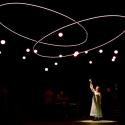
Unlike Homer, Doran and dramaturges Cathleen McCarron and Anna McSweeney know how to cut. This is the Trojan War, selected highlights: Achilles’ great sulk and the death of Patroclus; the demise of Hector; the Trojan Horse and the end of the war; Ulysses’ adventures with the Cyclops and the sirens; and his return to Ithaca, where Penelope has been fending off grasping suitors. Doran strips almost everything away: four or five actors at lecterns, two musicians behind them (Dunja Botic and Nick Lee, both excellent). Skeletal structures loom in the background – a minimalist vision of the topless towers. There's barely any movement, so nowhere to hide.
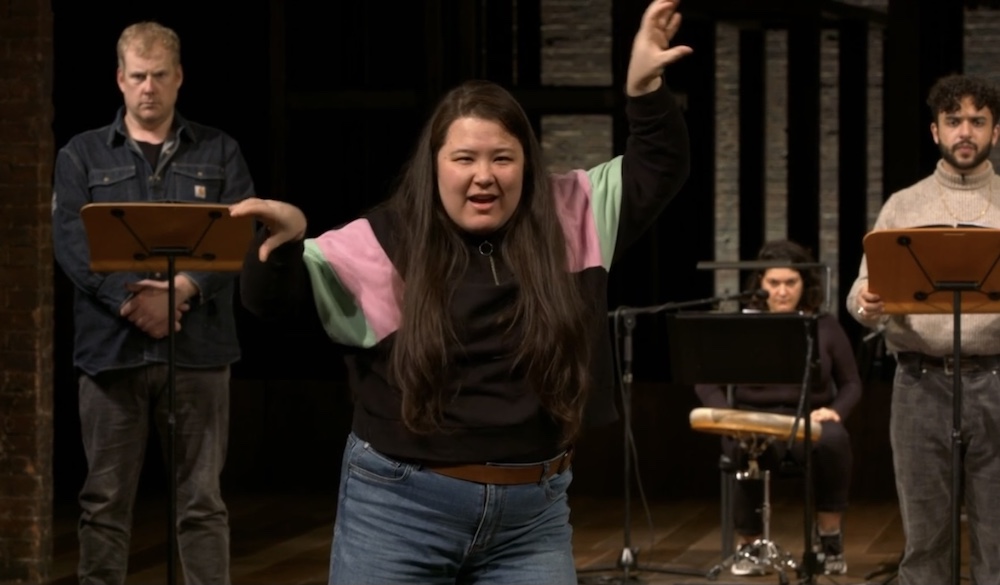 Two translations are at play here with no noticeable break between them, which speaks to a seamless knitting-together by Doran, McCarron and McSweeney, and they’re both in iambic rhyming couplets. That would be alright, if we hadn’t been trained by Shakespeare to hear that combination of rhyme and metre as the close of a scene. As a result, every line sounds like an ending; it’s easy to get lost in the soothing tum-ti-tum-ti-tum, and there’s no blocking or scene changes to snap you out of that rhythm. Stripped-down productions are all well and good (and necessary, as the pandemic wears on), but there’s an inordinate amount of pressure placed on the words, and these ones just aren’t up to the task. It’s an irony worthy of the Greek gods that an RSC production is let down by its iambs.
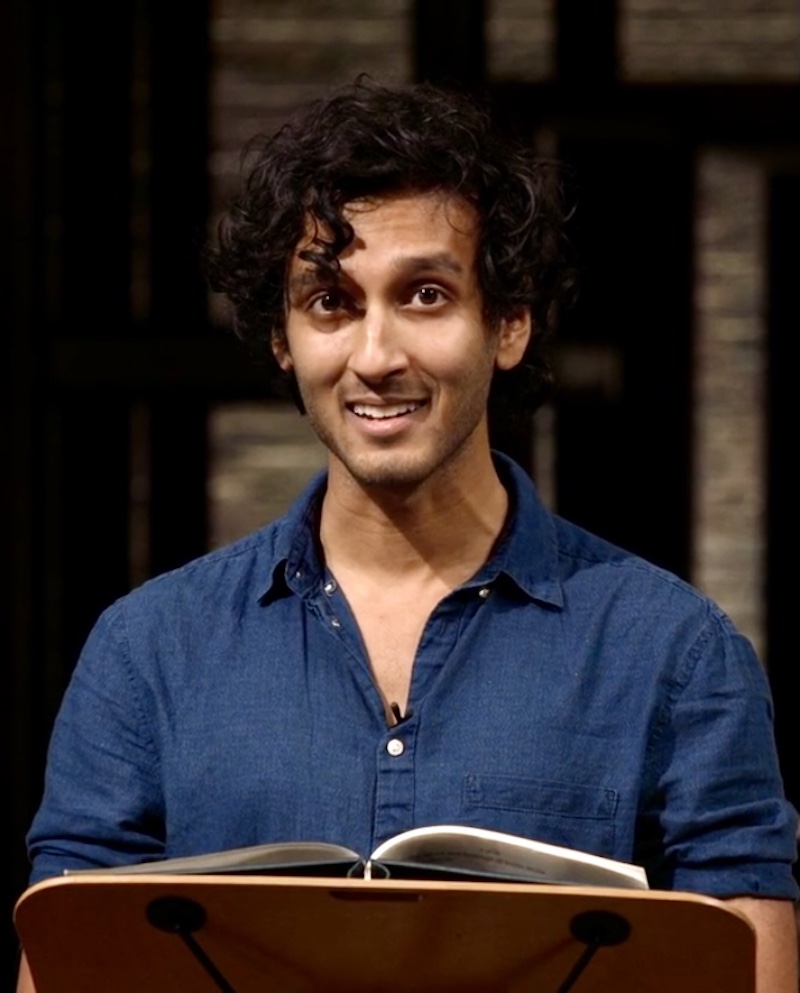
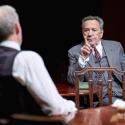
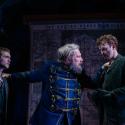
The cast do well within their verbal bindings, in particular Alfred Clay and Avita Jay, as two of Ulysses’ sailors. Instead of leaning into the pentameter, they keep it light: Clay’s imitation of a shout echoing around a cavern is a high point. Assad Zaman’s Patroclus (pictured below left) is similarly free and loose, refusing to get bogged down by the words or the two-thousand-year history of his character. Bea Webster and William Grint’s turn as the Sirens is a delight – they twist and dance across the stage, spinning a siren song without making a sound.
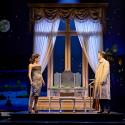
 But Doran’s decision to play the classics like this, with no hint of irony or implication that their ideas might be a little awry, feels outdated. When Telemachus (Patrick Osborne) tells his mother Penelope (Kemi-Bo Jacobs) to retire and leave the serious business to the men of the house, she should at least be allowed a look to the camera, a moment to connect with the audience. This is a cycle of plays out of time, a production that hides its fundamentally conservative nature behind its bold form.
Like the best Greek heroes, then, Troy Story is suffering from an identity crisis. It’s billed as “two translations of the Greek classics”, but the third play, The Wooden Horse, is based on a book of the Aeneid. This wouldn’t be such an issue if the Greek names weren’t mostly Romanised – Odysseus becomes Ulysses, Athena is Minerva, and so on. It’s also jarring when a production whose name bears more than a passing resemblance to a well-known Pixar franchise tries to take itself completely seriously. Clay, Jay, Zaman, Webster and Grint make the four-and-a-bit hours just about worth it.





Add comment