Dylan Thomas’ iconic play Under Milk Wood boasts a host of colourful characters. From the blind sea Captain Cat to the loveable Polly Garter washing the steps of the welfare hall, the play is a play for voices; a play for characters. Thomas, born in Swansea, thirst like a dredger, moved to Laugharne with his wife Caitlin in 1938. It was here he most likely got the inspiration for those characters, although the setting was allegedly inspired by New Quay in Ceredigion. This year for the poet’s 100th birthday, Dylan is everywhere and National Theatre Wales’s Raw Material: Llareggub Revisited is part of the celebration.
Joining forces with the BBC and the Laugharne players, NTW's site-specific production (with only a handful of performances over the bank holiday weekend) offers an alternative walking tour of the town where Thomas was absorbed like a native. The piece, written by Jon Tregenna and installed by visual artist Marc Rees, re-imagines the residents of Llareggub hill. Unlike the original play, however, which is famously bursting at the seams with inhabitants, it relies a little too heavily on installations.
 The audience is left to its own devices, encouraged to wander around the town with the guidance of a map. It was difficult to find any sort of narrative in this self-service approach, so much of the performance was spent visiting random fragments that had no linking quality, nothing to bind the disparate elements together. Captain Cat toldtall stories in the basement of Pelican House (where the poet’s parents lived), a rhetoric rich in that same quality reflected in Thomas’s characters, but more performances like this were needed. Instead, the audience was invited to watch pieces of film and visit Thomas’s grave.
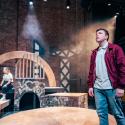
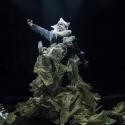
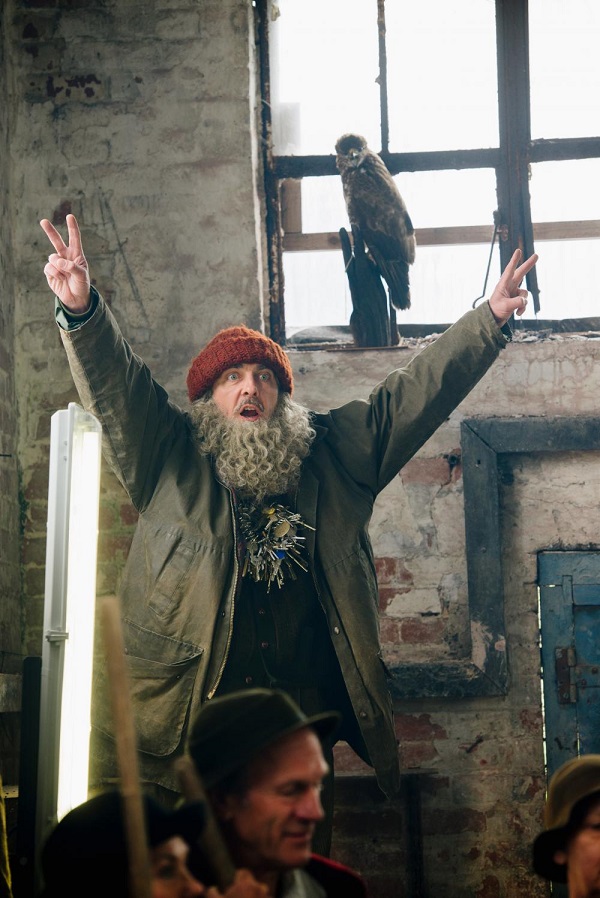
There were some lovely touches. The cast of characters as knitted dolls, the cockles and bread served at the end, the audio installations for voice - actually for Voyce, the feral character played by Russell Gomer (pictured above) who promised to show us Laugharne’s real underbelly: these all hinted at a true love for the play and indeed the poet. Raw Material felt like the highlights package of what should have been an absorbing celebration of Dylan Thomas’s play for voices. The installations earned their place, but there was a lack of any real sense of theatre, of characters or narrative.