If there was an opposite to the limitless “ever after” of fairytales, the relentlessly nullifying "nevermore" of Edgar Allan Poe’s raven would come pretty close. A deformed, sickly smiling "musical fable for adults", the ominously named Nevermore is Canadian theatre company Catalyst’s grim(m) take on the life of that greatest of storytellers, Poe himself. Had Little Red Riding Hood decided to meet the Wolf at an S&M club for a spot of burlesque (and had Nick Cave been on hand to write some songs about the encounter), Nevermore would be the result.
More hauntingly macabre than any of his own stories, Poe’s life turns the familiar bildungsroman – that most literary of fairytales – on its head. The conventional heroic beginnings of parental alcoholism, neglect and untimely death lead to the obligatorily orphaned Poe being adopted (right on schedule) by wealthy childless benefactors. Here however things take a left turn: Poe loves his mother; she dies. Poe loves his foster mother; she dies. Poe loves his brother Henry; he dies. In a pattern that persists raven-like through his life, everything he values turns to ashes, until eventually Poe himself succumbs to TB and dies an early and lonely death.
It’s a compelling story, but also a repetitive one – a basic structural issue that blights Catalyst’s retelling more effectively than any ghostly omen. Subtitled “The imaginary life and mysterious death of Edgar Allan Poe”, the show takes an improvisatory approach to the facts, embroidering the fable-like simplicity of the tale with gothic tropes and sinister portends that gaze obliquely toward Poe’s own fiction.
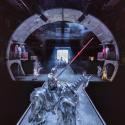
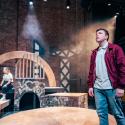
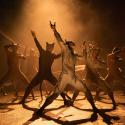
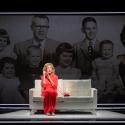
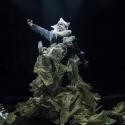
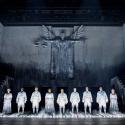
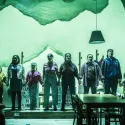
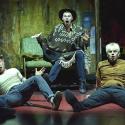
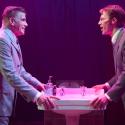
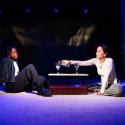
It’s an approach that works wittily and stylishly well for about an hour. The synchronisation between gesture, dance, word and sound effects (deliberately distorted for maximum impact) is slick and elegant, bringing an expressive pathos to the narration, as well as some neatly observed humour. Bretta Gerecke’s set is a miracle of invention – nightmarish sleights of hand are achieved with little more than a couple of sliding panels and a metal frame – and her Edward Gorey-inspired costumes (which come by way of Tim Burton) are a gorgeous freak show of alarming corsetry and grotesquely distorted silhouettes. Then things stop being fun.
London has already seen one show in rhyming couplets recently in the form of Martin Crimp’s Misanthrope translation, and – as he proved – it’s a tough act to sustain. Mimicking the regular cadence and form of Poe’s own verse, the confined scheme of rhythm and rhyme is at times maddeningly arch, and not really fluid enough to yield the allusive richness that writer-director-composer Jonathan Christenson seems to be aiming for. The score – a melodic face-off between Michael Nyman and Ludovico Einaudi (umpired perhaps by Philip Glass?) – has a simple, music-box charm about it, but then it's not an instrument one is often called upon to listen to for two hours straight.
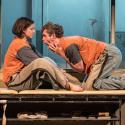
Despite the polished efforts of its seven performers and team of designers, Nevermore is as tragically flawed as its hero. The potent appeal of Poe, his uniquely disturbing gift, is above all that of storytelling. Never a simple matter of getting from A to B, his narratives are exercises in tension, atmosphere and style. Christenson identifies and successfully creates his own distinctive and appealing visual world, but becomes so bogged down in the details that he forgets the first commandment of theatre and literature alike: tell the story.
Reworked as a miniature cabaret-cum-theatre vignette, I’d be first in line for Nevermore. As it stands however – all oozing spare narrative flesh and limp parting handshake – I'd rather stay at home with a book. Edgar Allan Poe certainly met his end last night at the Barbican, but I’ll swear it wasn’t the TB that killed him.
It’s a compelling story, but also a repetitive one – a basic structural issue that blights Catalyst’s retelling more effectively than any ghostly omen. Subtitled “The imaginary life and mysterious death of Edgar Allan Poe”, the show takes an improvisatory approach to the facts, embroidering the fable-like simplicity of the tale with gothic tropes and sinister portends that gaze obliquely toward Poe’s own fiction.
It’s an approach that works wittily and stylishly well for about an hour. The synchronisation between gesture, dance, word and sound effects (deliberately distorted for maximum impact) is slick and elegant, bringing an expressive pathos to the narration, as well as some neatly observed humour. Bretta Gerecke’s set is a miracle of invention – nightmarish sleights of hand are achieved with little more than a couple of sliding panels and a metal frame – and her Edward Gorey-inspired costumes (which come by way of Tim Burton) are a gorgeous freak show of alarming corsetry and grotesquely distorted silhouettes. Then things stop being fun.
London has already seen one show in rhyming couplets recently in the form of Martin Crimp’s Misanthrope translation, and – as he proved – it’s a tough act to sustain. Mimicking the regular cadence and form of Poe’s own verse, the confined scheme of rhythm and rhyme is at times maddeningly arch, and not really fluid enough to yield the allusive richness that writer-director-composer Jonathan Christenson seems to be aiming for. The score – a melodic face-off between Michael Nyman and Ludovico Einaudi (umpired perhaps by Philip Glass?) – has a simple, music-box charm about it, but then it's not an instrument one is often called upon to listen to for two hours straight.
Despite the polished efforts of its seven performers and team of designers, Nevermore is as tragically flawed as its hero. The potent appeal of Poe, his uniquely disturbing gift, is above all that of storytelling. Never a simple matter of getting from A to B, his narratives are exercises in tension, atmosphere and style. Christenson identifies and successfully creates his own distinctive and appealing visual world, but becomes so bogged down in the details that he forgets the first commandment of theatre and literature alike: tell the story.
Reworked as a miniature cabaret-cum-theatre vignette, I’d be first in line for Nevermore. As it stands however – all oozing spare narrative flesh and limp parting handshake – I'd rather stay at home with a book. Edgar Allan Poe certainly met his end last night at the Barbican, but I’ll swear it wasn’t the TB that killed him.
- Check out what's on at the Barbican 2010 Season
- Find Edgar Allan Poe on Amazon
- Explore other productions by Catalyst Theatre