Labels have their uses but they can also be a blight. The works of the Scottish playwright James Bridie – with their regional accents and domestic settings – bear many of the hallmarks of so-called Kitchen Sink drama but didn’t make the canon. Not grimy enough, perhaps, not English enough, and certainly not angry enough. The playwright is better remembered as a founder of Glasgow’s Citizens’ Theatre and the Edinburgh Festival.
All power to the Finborough then in its campaign to save Bridie’s writing from terminal neglect. Last year saw the first production in 70 years of Dr Angelus, a play which originally starred Alastair Sim and a very young George Cole. Now it’s the turn of Mr Gillie, whose original West End run in 1950 featured the same stellar pair. The current production is the first since then. This is a play not about anger, but its psychologically more interesting cousin, disillusionment. Topped and tailed by a celestial post-mortem discussion between a barrister and a judge as to the value of the life of the titular character, the body of the play offers the evidence for the judgment.
The play is remarkable for rising above domestic concerns
William Gillie (played by Andy Secombe with just the right mix of benevolence and tetchiness) is a poorly paid schoolmaster in the Scottish coal-mining village of Crult, a place where school-leavers are destined for the scullery or the pit. Undeterred by the doubts of his loyal wife (Emma D’Inverno) and the outright hostility of the purse-lipped clergyman who pays his wages (a gloriously bloodless performance from David Bannerman), Mr Gillie persists in offering private coaching in literature and philosophy to any student who shows so much as a flicker of intellectual promise.
Thus far, it is pointed out, not one of Mr Gillie’s protégés has rewarded his dedication. Indeed, a number of them, having taken up his suggestion that they head to London to spread their wings, have decidedly gone to the bad. Consequently there have been murmurings among the Education Committee about Mr Gillie’s fitness to continue in post.
Things come to a head when two of his current students – Tom, a promising playwright, and Nelly, a budding actress and only child of the bumptious village doctor – declare themselves not only to be romantically involved, but about to elope down South. The finger of moral disapproval is soon pointing at Mr Gillie not only for giving the pair inappropriate careers advice, but for countenancing their affair on church property. The bibulous Dr Watson, what’s more, is distraught at losing his precious daughter to “a black-faced pit boy”.
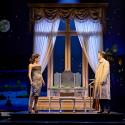
Set entirely within the confines of the Gillies’ parlour (Anna Yates’s set is a study in brown), the play is remarkable for rising above domestic concerns, despite the quantity of tea served with the arrival of each and every visitor. Just as Mr Gillie sets his sights high for each of his protégés, so the play embraces big themes: the true purpose of education, what constitutes personal success and failure, and the essential selfishness of mankind.
While William Gillie upbraids the doctor for wanting to keep his daughter at home where she cooks and cleans for him, he fails to see the parallel in his own life, made comfortable by the loving attentions of a wife who, to judge by her liveliness and sound common sense, might otherwise have done something in the world.
Such subtleties are beautifully brought to light in the detailed direction of Jenny Eastop and the playing of the eight-strong cast. Malcolm Rennie brings a comic blast of whisky breath to the role of the flamboyant and self-pitying doctor, with Caitlin Fielding horribly convincing as his ruthless daughter: you just know her marriage to Andrew Cazanave Pin’s callow Tom will quickly come to grief. As the headmaster’s wife, Emma D’Inverno could have turned in a comic performance along the lines of Mrs Doyle from Father Ted; instead, she brings a sparkling complexity to the role.
But as the title suggests, the evening belongs to Andy Secombe’s sharp, contained, conflicted Mr Gillie. This is his story, he appears in every scene, and it is ultimately his tragedy, or not, that we are asked to consider. As he puts it, most men are occupied in the design and strengthening of cages: "I do not like cages. I think that the few minutes between the door of the cage and the jaws of the cat make life worth living." Ultimately (spoiler alert) the celestial Judge applauds his stance. There is a vacant place among the immortals, and Mr Gillie, he decrees, shall take it.
- Mr Gillie plays Sunday, Mondays and Tuesdays at the Finborough Theatre to 11 July
- More theatre reviews on theartsdesk