

On the morning of the press show of Laughing Boy, the BBC news website’s top story was about the abuse of children with learning disabilities by the staff at a special school.
The undercover investigation had revealed a catalogue of distressed young people being locked in rooms barely bigger than cupboards for hours, sometimes naked and with no access to toilets or food. Staff were filmed on CCTV repeatedly hitting and kicking children; but despite a joint police and local authority investigation that concluded six staff had abused children "on the balance of probabilities", they were not sacked. By mid morning, the story had been pushed far down the BBC website, overtaken by the horrific news of a man attacking strangers with a sword.
What has this to do with Laughing Boy a new play about Connor Sparrowhawk, an 18-year-old boy with learning disabilities, autism and epilepsy? Connor, who got his nickname because of his passion for making friends and family laugh, drowned in a bath while in an NHS run assessment and treatment unit (ATU) in Oxford, almost 10 years ago.
His mother Sara Ryan, an academic, campaigned indefatigably for justice for her son. At the very least he deserved a proper, jury-led inquest into what had led to the staff leaving Connor alone in a deep bath when he was known to have tonic-clonic seizures. The Justice for Laughing Boy campaign lit up the world of disability activism and led eventually to a grudging apology, a substantial fine and the closure of the ATU where Connor died.
Inquests into deaths such as Connor’s are rare. Towards the end of this powerful, moving if occasionally overly didactic play, we learn that only one percent of unexpected deaths of people with learning disabilities in custody or care are given an inquest, in comparison with thirty percent into the deaths of people with mental illness. This disparity in investigation speaks volumes about how society regards the value of the lives of learning disabled people, their status at rock bottom, below that of the mentally ill.
In 2015, the NHS committed to closing down ATUs and other long-stay institutions for learning disabled and autistic people; that commitment has failed to be achieved. As of April 2024, there are 2045 people languishing in such places. Stephen Unwin, who has written and directed this new play as a collaborative adaptation of Sara Ryan’s book, Justice for Laughing Boy, shines a fierce light on to Connor’s story.
Alfie Friedman plays the young man with an ethereal intensity; after a happy childhood at a well-run special school, loved and supported by his family, Connor had developed epilepsy (common among people with autism and/or learning disabilities) and was struggling with aggressive impulses that made school and home life very difficult.
At a crisis point, his family were offered a place for him at a local assessment and treatment unit to help him get through this phase. But from the outset, Sara Ryan found little in the way of assessing nor treating took place. Understaffed workers, lax health and safety training and an unsympathetic psychiatrist seemed to be the order of the day. Communication between the family and the ATU became increasingly fractious and Connor increasingly unhappy. Connor drowned during a seizure, unobserved by the ATU staff who had left him in a locked bathroom despite the obvious risk. It was the 107th day of his stay. His parents, siblings and a devoted army of campaigners fought for a full enquiry as the ATU management obfuscated and attempted to blacken Ryan's reputation.
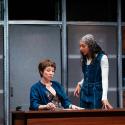
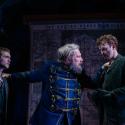
 Janie Dee plays Sara Ryan with a ferocious intelligence. She doesn't downplay Ryan's combative and sweary style but also allows us to see her warmth, humour and deep love for her son. The other cast members take on a kaleidoscopic variety of roles – Connor’s grieving brothers and sister, stepdad, staff at the ATU, defensive NHS management, reporters, lawyers on both sides and politicians including Norman Lamb.
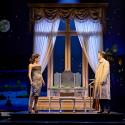
This switching of roles, while essential in such a small theatre with a restricted cast, isn’t always convincing – a few too many times a younger cast member puts on a silly voice which serves to mock the older person they are playing. This clumsy acting undermines credibility, makes the authority figures cartoonish, and diminishes the play's impact. But Unwin moves the action on effectively and the play rarely lags. Staged on a blank set with a few chairs and props, the production uses montaged video projection of family videos and photos and news coverage from Ryan's extroardinarily creative and effective campaign. These back projections also round out Connor's life, we get glimpses of his passion for buses and lorries and a sense of what his adulthood could have been.
It’s to be hoped that this heartfelt and passionate production reaches a wider audience than those involved in trying to make the world a better place for people with learning disabilities and that media attention about their mistreatment doesn’t again get pushed down the agenda.









Add comment