

The late Simon Gray, who died in 2008, lived a ragged, bruised and battering life. I usually think of him as the John Prescott of playwrights, except that he was miles more articulate, and eventually rewarded by a CBE rather than a peerage. Anyway, he was pugnacious and out of step with playwriting trends. In an age of lefty state-of-the-nation dramas, Gray explored the emotions of upper-middle-class characters and their difficulties with communication. Although he could be irascible, and his published diaries are scorchingly rude, the default position of his plays is an ironic melancholy, as evidenced by this welcome revival of The Late Middle Classes.
First staged in Harold Pinter’s production in 1999 but denied a West End transfer when its venue was given over to the Boyband musical, the play transports us effortlessly to England in the 1950s. We are on Hayling Island, where 12-year-old Holly lives with his parents, Charles and Celia, an apparently comfortable married couple. Celia likes gin and tennis; Charles, a pathologist, seems to love his work more than his home. So while Holly, a gifted child, is having piano lessons he is also learning about emotional needs: those of Brownlow, his piano teacher, as much as those of his mother.
Clearly autobiographical, the story shows how Holly is not only a focus for his needy mother, but also for Brownlow’s desire for an artistic muse, as well as for Brownlow’s dotty Austrian refugee mother. Out of this comes not only an aching personal drama, but also a picture of the nation, tight-arsed, narrow-minded and provincial. Because the Brownlows are from Vienna they act as outsiders, showing the English to themselves. But they are also funny foreigners, and suspect because they are not, well, English.
The familiar rituals of middle-class English life are all here: piano lessons, afternoon tennis, evening drinks, and — in one excruciating scene — fathers telling their sons about the facts of life. All rather unnecessary in this case as the boy has already got hold of a naturist magazine! Oh, and then there is social ambition: Celia wants Holly to get a scholarship to a top public school.
Contrary to cliché, there’s a distinctly passionate streak in Charles and Celia’s marriage, and Gray’s portrait of them is loving, and difficult, and completely convincing. Juxtaposed with this unusual English family is the continental Brownlow, with his philosophical cast of mind, his slight sado-masochist tendencies, and his eccentric mother, agoraphobic, cat-loving and partial to a drop of sherry. Two worlds, English and Viennese, come together with all the harmony of a fist on a piano keyboard.
Very cleverly, Gray sets up his play as a comedy of long-lost manners, vaguely melancholic and gently amusing, then ambushes us with a revelation that turns the whole family upside down. In these quaint 1950s surroundings, the worm in the chintzy bud is sex of course, and Gray delivers his second-act shocks with a fine command of hilarity and savage insight. Suddenly, splashes of hot feeling clash with icy wit. And the play comes to a boil.
These gobsmacking revelations, which suggest moral cowardice as well as a desire for truth-telling, do a lot to raise this determinedly old-fashioned play from the anachronistic rut in which Gray has laid it, although I still have some doubts about the framing device in which an older Holly revisits Brownlow (which seems neither necessary nor satisfying). Yet the play’s lack of contemporary edge is also an advantage — Gray masterfully avoids clichés about paedophiles, predators and abuse.
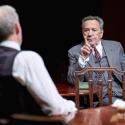
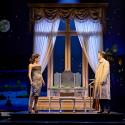
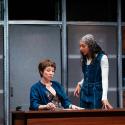
David Leveaux’s excellent production, on Mark Britton’s olde set, can’t really disguise the clunky slowness of the play’s beginning, but it delivers the second-act punches with enormous force. Helen McCrory’s Celia is nervy, spiky and an utter spitfire when roused, while Peter Sullivan’s Charles is distracted, baffled, broody and then vengeful. On the other side of town, Robert Glenister as Brownlow and Eleanor Bron as his mother convey the more tangled expressiveness of these outsiders. As Holly, Laurence Belcher is naturalness itself. Both an anatomy of love, and a wry account of a clash of cultures, The Late Middle Classes is a superb piece of theatre.
Clearly autobiographical, the story shows how Holly is not only a focus for his needy mother, but also for Brownlow’s desire for an artistic muse, as well as for Brownlow’s dotty Austrian refugee mother. Out of this comes not only an aching personal drama, but also a picture of the nation, tight-arsed, narrow-minded and provincial. Because the Brownlows are from Vienna they act as outsiders, showing the English to themselves. But they are also funny foreigners, and suspect because they are not, well, English.
The familiar rituals of middle-class English life are all here: piano lessons, afternoon tennis, evening drinks, and — in one excruciating scene — fathers telling their sons about the facts of life. All rather unnecessary in this case as the boy has already got hold of a naturist magazine! Oh, and then there is social ambition: Celia wants Holly to get a scholarship to a top public school.
Contrary to cliché, there’s a distinctly passionate streak in Charles and Celia’s marriage, and Gray’s portrait of them is loving, and difficult, and completely convincing. Juxtaposed with this unusual English family is the continental Brownlow, with his philosophical cast of mind, his slight sado-masochist tendencies, and his eccentric mother, agoraphobic, cat-loving and partial to a drop of sherry. Two worlds, English and Viennese, come together with all the harmony of a fist on a piano keyboard.
Very cleverly, Gray sets up his play as a comedy of long-lost manners, vaguely melancholic and gently amusing, then ambushes us with a revelation that turns the whole family upside down. In these quaint 1950s surroundings, the worm in the chintzy bud is sex of course, and Gray delivers his second-act shocks with a fine command of hilarity and savage insight. Suddenly, splashes of hot feeling clash with icy wit. And the play comes to a boil.
These gobsmacking revelations, which suggest moral cowardice as well as a desire for truth-telling, do a lot to raise this determinedly old-fashioned play from the anachronistic rut in which Gray has laid it, although I still have some doubts about the framing device in which an older Holly revisits Brownlow (which seems neither necessary nor satisfying). Yet the play’s lack of contemporary edge is also an advantage — Gray masterfully avoids clichés about paedophiles, predators and abuse.
David Leveaux’s excellent production, on Mark Britton’s olde set, can’t really disguise the clunky slowness of the play’s beginning, but it delivers the second-act punches with enormous force. Helen McCrory’s Celia is nervy, spiky and an utter spitfire when roused, while Peter Sullivan’s Charles is distracted, baffled, broody and then vengeful. On the other side of town, Robert Glenister as Brownlow and Eleanor Bron as his mother convey the more tangled expressiveness of these outsiders. As Holly, Laurence Belcher is naturalness itself. Both an anatomy of love, and a wry account of a clash of cultures, The Late Middle Classes is a superb piece of theatre.
- The Late Middle Classes at the Donmar Warehouse until 17 July
- Find Simon Gray on Amazon
- What’s on at the Donmar Warehouse this season


Add comment