It is unsurprising to learn in the post-show Q&A that each audience receives Jonathan Maitland’s new play based on his 2006 memoir differently. My house laughed a lot (me especially) but some see the tragic overwhelming the comic, and the laughs dry up. When it comes to humour, as is the case with mothers, it’s each to their own.
It’s an unusual production right from the off when the playwright, who is also a main character, is also acting himself too – but not entirely, as there’s a pre-teen and post-teen version of him too, played by different actors. Got all that? When you add his presence to the fact that we know it’s not "a" Jonathan Maitland, but "the" Jonathan Maitland, TV and radio journalist and award-winning dramatist, and then slot in the final piece of the jigsaw, the play’s title, I confess I was primed for laughs not tears. Such a high-flying career doesn’t guarantee a happy life, but I think I’d be prepared to take my chances from there.
The tension between these poles at either end of the moral thrust of the story never really resolves. For a man who chucked in therapy after one session, adapting your own memoir into an autobiographical play that revives your younger selves, your mother, your father and your stepfather, sure looks like it has a therapeutic dimension. And, crucially, this isn’t a smartarsey piece of metatheatrical flummery translated from the original Italian, with us pinned as the marks for the con: we’re assured it’s true. Well, true enough, and I believe him.
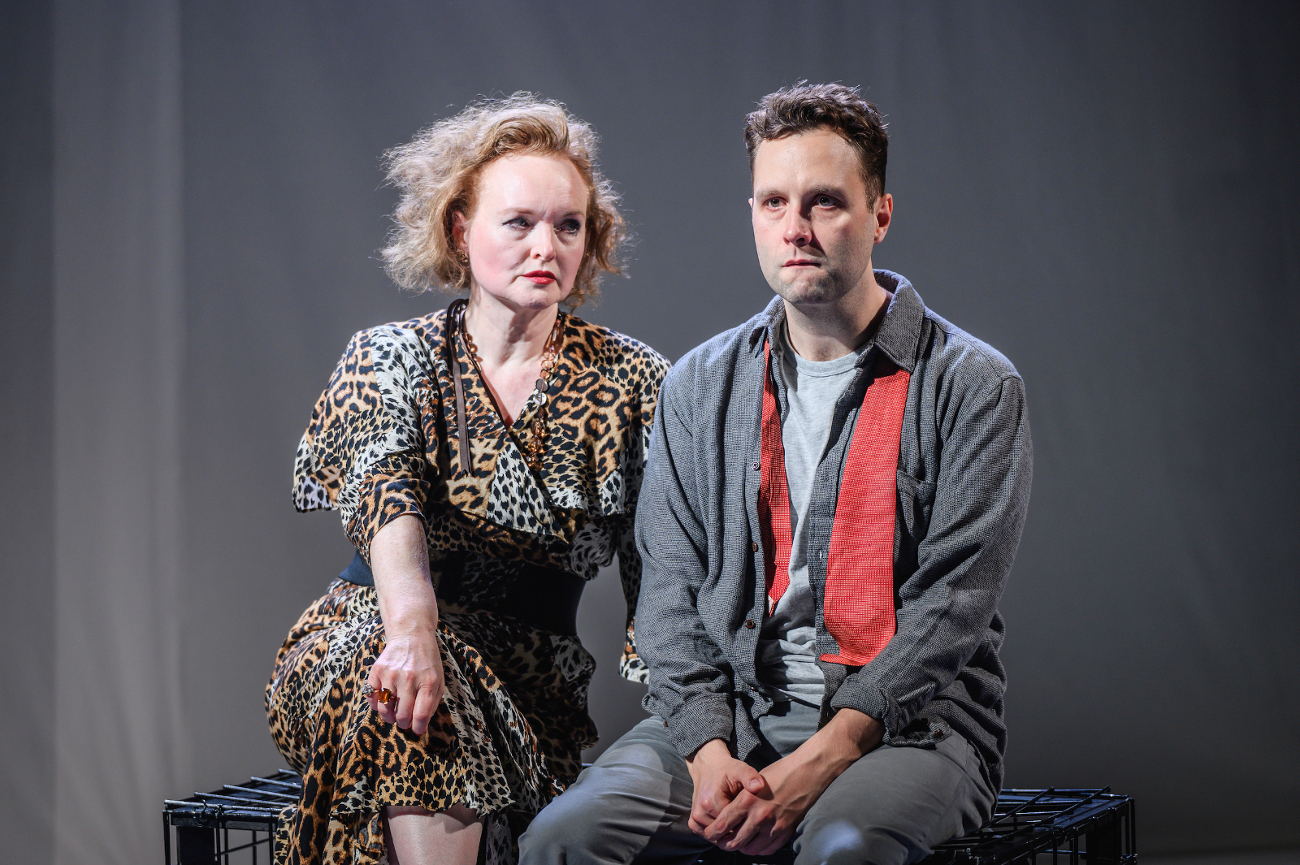 The dominant character in the play, in Maitland’s psyche over the years in question (and, some might suspect, in the years afterwards too) is his mother, Bru, a woman who invents backstories, names, personalities and whatever else is handy to suit circumstances as they arise. A charismatic, flirty (I’m being euphemistic here, not an adjective she ever bothered with) narcissistic force of nature who loved her son more than anything else in the world – except herself. She was an outrageous, entitled, hardworking, duplicitous, mendacious, machiavellian woman who could perform the role of a mother, but not feel it. Jonathan, sent away to boarding school at three, cruel even by the standards of the aspirant English lower middle class, felt that rejection sharply – and obviously still does, because those boys always do.
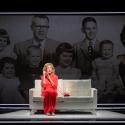
Catching Bru’s lightning in a bottle is quite the task for an actress and Emma Davies (pictured above with Peter Clements) gets about as close as one could to so singular a personality. She struts about, bats eyelashes at simple-minded blokes too dazzled to see her manipulation of their personalities, makes bad choices in men (both husbands are washouts) and never meets an emotional lever she won’t press down on to open a hole in another’s resolve. Davies is excellent in being both egregious and attractive not just consecutively, but concurrently. She was fantastic company, a firecracker in humdrum North Cheam, where she opened a gay hotel, because, well, why wouldn’t she? Jeez, it must be nice to walk away from time to time though, not that such a luxury was afforded to her son.
Peter Clements, John Wark and Stephen Ventura (with Brodie Edwards and Howard Webb sharing the young Maitland role) play all the other parts, most easily recognisable types, from the officious council inspector seen off with an envelope of cash, to the bobbies hypnotised by Bru’s showmanship when called out to quieten her disco (in Cheam, I remind you) to the teacher waiting for a handshake and expression of gratitude after administering corporal punishment. There’s a dodgy lawyer too, as there usually is.
It’s all done very well and director, Oliver Dawe, keeps the show rollicking along through its 90 minutes, but there’s still something missing. Like Meursault in Camus’ The Outsider, the son is strangely indifferent to the death of the mother (no judginess from me on that, since I was too) which is indicative of an ambivalence, a partial vacuum at the centre of the play. Lacking a cathartic moment – that boarding school culture runs deep - this mother-son relationship feels stuck, never to be fixed. There are disagreements between them, but no proper arguments; reconciliations, but no lessons learned; love expressed, but a unbreachable distance maintained.
Or, maybe, we’re so conditioned to a Sinead O’Connorish tear as an absolute minimum in the evolution of such dysfunctional relationships that "muddling through", via a few half-hearted tears into the pillow sure, just isn’t enough. But, usually, it is, or was. So maybe that’s the moral of the story after all.