

Very occasionally the playing of a play leaves a deeper impression than does the play itself. This is the case with Good Canary, a lippy, sweary tragicomedy by Zach Helm about secrets and addiction on the New York publishing scene. It has already played in translation in Mexico and in France, where it won Molière awards for direction and design. Its director, the prolific screen and stage actor John Malkovich, now brings it to London for the first time – and obligingly lends his famously dark-chocolate tones to the reminder to turn off mobile phones.
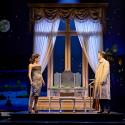
This is also one of those plays with a plot twist – at precisely its mid-point – so devastating that you find yourself replaying all the earlier scenes in your head for clues. For the first half, though, you do not doubt what you see. Jack (Harry Lloyd), a gentle soul, has just put out his debut novel and is lapping up the critical praise and overnight celebrity while Annie (Freya Mavor, pictured below) is his stay-at-home guard dog, attacking the solecisms of sloppy reviewers and keeping his bed warm. She is bulimic and hooked on amphetamines but hey, that’s only because she wants to remain slim and sexy for her loving husband.
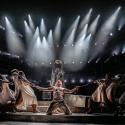
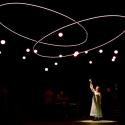
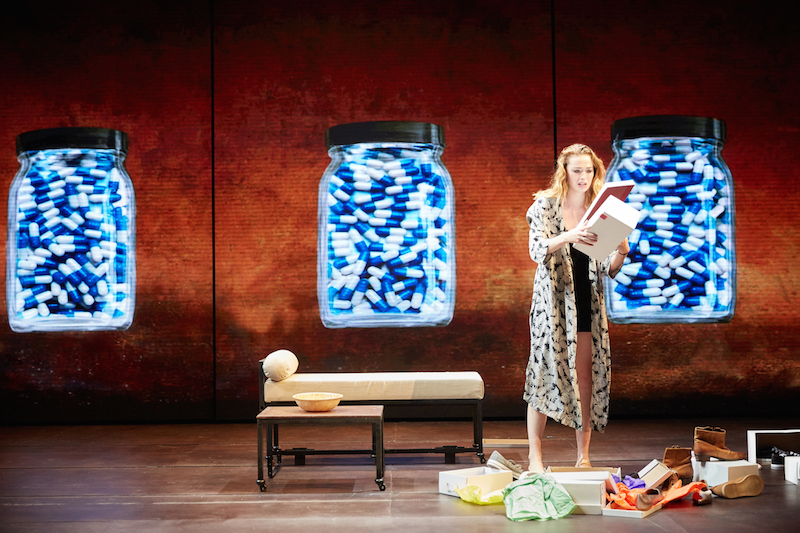 The production’s strongest selling point is the way it turns an essentially very talky script into a dynamic stage experience, even hyperactive at times, the audience living Annie’s world at her chemically-fuelled tempo. When Annie manically cleans the apartment windows, they shrink and expand with Alice in Wonderland perversity. Elsewhere, Pierre-François Limbosch’s hugely colourful design gives us a dazzling 3D sense of being on New York’s streets – even the brown of the brownstones is intense.
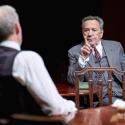
Another joy is the superb level of acting from every member of the cast. Ilan Goodman’s fuzzily affable drug dealer delivers some of the play’s best lines. He “cannot determine the price of not selling someone drugs. It requires a level of math [he] never acquired”. Michael Simkins is marvellous as the Trump-like über-publisher, caught out at his own party for not having read the book he is about to invest millions in. And Sally Rogers (so memorable as the hardnosed Northern pub landlady in last year’s hit play Hangmen) is a scream as the tycoon’s nipped and tucked wife.
The playwright’s conflation of addiction and creative genius is ultimately far too easy
It’s impossible to discuss the plot for fear of introducing spoilers. Suffice to say that many scenes have the ring of personal experience: the playwright clearly enjoys his skewering of the self-regarding literary critic from the New York Times (played by Simon Wilson) in an excruciating scene at the publisher’s party. More subtly, he also observes the excluding mateyness of men’s behaviour at such events: how they laugh like drains at each other’s anecdotes, sidelining womenfolk who might have serious things to say. Zach Helm clearly also has had friends whose drug dependency and personality disorder stemmed from negative childhood experiences like Annie’s. Yet not all of these points are fully integrated into the text of the play.
When Annie blurts out that she was raped at nine years old, it’s as if no one heard her, and it’s not referred to again. Similarly, when Jack buys Annie a caged canary (to give her something to tend and care for – pets are often used in the treatment of anorexia – Helm has done his research), the thing barely gets another mention, even though it features in the title of the play. It is also meant to remind us of the use of canaries as early-warning systems in the First World War. But the bird’s relevance to Jack and Annie’s story is far from clear, and the playwright’s conflation of addiction and creative genius is ultimately far too easy.
As with all imperfect plays that are delivered with consummate flair and skill, this one lives vibrantly in the playhouse but stands up less well when you think about it later. See it for the performances – Freya Mavor is a standout – and the immaculate detail of Malkovich’s direction.





Add comment