

Just before the curtain came up for the second half of Fatal Attraction, a chap sitting behind me told his companion, “All I remember is that it ends quite badly.” It may seem like a cheap shot, from me, but the comment was apposite in so many ways, not least because the reason for this misbegotten production’s very existence is a writer’s desire to change his ending.
James Dearden’s biggest claim to fame is as the screenwriter of the 1987 big screen potboiler – and, of course, bunny boiler – about a man made to suffer for his adultery, when his one-night stand turns out to be a psychotic stalker. Starring Michael Douglas, in that time of his career when he had a true showman’s nose for controversy, and Glenn Close, the film was a box office smash and cause célèbre, infuriating feminists for its demonisation of the woman, not the cheat.
Dearden has said that test screenings – certainly one of the more unfortunate aspects of studio filmmaking – pushed his original script towards the infamous ending in which a knife-wielding Alex Forrest is shot dead in the bath by Dan Gallagher’s wife Beth; this adaptation, his first writing for the theatre, is an attempt to redress the balance, to right the wrong done Alex, a lonely, single woman in New York, who only ever wanted a little respect.
 But he and director Trevor Nunn ought to have let sleeping dogs lie. Despite the West End’s increasing penchant for Hollywood subjects, this story, however you cut it, just feels too trashy for the stage. And while the filmmaker Adrian Lyne transcended what used to be called “straight-to-video” fodder to create a polished, if dubious mainstream thriller, in place of his well-oiled Hollywood manipulations we get theatrical amateurishness.
This is signalled from the off, when New York lawyer Dan (Mark Bazeley) addresses the audience in what will become a constant, self-pitying, self-justifying and portentous narration, bemoaning the “bad turn after bad turn, until you end up in hell,” and alerting us to the “accident waiting to happen” – carelessly alluding to the play as well as the fling that will change his life.
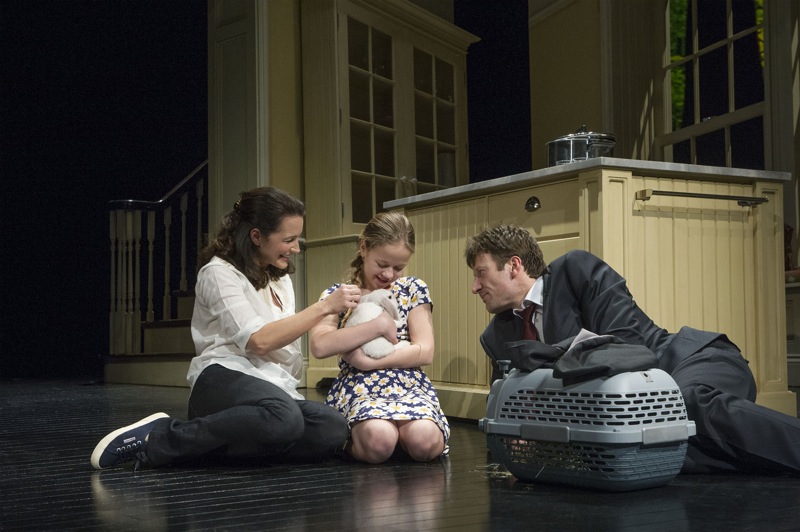
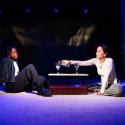
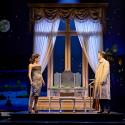
Dan is home alone in New York, his wife (Sex And the City’s Kristin Davis, pictured above with Bazeley) and young daughter having gone to the country for the weekend. He joins a pal in a bar, and is again left alone. Happily, so is Alex (Natascha McElhone) an attractive, confident, and exceedingly interested single woman. They chat, bond over coincidental connections, have dinner, she asks if he is discreet.
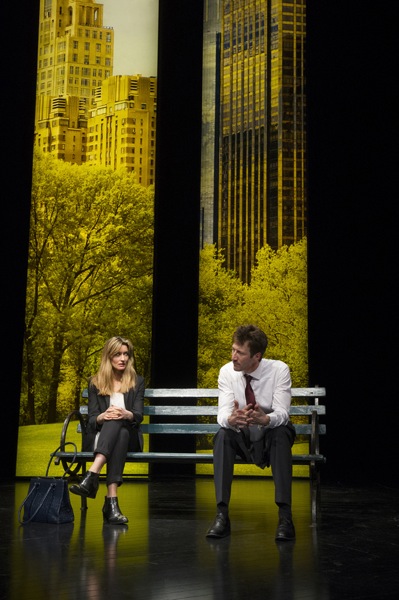
This mutual seduction scene is the best moment of the play. Both Bazeley and McElhone are very tall – he lanky and lizard-like, she lithe, her inability to find anywhere for her extraordinary legs somehow redolent of lust, the attraction not yet “fatal” but enjoyably flirtatious, the conversation tip-toeing nicely around the inevitable, until the temperature rises and the set discreetly obscures their passionate clinch.
The next morning he’s back in his own apartment, lying to his wife on the phone and indulging in the routine, half-hearted guilt trip of a man who already thinks he’s got away with it. But then the phone rings (half of the production is spent in phone conversations) and we see a stern-faced Alex rebuking him for not saying goodbye. Disingenuously telling himself it would not be gentlemanly to deny her, Dan pays another visit and this time gets more than he bargained for.
 Just as in the film, Alex goes off the rails with alarming speed; Dearden remains unaware of the virtues of the slow burn, and anyone expecting a subtler and more sympathetic portrayal of the spurned lover would be disappointed. There are suggestions of vulnerability, of loneliness and mental ill health, but these are constantly subsumed by the plot, by her harping mad behaviour (animal cruelty, child abduction, knife attacks; it could never be argued that she isn’t extreme) and by Dan’s hogging of centre stage.
In fact, until the denouement, this seems pretty faithful to the original, even down to the slightly look-alike casting (though McElhone sadly doesn’t have Close’s Eighties perm). The producers want to have their cake and eat it, to give audiences the familiar – the appearance of the family pet and the pot on the stove met with gushes of enthusiasm – while formulating, in their minds at least, something new.
But if the morality of the piece was derisory before, now it’s simply muddled; the new, operatic ending, signalling something different for each of the principal characters, is laughable, making one pine for a gun and a hot bath.
It’s strange that while wanting to be more sympathetic towards Alex, it was to Dan that Dearden gave the narrative voice; why not adulterer, lover and wife? Though he shouldn't have to, Bazeley carries the play well enough, conveying – as did Douglas – the turmoil of a weak, though not necessarily bad man. The actresses fare less well with under-developed roles, particularly Davis, who lacks Anne Archer's steeliness and resorts too often to the sort of airy delivery more suited to sitcoms.
While Dearden's dialogue is often risible, the directorial hand is a heavy one, from the laboured (and ultimately woeful) allusions to Madame Butterfly, to the over-obvious Apple placements (learning a trick from the film world?) and over-use of multi-purpose extras.
Nunn is becoming either lazy or fixated. He recently directed Bazeley in Scenes from a Marriage, based on Ingmar Bergman’s stunning TV series, chronicling the slow, heartbreakingly nuanced unravelling of a marriage. That production wasn’t perfect, but with the material at its disposal it was far superior to this scandalously awful night.
- Fatal Attraction at Theatre Royal Haymarket until 21 June


Add comment