Site-specific theatre is hard – where to put the audience, can they stand for nearly two hours, how do we enable them to see/hear, most importantly, what is the purpose of the site and how is it to be used? Verbatim theatre, too, is hard – how to shape a narrative, how to develop characters. Put the two genres together, and what have you got? A well-intentioned, rather unfocused mess, to be honest.
On paper, the idea is great: three journalists interviewed 43 of their colleagues about their own experiences, their views on the industry and the state of journalism. Then the company (the National Theatre of Scotland, renowned in Black Watch for taking similarly diffuse material, in that case the narratives of soldiers serving in Iraq), under the direction of Vicky Featherstone and John Tiffany, with critic and novelist Andrew O’Hagan as "co-editor", worked to shape those narratives into a coherent whole.
Individual narratives are not nuanced enough for us to care
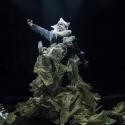
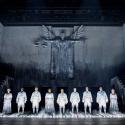
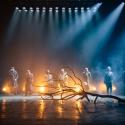
A token gesture towards structure is made by starting the play with, ostensibly, a morning conference, then theoretically following journalists through their working day until finally they switch off their electronic gear as they bed down for the night, in a delightful design jeu d’esprit, in nests of shredded paper. (The excellent design-work is shared between Lisa Bertellotti and Chloe Lamford). But this is window-dressing; in reality the talk is not of daily work, but of Leveson, and their reactions to it; their careers, Leveson; old-style journalistic training vs new-style social media; Leveson; the Royal Family’s right to privacy; Leveson; how journalism has sold out to corporate culture and the cult of celebrity. Then back to Leveson.
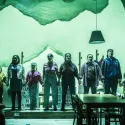
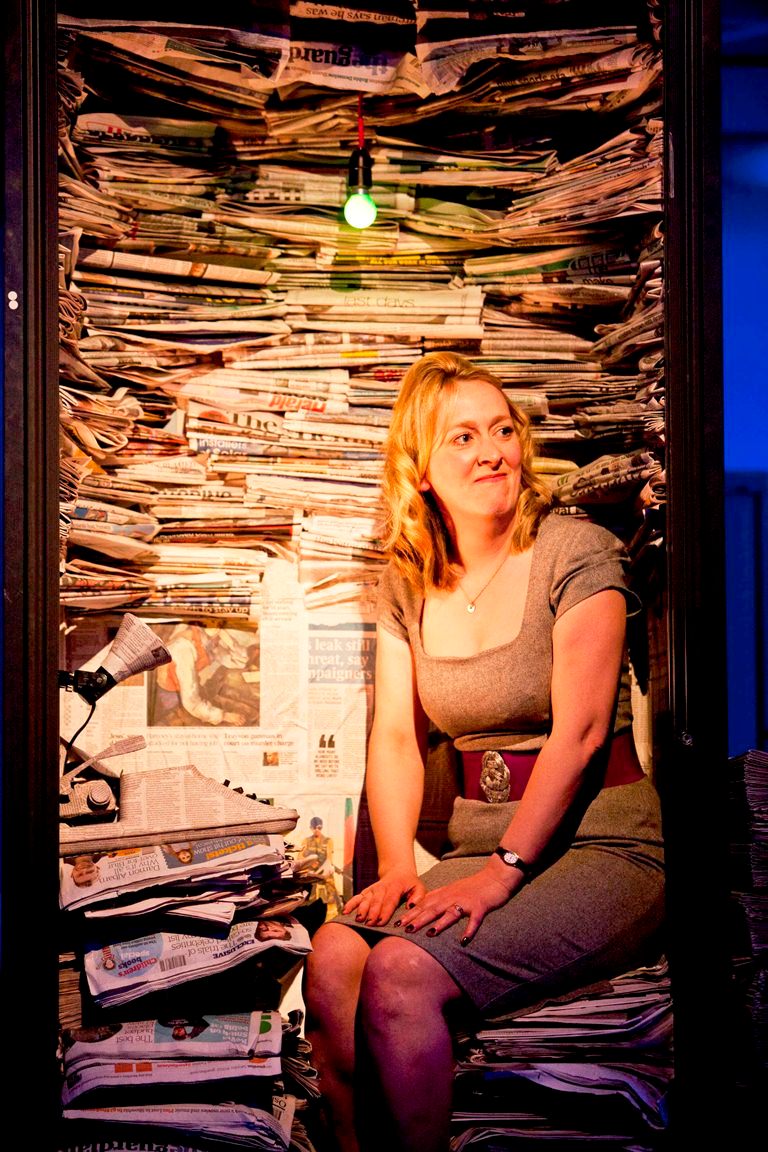 For we are not being permitted to listen to an analysis of events, or even an explanation of them. All the interviews give is what it feels like to be inside this world. And feeling is not enough. This idea might have worked in a conventional setting, when pace and shape could have been imposed by structure. Or, if a more conventional script had been created, then the unstructured shape of the evening, sprawling across a series of empty offices, might have given texture. The two combined, however, just gives us a lot of unfocussed whining.
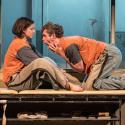
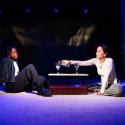
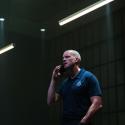
A couple of the journalists’ stories allow us, all too briefly, to connect with the speakers as real people. Deborah Orr (Gabriel Quigley, pictured above right) is touchingly at the end of her rope as she tells of a dream in which she kicked a recalcitrant interviewee to death (she dumps the body in Alan Rusbridger’s office: “No one will know!” she says with cheerful panic); Ros Wynne-Jones (the excellent Maureen Beattie), of the Mirror, is heartbreaking as she pretends not to be devastated as her story of a massacre of women and children in East Timor is dumped in favour of 30 pages on Edward and Sophie’s wedding.
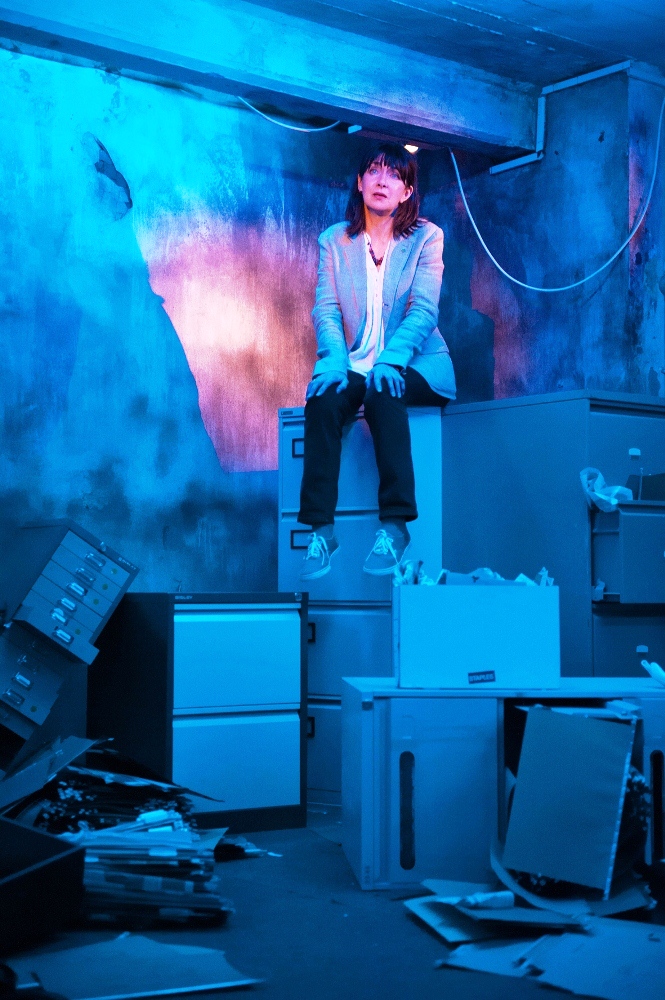 But for the most part, the voices blur and the individual narratives are not nuanced enough for us to really care, either. At one point an old-school journalist protests that new-media colleagues “think we’re just egotistical dinosaurs”. If the cap fits, thinks the audience. Although the interviewees, theoretically, have made words their business, Enquirer is filled with sentences that go thud (“It’s like bolting the stable door after the horse has died”) or outright banality (“We’ve opened Pandora’s box. We’ve completely lost our way. How did we lose our moral compass?”)
Andrew O’Hagan quotes Ernst Lubitsch (or, as he has it, “Ernest”), who claimed it was the job of the artist “to suggest 2 + 2. Let the audience say ‘four’.” Despite that, this rather plodding, repetitive evening assumes we are not quite clever enough to do the sum.