Don Quixote and his paunchy sidekick long ago escaped the pages of Miguel de Cervantes' novel. The image of the sad-faced knight on his bony nag Rocinante with his companion Sancho Panza atop his donkey are familiar in film, opera, paintings and everything from kitchen tiles to cartoons and furnishing fabric. The knight himself foretold their afterlife, predicting that his exploits would be memorialised in paintings and sculpture. These two - who never existed - may be the most recognisable Spaniards of all time.
Cervantes' best-known work, credited as a fountainhead of Western fiction, is lauded as an inspiration for works by writers from Dickens to Paul Auster, Dostoevsky to Rushdie. Actors impersonating the angular knight have included Peter O'Toole (in the musical Man of La Mancha in 1972), Paul Scofield (at the National Theatre in 1982) and Jonathan Pryce in Terry Gilliam's film The Man Who Killed Don Quixote.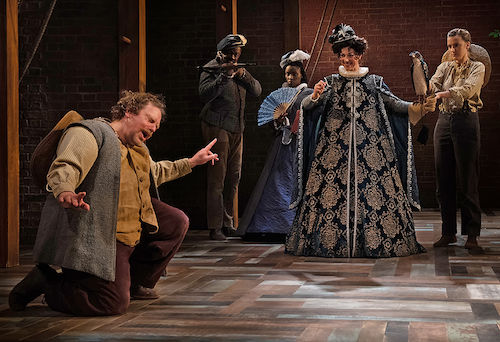
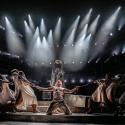
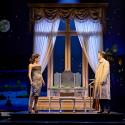
A particular hallmark of the novel is its knowing self-reference, especially in Part Two, written in 1615, 10 years after Part One, which had been an immediate runaway success. The fantasist who attempts to revive medieval chivalry wearing a barber's basin for a helmet, who tilts at windmills believing them giants and imagines sheep to be marauding armies, enters his own fiction in Part Two. This is a gift to the RSC's cast and to adaptor James Fenton: they eagerly embrace opportunities for metatheatre, involving members of the audience, in and out of the story, as enthusiastically as actors at the Globe. (It's worth remembering that Cervantes and Shakespeare were writing at the same time and died within ten days of each other in 1616.) And this in turn helps to showcase the main theme of the story, the contrast, the interaction between reality and illusion, the mundane and the fantastic. There was an absolute gift on press night when a pyrotechnic effect set off the fire alarm. For a moment it was unclear if this was a double bluff - just where did the joke begin and end?- but Rufus Hound, (pictured above, meeting a seemingly friendly Duchess and her falcon) who brings something of his cheeky character in One Man, Two Guvnors to Sancho Panza, handled the moment with amused aplomb.
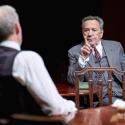
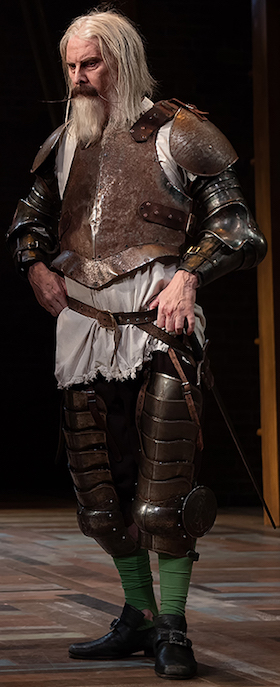 David Threlfall (pictured right) returned to the RSC to play Quixote in 2016 for the first time since his unforgettable Smike in Nicholas Nickleby more than 35 years before. Lanky, sadly dignified in his clanking armour and complete with straggly hair, twirled moustaches and a pointed beard, he looks born for the part. He makes a perfect contrast with the ebullient Hound, the one madly imaginative, relishing high-flown language, the other earthily practical.
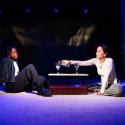
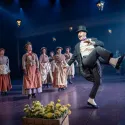
There are times when the humour in Angus Jackson's production (with Cal McCrystal as comedy director) is rather too broad, even childish: bread being hurled at the audience during the fight at the inn, for instance, or everyone encouraged by Hound to shout loudly at the word "Antwerp" for no particular reason. But, part musical theatre (with songs by Fenson and Grant Olding and the backing of a live band), part stand-up, part farce, part serious retelling of a classic, it is a mixture that ultimately wins over with its sheer joie de vivre. Occasional delicate moments are especially poignant - notably Eleanor Wyld's emotionally true singing as the beautiful Marcela who doesn't see why women prized for their looks should necessarily respond to the men who pursue them, and later as the pregnant peasant girl abandoned by a feckless lover. And Hound's unequivocal affection for the dying Quixote, who has at last learned the truth about himself, brings a note of truly touching melancholy.
Robert Innes Hopkins' design replicates as far as possible the plain brick of the Swan Theatre. Quixote's horse and Panza's ass are very distant comic cousins to War Horse's Joey, designed and overseen by the same expert puppeteer, Toby Olié, but with the opportunity for some often very funny mugging by their manipulators.
In short, the RSC has a winning West End Christmas show for all the family.