

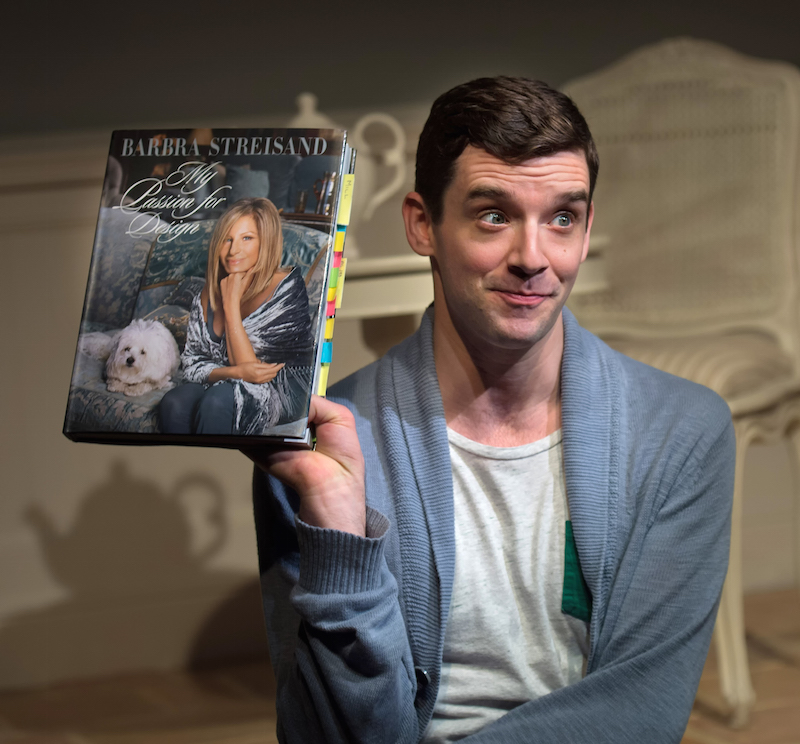
This is, stresses our guide, a work of pure (read: non-libellous) fiction, except that its “preposterous” premise is rooted in even more preposterous truth. In 2010, diva extraordinaire Barbra Streisand produced wildly narcissistic coffee-table book My Passion for Design chronicling the creation of her gaudy Malibu dream estate, which – gloriously – includes a basement storing her extravagant collections in fully-fledged “shoppes”. What, pondered writer Jonathan Tolins, would it be like if someone had to work in this absurd consumerist utopia?
The result is a screamingly funny one-man play, with magnetic Michael Urie (pictured below) taking on multiple roles, including Alex, the out-of-work gay actor swapping one totalitarian fantasia for another when he trades Disneyland for pretend storekeeping; Alex’s frustrated screenwriter boyfriend, Barry; long-suffering PA Sharon; and, of course, Ms Streisand herself. Urie wisely avoids outright mimicry, instead skilfully evoking the various characters through well-deployed tics. His Barbra is an entitled, insecure, image-conscious marvel, constantly pouting over an arched shoulder or smoothing a strand of expensively coiffed hair with an impractical lacquered nail.
 An intimate but unequal friendship develops between the control-freak icon and her young employee, the latter gaining grudging respect after creating an elaborate backstory for and standing firm on the price of an antique doll during their wacky improv. Soon, increasingly worshipful Alex is indulging the lonely luminary’s fondness for frozen yogurt, playing nostalgic dress-up, and even graduating to acting (and life) coach. Tolins’ taut, 100-minute narrative fully embraces the satirical possibilities of this Marie Antoinette-cum-Willy Wonka by way of Norma Desmond role play, but also hints at the psychological implications: the poor little Brooklyn girl desperate to fill the perpetual void, or, as bitchy Barry would have it, wilfully clinging to her “Dickensian victimhood” legend despite subsequent success and celebrity.
More potently, it’s a searing indictment of fantasy-driven “aspirational” culture, which encourages worshipping, censuring and living vicariously through the rich and famous rather than contending with reality. The rousing message of people needing people more than things isn’t exactly revelatory, but delivered with conviction in a show that supplies warmth as well as wit. Credit to Urie, who adds heft by demanding a measure of investment in Alex’s emotional life, not just engaging with deliciously conspiratorial confessions and coolly camp, pop-culture-savvy wisecracks. That being said, the snarky deconstruction of The Mirror Has Two Faces alone is worth the price of admission.
Stephen Brackett’s expertly paced production develops a compelling rhythm that partially conceals weaker moments – like a late, straining push for pathos, when revue trappings clash with attempted existential drama – and Andrew Boyce’s all-white set offers an effective backdrop for the quick-change action, supported by judicious projections and lighting cues. There’s some smart meta layering with an acknowledgement of theatre as another means of creating a perfect, escapist world, but such postmodern cynicism is shortlived. This is an unashamedly riotous romp, and no one’s gonna rain on its parade.






Add comment