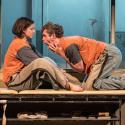
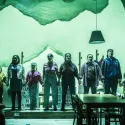
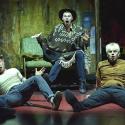
In retrospect, all the clues were there. A star actor embarking on a new performance genre; a fresh reappraisal of one of Scotland’s cultural icons; a hi-tech production of sumptuous video and prop trickery; a dance score from a major name in new Scottish music. In short, a solo dance show from Alan Cumming about Robert Burns. What could possibly go wrong?
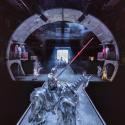
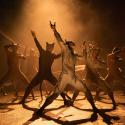
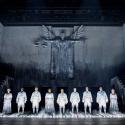
It would be easy to say: everything. But although Burn has some serious issues, its constituent parts are (largely) pretty persuasive, and often very impressive. Cumming (who co-creates, alongside choreographer Steven Hoggett) is his usual charismatic, captivating self delivering Burns’s lines from poems, letters and other writings, eminently watchable throughout the show’s hour-long duration, but also presents a new, earthy physicality in his lank hair and his figure-hugging vest. Ana Inés Jabares-Pita’s set is breathtaking, with ravishing, high-definition video imagery from Andrzej Goulding as a restless backdrop, and scratchy quills working magically on their own. Even Anna Meredith’s music, though sometimes pounding away a bit too much like a 2000s club night, is expressive and surprising, drawing together disparate musical elements into a convincing whole.
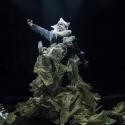
Where Burn struggles to convince, though, is in its overall conception. Why do we need a dance show about Scotland’s Bard, and what does Cumming articulating almost every single word in a recited Burns letter through movement contribute to our understanding? Not much, I’d venture. Nor does what’s possibly the show’s low point, a semi-rap version of Burns’s "Scots Wha Hay" above one of Meredith’s merciless beats.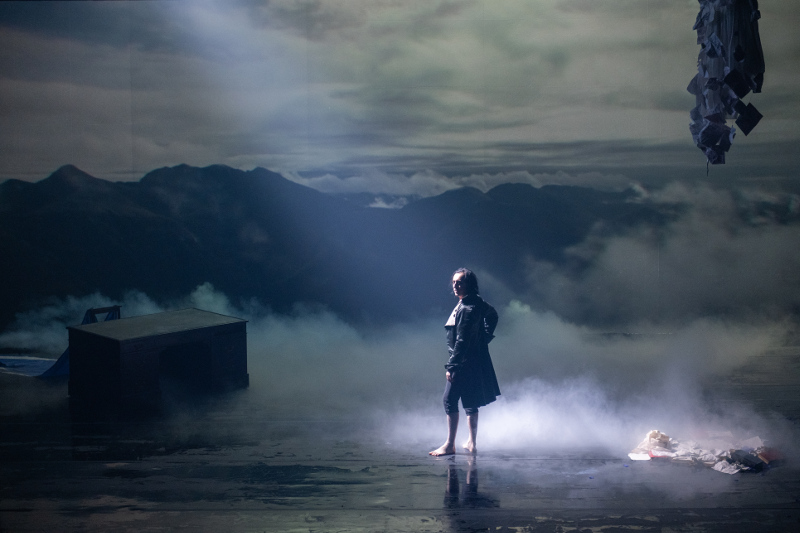 Likewise the show’s rather flat birth-to-death biography, in which figures who are crucial to Burns’s life make their mark one minute but are forgotten the next, and events pass without much impact. We learn little that’s new, nor see threads and themes woven together in a fresh or revealing way. Instead, this is a swaggering, heroic celebration that casts its writer as an early Romantic hero – almost literally as Caspar David Friedrich’s iconic Wanderer above a Sea of Fog at one point – without asking too many questions (though admittedly it briefly raises Burns’s questionable attitudes towards women).
"And still my motto is: I dare" remains the Burns maxim that Cumming returns to time and again throughout the show, and you can see the parallels with the audaciousness of his own conception. It’s a bold, risky project, unquestionably. The results, though, are sometimes baffling, occasionally patience-trying.