

1536, Ava Pickett’s debut play, is a tribute to women who won’t shut up, especially ones living precarious lives in Tudor England in the year of the title. But this is not really a period piece.
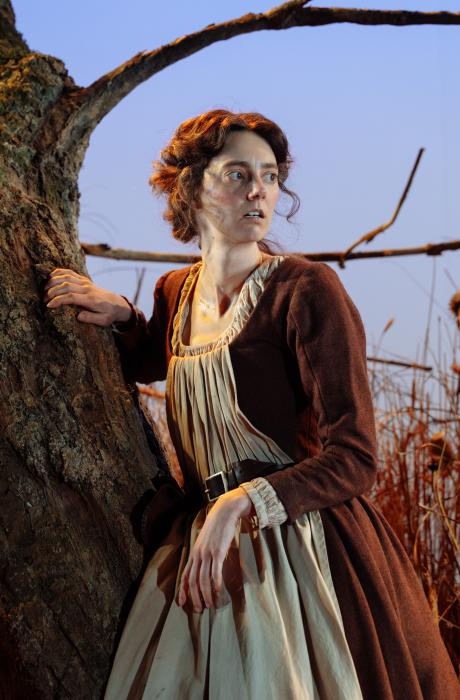
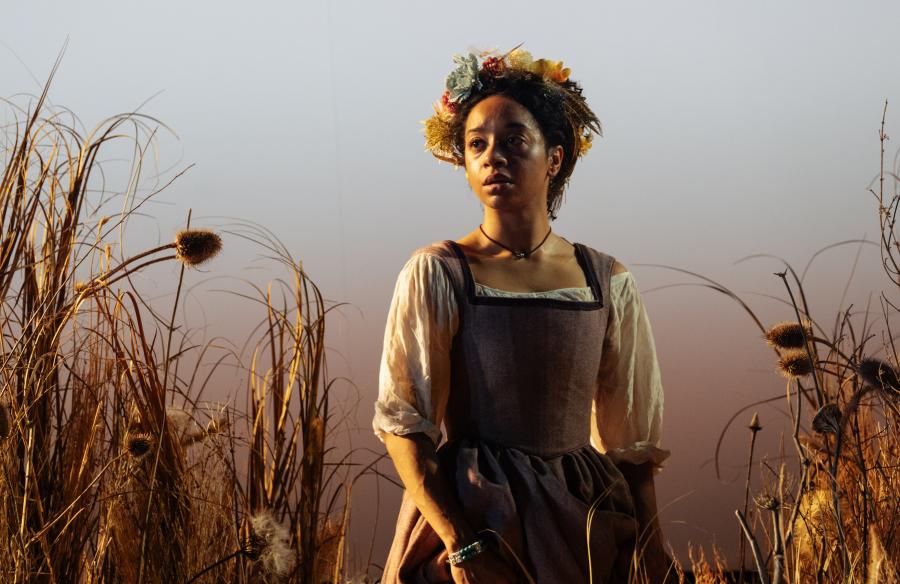
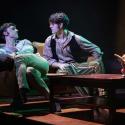
Pickett’s clever conceit is to give her three female protagonists the swagger and F-words of modern-day young women living a few miles from Colchester. When they get over-excited it’s like listening to a multi-tracked Catherine Tate not being “bovvered”. Their vocabulary isn’t remotely archaic, neither are their concerns and some of their ideas, especially those pronounced loudly by Anna (Siena Kelly, pictured bottom), whom we first meet having a knee-trembler up against a tree with her regular squeeze, Richard (Oliver Johnstone).
These are country girls, two days behind London’s news and living in a hierarchical society where families deploy marriage to suitable candidates as a weapon. This is why dopey Jane (a treasurable comic turn from Liv Hill) is being married off to a man from a “good family”. Mariella the midwife (Tanya Reynolds, pictured below right), the wisest of the trio, has already lost the man she loves to one such arranged marriage and now speculates with a weary wistfulness about what a world without men would be like, sans marriage, contracts, food-preparing, sex and the like. Anna, predictably, announces she personally would be bored.
Anna enjoys the chase, the feeling of power when a man wants her body. It’s possibly the only agency she has. We don’t know how many conquests she has made as she is clearly a bit of a bragger, but it becomes clear that Richard is her main man. He’s about to be married, though, and she draws the line at married men.
Anna’s situation plays out against the larger picture of Anne Boleyn’s arrest and imprisonment for seducing some 20 men, which counts as treason. For most of the play she seems to be a proxy for Anne, whose reputation as a sex-mad schemer has by now been broadcast nationwide and has earned her the nickname “the Great Whore”. Of the three Essex women, only Jane takes this gossip at face value. But all three initially find it impossible to accept that a man would imprison his own wife, and the Queen of England at that. When Anne is beheaded, it shakes their sense of the world to the core, even though they know Henry is the king, and “it’s the law".
As the play progresses and the mood darkens, this 16th century rural backwater’s parallels with modern life become increasingly marked. Gossip is the locals’ social media; the unjust besmirching of Anne Boleyn’s character a form of trolling; her execution the ultimate “cancelling”. The men in the piece gradually assert their right to subjugate women and designate them as “whores”, one of only two categories they own to, the other being “wives”. Down the road in Colchester, two women have been burned publicly by their husbands for “adultery”. And as Mariella and Anne watch, horrified, a woman is assaulted by a local man, to whom she is swiftly married to avoid a scandal: “I suppose it’s not rape if she’s your wife,” Mariella muses. So yes, Henry Tudor, the man who first turned the world upside down in these women’s eyes by divorcing his wife and marrying Anne Boleyn, can now imprison and kill her with impunity, if he likes. It’s all of a piece.
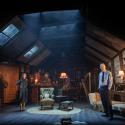
Directed by Lindsey Turner, the production is exceptionally handsome and the staging exemplary. All the action takes place on the edge of a field of corn, with a withered tree to one side (design by Max Jones), where shifts in mood are emphasised through impeccable lighting (by Jack Knowles) that moves from a warm sunny orange and a dismal grey at night to an intense, lurid scarlet when danger looms. The sound design (by Tingying Dong), too, underpins the action with distant drunken men cheering and dogs barking. All the design elements come together spectacularly in the final stretch, when the simmering anger of the area is made concrete (no specifics: it should stay a surprise).
This mix of extreme light and shade is expertly pitched by the three women, all of whom have fine comedy chops. They deliver to perfection a droll running gag about the “hand-dance” Jane and her father have been perfecting as what passes for an entertainment at her wedding, as well as a very funny dance rehearsal and a daft conversation that’s somehow hothoused from the phrase “turning a new leaf”. But the humour is edged out by encroaching sadness and a sense of hopelessness. Reynolds, already exceptional in period pieces where an intelligent woman with a sharp tongue is required, shows she can play more of an underdog, an unhappy woman in extremis. And Kelly conveys the full pathos of Anna’s situation, a sassy, strong-willed woman before her time. “Has it always been like this?” Anna and Mariella wonder as the male-dominated world starts to close in on them.
Almost 700 years later, the freedoms they yearn for are once again under threat in some parts from self-styled “kings”. The degree to which women are angry about this spilled over into the auditorium the night I went, where, as Anna fought back against her male tormentor, women in the audience spontaneously clapped and cheered.
- 1536 is at the Ambassadors Theatre until 1 August
- More theatre reviews on theartsdesk



Add comment