A libertine who deserves punishment makes a good/bad start when a male director decides he really has tried to rape Donna Anna, and doesn't just enjoy post-coital badinage with her.
Tom Creed thankfully begs to differ from, say, Kasper Holten – hard to believe that Don Giovanni is due for revival in the coming Royal Opera season – or Ole Anders Tandberg at the Royal Swedish Opera (toilets à la Bieito, whose ENO Giovanni was a horrible mess - there's only one, and only briefly, on the Lismore stage). The era of "she wanted it really" is over, and Creed's good folk are vocally the strongest. Quality in Mozart is already assured with the Irish Baroque Orchestra under the vivacious Peter Whelan, liberated from their stableroom confinement this year, sounding free and easy.
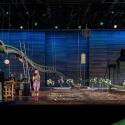
Certainly it's all done on a lowish budget in a yard of Ireland's Lismore Castle, poetically sited above the river Blackwater, and blessed with one of the finest gardens anywhere. There are no onstage orchestras, which is a pity, though the IBO makes sharp-edged amends from below and in front of the stage, and only one set, a hotel corridor with a lift, three bedrooms, a storage cupboard, a fire exit and two chairs – set and lighting designer Aiedin Cosgrove does her best. The biggest error comes at the start: hotel business is the last thing we need to see against the dramatic music of the stone guest's appearance. Otherwise, more rehearsal time, Glyndebourne or Garsington style, would allow the singers to inhabit their roles fully, though four are as good as can be under the circumstances.
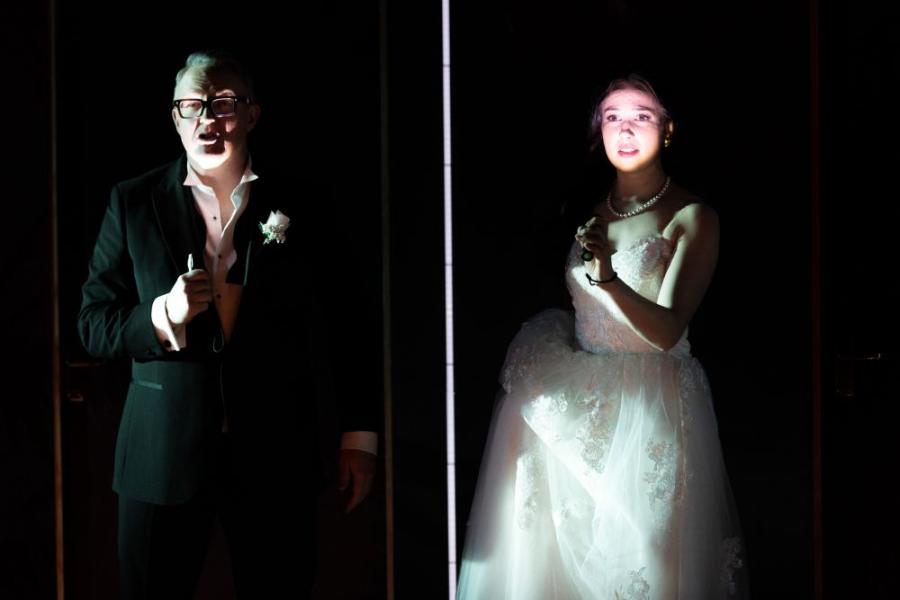
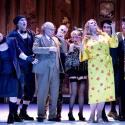
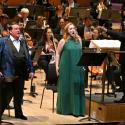
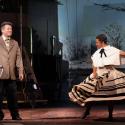
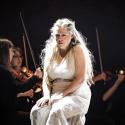
Amy Ní Fhearraigh shone as Rosemary Kennedy in Irish National Opera's Least Like the Other and as Herodias in the Irish premiere of Gerald Barry's Salome. Donna Anna poses challenges of a whole different order, and she negotiates them all with vocal integrity and dramatic vividness. "Or sai che l'onore", rangewise the most difficult of her arias, gleams with vengeful thrust, while "Non mi dir" gained in intensity as this Anna realises her Ottavio won't listen to her pleas for time to mourn and becomes ever more frustrated. Gavan Ring's "Il mio tesoro", perfect phrasewise (no easy feat), is also shot through with anger; the lives of these two (pictured above) have been changed for ever, and who's to say they didn't genuinely love each other in the first place?
The anything-but-comic bookending of this dramma giocoso was immensely enriched, too, by Valerian Ruminski's Commendatore. Whelan's forces sent the requisite shivers in middle range as he fell dying from a blow to the head, and reinforced the horror of his invitation to hell; Don Giovanni leaves, neatly, through the fire exit. Therein, though, lay the weakest link, as so often in this trickiest-to-bring-off of Mozart's masterpieces. Jolyon Loy is tall and handsome, but a black hole in terms of charisma. Maybe the baritone, without bass heft or upper cut, is too softly lyric for the role; though once again the orchestra bristled through "Fin ch'han dal vino", the rake did not, though the Serenade gave Loy the space he needed.
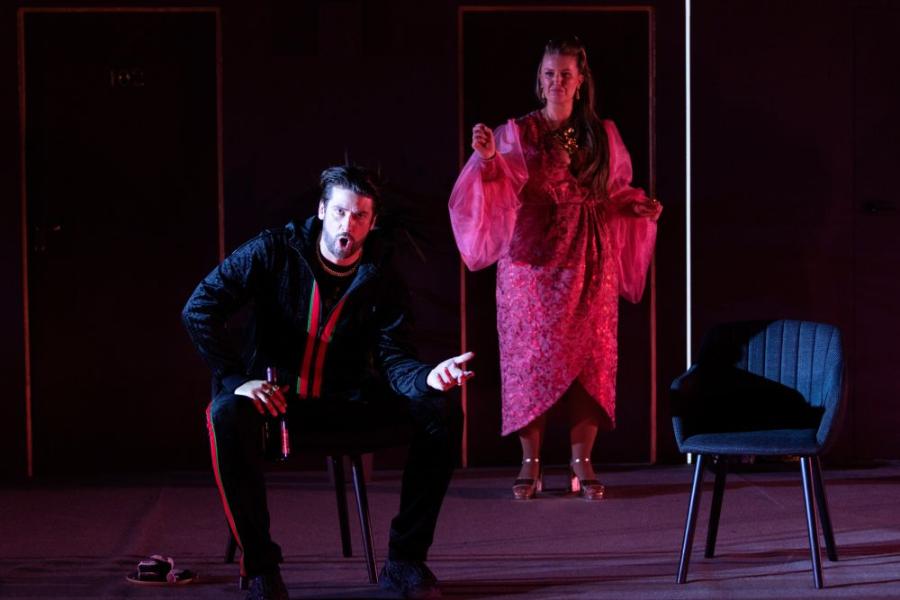
His Leporello, Andrew Murphy, does well with the sharp recitative but sounded a bit sung out on the first night; the Catalogue Aria only really worked for the orchestra, its deft opening neatly matched by the soaring and swooping of barn swallows. The change of costume with his master is played for laughs, and that works, though the stretch up to the Act Two Sextet proves problematic, as usual. Donna Elvira is the personable Carolyn Holt, vocally rather uneven – though of course, this being the original version, she doesn't get her "Mi tradì", nor – more to be regretted, does Ring have "Dalla sua pace".
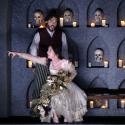
Pitch-perfect as sweet, wayward Zerlina, Aimee Kearney (pictured below) is well matched to her Masetto (Dominic Veilleux) as the hotel staff cross-dress and wig up for their wedding. There's too much aimless jigging at Don Giovanni's party, horribly reminiscent of the Bieito Act One finale; less would be more here, and social distinctions are limited to hotel guests and the workers. Giovanni is a bit of a nowhere man in all this.
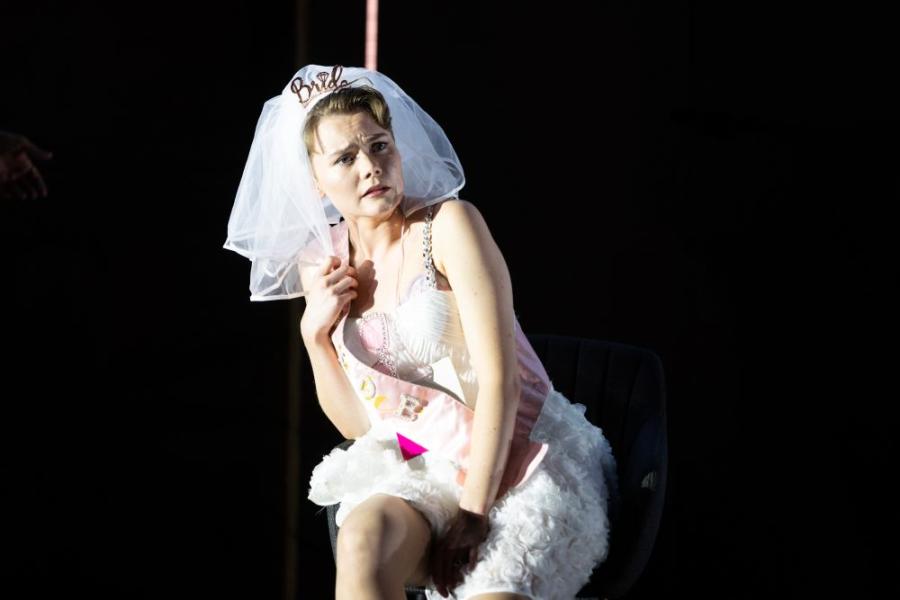
Under the circumstances, though, there's so much to enjoy. If Whelan doesn't do anything especially unusual with the score – given the likes of Currentzis, that's a virtue - his pacing is always a pleasure, the woodwind excel and the singers are always well supported. Not for the first time, I take away the memories of the Ottavio and the Anna above all.
At 1pm on the same day, mezzo Gemma Ní Bhriain gave a recital with Máire Carroll at one of the many mansions above the Blackwater River, Tourin House. Its fine grounds stretch down the valley to the old tower of 1560, and the room used for the concert opened out to light and space. The programme was an ambitious one: songs from Schumann's Frauen-liebe und Leben punctuated by others reflecting the song in question.
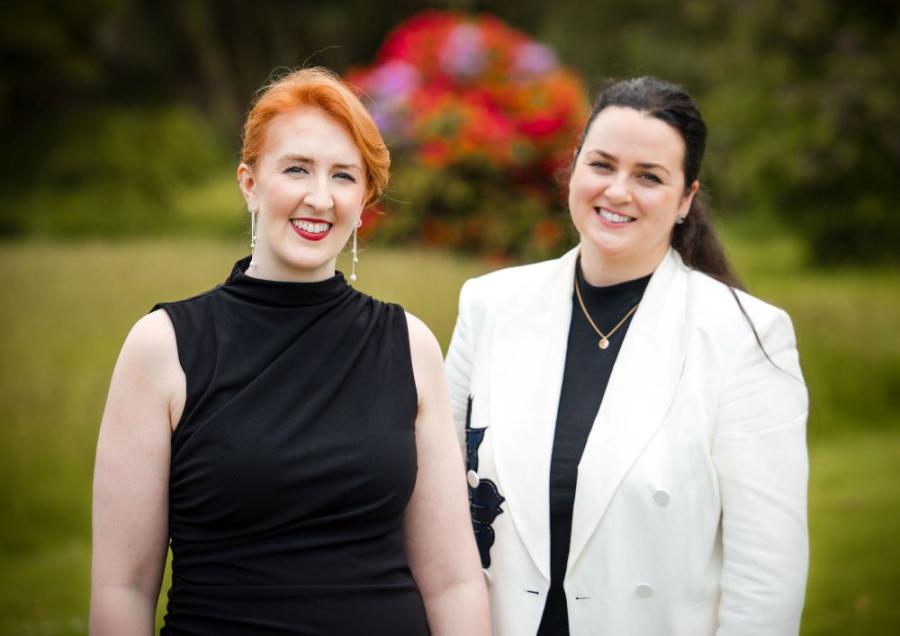
Ní Bhriain has excellent breath control and a fine instrument, though in song sequence it could do with more tonal variety. In passionate outpourings such as "Er, der Herrlichste von allen" and Grieg's "Ein Traum", the rapture was ideal, with total security at the top of the register. More quiet singing - and playing, for Carroll is forthright and thoroughly musical in her responses, but not always subtle – wouldn't have gone amiss in Strauss's "Morgen". But two of Ravel's Five Popular Greek Songs were charmers, and Britten's "Cradle Song" caught the darker mood toward the end of the hour perfectly. One thing's for sure: young Irish singers are the gift that keeps giving.