It was an awesome start, those three notes from the cellos even before Wagner's famous "Tristan" chord inspiring more deep emotion than the whole of the previous evening's Bellini I puritani. Somehow, though the end left me dry-eyed, and so did the rest of an undeniably impressive evening. Antonio Pappano gets magnificent sounds from his London Symphony Orchestra, but here felt like his predecessor Simon Rattle in hitting too hard at times, albeit with more flexibility. And with the Metropolitan Opera screening all too fresh in the memory, this Tristan and Isolde already had an impossible task to match Michael Spyres and Lise Davidsen for tone-colour and vocal-dramatic range, (those in the Met auditorium still have reservations).
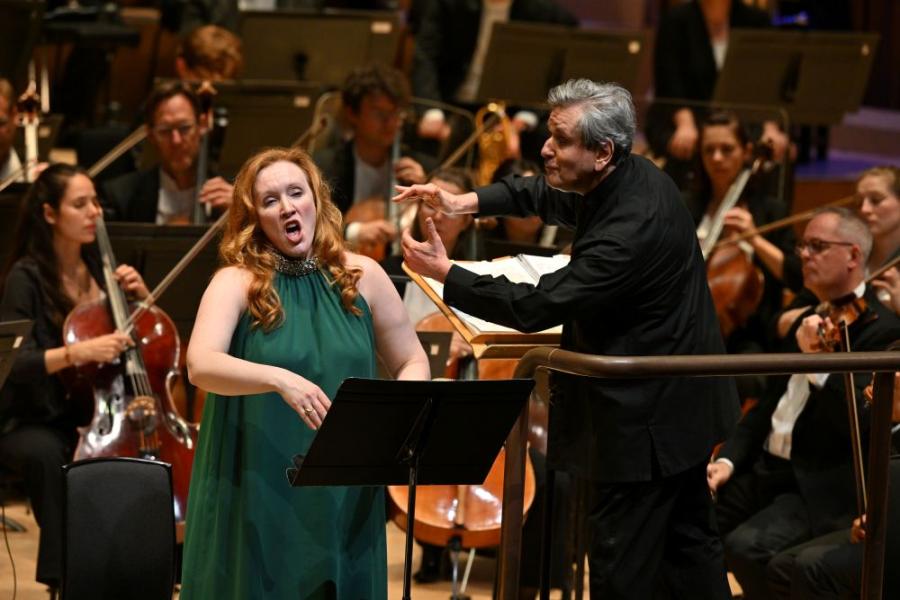
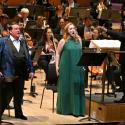
These lovers were resplendent in different ways. Sara Jakubiak, singing her first Isolde, looked the part: red hair against green dress for the Irish Queen, pale, almost mask-like face white with initially contained rage and pain. Every top note was powerful and spot-on. But could the voice settle throughout the range for the night of love and the final "transfiguration through love"? It seems she might be paying the price for the money notes, the middle range not properly threaded, the dramatic engagement reined in by her determination to get it all right (though the meaning of the text was never less than clear).
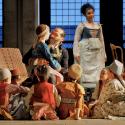
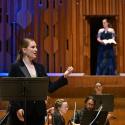
It was almost cruel, and not appropriate, of Marina Prudenskaya (pictured below with Franz-Josef Selig's Marke) to try and outqueen her as a sometimes too similarly driven Brangaene; the servant's tenderness was kept in check, the mezzo's Isolde potential clear with a more connected and ringing upper register. Her Watch song in Act Two was the highlight of the love scene.
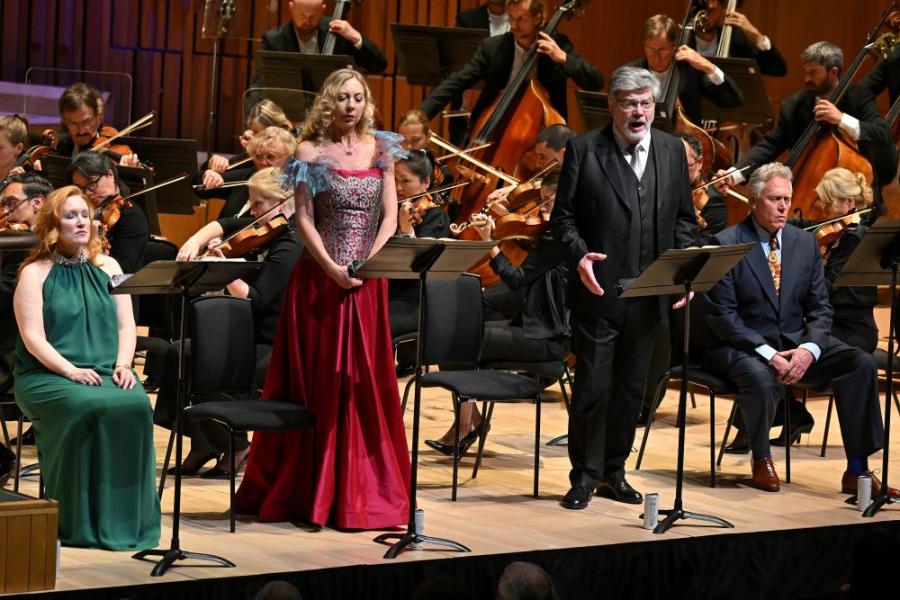
Even so, the indomitable Tristan of Clay Hilley sang very softly as time dissolves, transcendently realised by the instrumental pulse (a pity, especially given concert circumstances, that the usual cut was observed in the long discourse about night and day, life and death, before it). Pappano helped his soprano and tenor to articulate the erotic passion on their night-time meeting - top Cs again no problem - but previously, at the Royal Opera, it's been his pacing of the "night of love" which impressed the most. Less so here; alongside Prudenskaya, Franz-Josef Selig as heartbroken King Marke got the best deal, especially with the visual fascination of seeing what lower strings support him before the violins gradually join the textures of his long monologue.
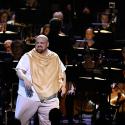
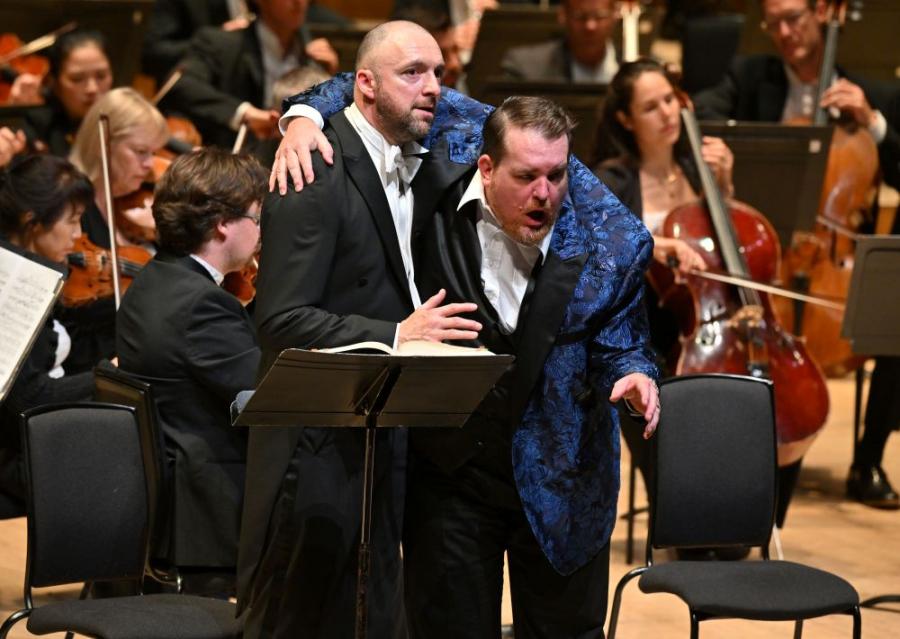
After Pappano's Karajanisation of the Act Three Prelude, he worked in tandem with Hilley's precisely-realised journey through the agonies of a wounded Tristan who refuses to die before he can see his Isolde again. Curiously, one might like to feel the vulnerability of an heroic tenor in this insane stretch, and Hilley is just too secure for that. But he acted every moment, ignoring the score in front of him unlike the other singers. For all that, Gyula Orendt gave perhaps the most affecting performance of the evening as trusty aide Kurwenal (pictured below with Hilley), very touching in the opening dialogue with an equally sensitive Shepherd (Michael Gibson). I'm not sure why the doleful piping of the cor anglais had to be offstage - in the Met production, the player is right there with the dying Tristan - but it was magnificently resonant in the hands of young Drake Gritton
As usual, Pappano's LSO is encouraged in every nuance, clarinet family and horns especially. The storms within and the sea-surge without in the First Act have never sounded more extraordinary, or more detailed; if the amateur LSO Chorus men sounded a bit rough in their carefully-placed outbursts, that wasn't inappropriate either. The audience went wild at the end - as indeed they should, given the astonishing demands of this endlessly inventive masterpiece. It just wasn't quite the full deal for me.