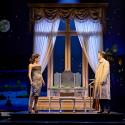
In the 1920s, Sir Arthur Conan Doyle was as famous as it gets really, author of the beloved Sherlock Holmes stories, a polymath and a rare British example of that most continental of figures, the public intellectual. Across The Atlantic, Harry Houdini was a phenomenon, the escapologist showman, personifying The Great American Dream, even making movies.
A century on, Holmes and Houdini (both of whom are invented characters, lest we forget) persist as metaphors and memes that require no explanation.
Ah, lest we forget. Neither man could, to the extent that memories became pathologised. The writer was wracked with grief for his son, Kingsley, lost in the charnel house of The Somme and the showman grieved for his mother, the woman who kept his feet on the ground even when he was suspended, upside down and manacled, before an adoring crowd who were simply hoping for the worst.
Conan Doyle became the leading advocate for spiritualism, desperate to believe that his son was still there, merely obscured behind an invisible curtain and that the right medium could break through the veil and contact be established. He also believed that Houdini could materialise and dematerialise in his stage act, even when the man himself explained that it was just a trick. That alerted the American to just how deep this movement (like any cult) could get its claws into even the most celebrated of men. He sought to debunk its myths and expose its charlatans, embittered after his own attempts to reach the spirit world had failed.
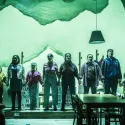
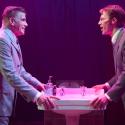
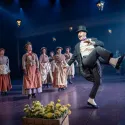
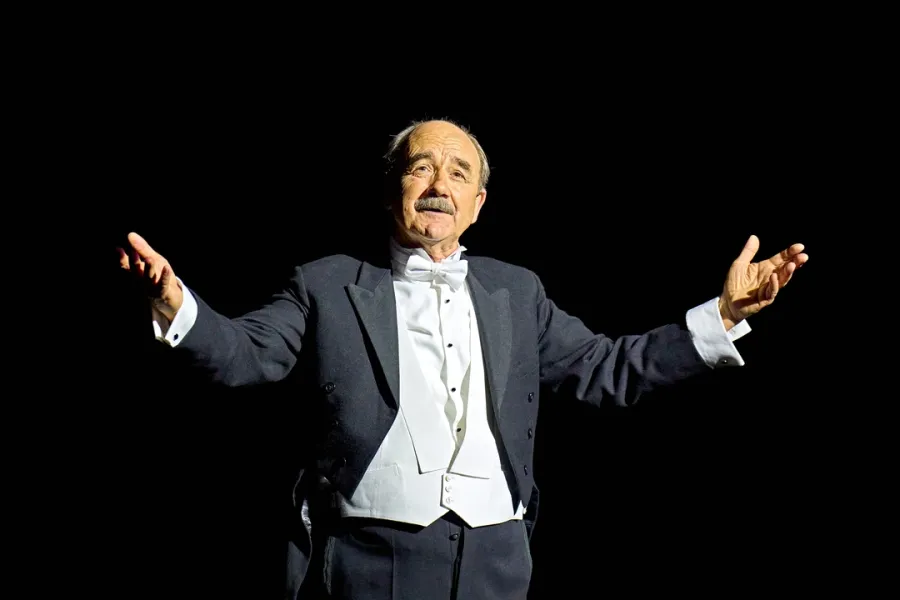
The play works best in its first half. After an impressive escape on stage (dare I say, “Before your very eyes”), the two men meet and get along famously, each idolising the other, probably a bit too much. David Haig (pictured above), who also wrote the script, gives us a Conan Doyle full of bonhomie and good humour, playfully boxing with the younger man in a portent of what is to come. But it’s not long before the eye gleams with the zealot's rectitude and Houdini, like most of a house 40 years on from the height of dodgy Doris Stokes’ 1980s fame as a medium, nails him as a crank.
Hadley Fraser captures the charisma of Erik Weisz, who, with tiring patience as if more effectively trapped by his persona than chains ever could, continually corrects people on his name, telling them, “It’s just Houdini”. That's a telling double meaning, revealing that he longs to be recognised as more than a freak show. As we observe the respect between the two men crumbling as beliefs turn into obsessions, you wonder who it hits hardest. Conan Doyle won’t read Houdini’s books and Houdini won’t accept that the séance was real. The distance grows.
It’s in the second half that the play loses its momentum, as both men are stuck in their positions and have nowhere to go as the relationship crashes and burns. Parallels between Leavers and Remainers, between Trumpers and, well, everyone else I suppose, could be drawn, but Haig leaves these generalisations largely unexplored, with no appeal to the universality of such psychologies. He does provide Houdini with a viciously cruel denunciation of Conan Doyle’s favourite medium, Mina Crandon, staged by director Lucy Bailey with sustained and shocking violence.
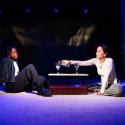
That brutality rather undercuts Houdini’s nice guy image and, when Conan Doyle’s wife, Jean (played with some elegance by Claire Price), is exposed for being, I’ll be charitable, too keen to please her husband with her spirit writing, the only character left to like is Bess Houdini. She’s played with down to earth common sense (and a full Noo Yawk accent) by Jenna Augen, a loyal wife, bemused by these alpha males’ stubbornness.
In some ways the play feels both too late and too soon. Magic has been demystified by the likes of The Masked Magician and countless YouTube videos that show how it’s done. Derren Brown, and those who follow in his wake, deliver astonishing feats, but are at pains to tell us that it’s just showbiz folks and not supernatural intercessions. Instead, magic has become respected as an art in and of itself, books like David Blain’s surprisingly well researched Mysterious Stranger and Pete Firman and Ali Cook’s television series, The Secret World of Magic, exploring its global history with the rigour it deserves.
But 2026 is also too soon. Haig’s Conan Doyle cites James Clerk Maxwell's extraordinary equations that explained electromagnetism as an example of worlds we cannot see. Had he been born 100 years later, he would have cited quantum mechanics, which is real and is about to revolutionise computing, but presents as spiritual as much as it is physical – even to the scientists. We haven't got to its e=mc2 moment just yet.
Ultimately, along with characters we’ve grown to dislike more and more over the previous two hours, we’re also left with the idea that withholding the truth can be an act of kindness to people traumatised by events. But, scale that up, and you get The Stab In The Back and its present day variants, eg stolen elections etc. And that’s just too sobering a thought for the journey home.