

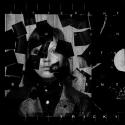
The titular “lighthouse of glass” is a place where the narrator is “crying into the sun,” in which there is a need to “stand by my solitude.” Choosing isolation and self-determination are themes running throughout Lighthouse of Glass the album and how Sweden’s Sofia Härdig has approached recording these 10 songs. As well as the songwriter, she is the arranger, engineer, producer and main instrumentalist.
“April,” the chugging, string-infused album opener suggests a PJ Harvey influence, with a smidge of Nick Cave too. This soon dissipates in favour of broader nods to Patti Smith: “Kingdom Come” has a “Dancing Barefoot” vibe; intense album closer “Some Strange Place” is structurally similar to “25th Floor”; on “In Silence,” Härdig fuses Smith’s fondness for a poetic-style stream-of-consciousness delivery with a Hunky Dory David Bowie ambiance. The defining factor, though, is Härdig’s sense of what constitutes a song, an innate feel for ascending to a crescendo and then, duly winded, scaling back to emphasise the drama which has just taken place.
While Lighthouse of Glass is a solo album as such, guests are drawn from Sweden’s music scene to secure Härdig’s personal vision. Veteran multi-instrumentalist – and Tom Waits collaborator – Bebe Risenfors plays on each track. John Essing of Bob Hund appears in the credits, as does guitarist Robert Johnson (the former mainstay of the Sixties-slanted band Robert Johnson & Punchdrunks). Despite all this, the hands on the steering wheel are Härdig’s.
As the role call implies, there is a background. Härdig’s first solo album was issued in 2005. This is her eighth. Previously, there was Sofia Härdig And The Needles – who were co-produced by Essing – and, earlier, she was in the duo The Happiest Girl In The World, which self-issued a couple of EPs over 2003 and 2004. With all this behind her, Lighthouse of Glass comes across as an album on which Härdig takes control of exactly what her music should be.



Add comment