In the early 20th century, Soviet filmmaker Lev Kuleshov spliced together images of people looking at things with a bowl of soup, a woman on a divan and an open casket. Each object represented a different emotional state – hunger, desire and grief – but each subject “looking” at the object was the exact same image, repeated. The cast-down eyes implied to be considering nourishment were the exact same eyes that appeared to stare in utter loss at death. And thus the idea of the movie star: a figure onto whom all projections are equally valid.
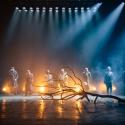
The opening scene of Arthur Miller’s last play, Finishing the Picture, plunges us into the mayhem caused when a depressed movie star is unable to refrain from drink and drugs long enough to get on set and finish the film. Forest fires rage round the film set, and the stage's crimson-painted walls seem to drip as tempers and trees ignite: smoke and acrimony darken the atmosphere. It’s the end of the shoot of The Misfits, fictionalised. At the time Marilyn Monroe and Miller were divorcing, and this play is a multifaceted look at how a woman who meant so much to all those around her meant less than nothing to herself.
 In an audacious move, director Phil Wilmott has removed Kitty entirely from the stage. Controversial, sure, but in the second half, as each cast member tries to cajole her either onto set or into hospital, her responses are conveyed through the anarchic riffs of an expressive sax behind which a hectic snare skits to hepped-up time. Its effect is unsettling and submerges the audience in the frantic rhythms of Kitty’s own mental whir – something words alone can’t quite convey.
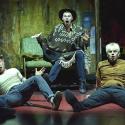
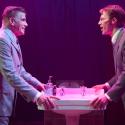
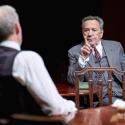
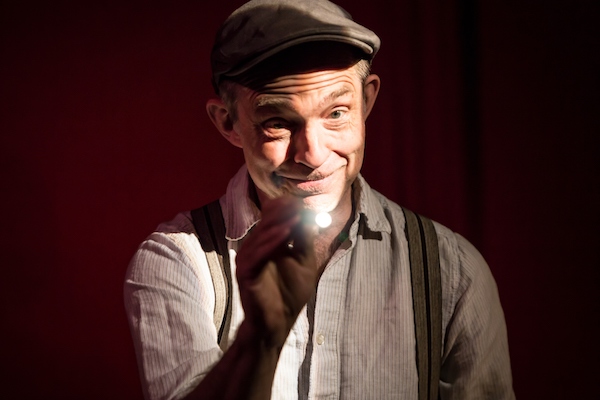
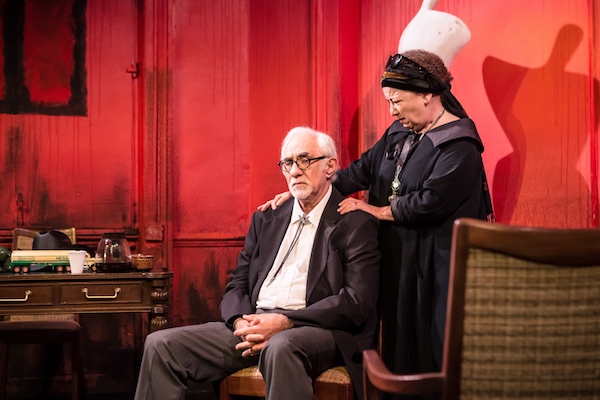
And feeling a little of what Kitty feels is important, because for everyone else on stage something other than her health is at stake. For director Derek, played by a variously inscrutable and snakily charming Stephen Billington, it’s his reputation. For Kitty’s dahling harridan companion Flora (Nicky Goldie, pictured below), it’s her grossly engorged per diem, while for salt-of-the-earth director of photography Terry (Patrick Bailey, pictured above), it’s something between doing a job well and getting to watch a gorgeous woman through his camera all day. (His line on how “her ass fits to the curvature of the lens” not only raises the biggest laugh of the night but also encapsulates the blend of easy misogyny, genuine admiration and technical wonkishness that marks out the film set.)
 For producer Paul, played with alternating slickness and bluster by Jeremy Drakes, it’s the money. If Kitty can’t get out of bed, an entire industry fails. He lists the people who depend on Kitty’s “fluffiness” for their livelihoods – from executives to lawyers to cinema tellers – but Kitty surely knows this already. It’s not a reason to get out of bed, but a reason to stay in it. She’s already been bulldozed by the machinations of the film industry, and it's the sad toxicity of mixed financial and emotional imperatives which means that only by sabotaging the film can the profundity of her own self-sabotage come to light.
Unfortunately it’s recognised only on an economic level. Kitty’s genuinely well-intentioned and magnificently patient assistant Edna (Rachel Handshaw) is unable to inspire her in the way the more unhinged and thespily supercilious Jerome (Tony Wredden) can. She’s too grounded in the real world and can’t understand how Kitty has lost herself in a realm of mirrors. Kitty can cut to the heart of Edna’s emotional core, immediately guessing that she and Paul have started an affair, but Edna can’t help Kitty see which reflection is her own genuine projection.
In many ways it is an idiosyncratic play, but this production's success is to leave intact the fear that Kitty will combust.
- Finishing the Picture at the Finborough Theatre to July 7
- Read more theatre reviews on theartsdesk