I started singing when I was nine years old in my primary school choir. I sang plenty of solos there before moving on to another children’s choir; that was a formative experience for me. At this point, I was singing the soprano part and from here I was invited to sing in Mozart’s The Magic Flute. This was my first experience of opera, and one that gave me great joy and satisfaction.
My first major performance was as Hansel in Humperdinck's fairy-tale opera at the Teatro Colón of Buenos Aires. This was a special experience, on the one hand because it was one of my first leading roles and on the other because this role is usually performed by a mezzo-soprano. That was my first big opportunity.
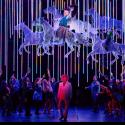
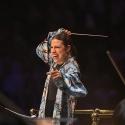
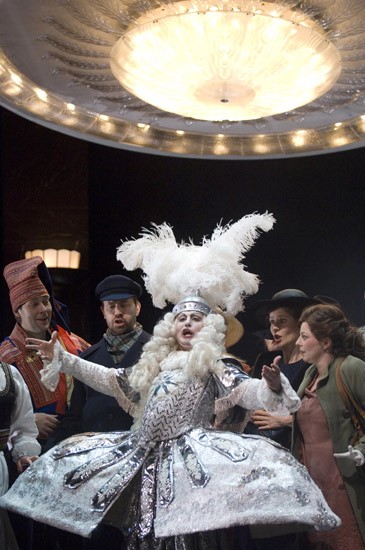 I find the question of what my favourite works are within the Baroque repertoire particularly difficult, as I enjoy performing the entirety of the repertoire. If I were to choose, I would say Handel’s Ariodante, as that opera is sublime. These days, I sing roles written originally for castratos. In my opinion Handel wrote best for the castrato out of all the voice types. He is a musical genius, who wrote for the voice in a way that allows the performer the possibility to express himself or herself to their full capability, and to really shine (pictured right, Fagioli as Handel's Giulio Cesare in Oslo).
This sort of repertoire is a continuous challenge for me, though – I am very much from the bel canto school of singing, from Argentina. This informs my approach to everything – not because baroque is bel canto: today we understand that bel canto was primarily in vogue in the 19th century, but singing in the Baroque style is also a kind of bel canto. Castratos and primadonnas sang parts which were specifically written for them by Nicola Porpora (whose most important student was, of course, Farinelli) and other great teachers.
Baroque music is a style that seems straightforward and could perhaps be performed by most singers. But one of the challenges is to be able to say something with the music, to interpret the music beyond the musical notation. It`s important that you focus on the emotions of the words and the emphasis of each phrase – going beyond the notes without destroying the construction that the composer proposed. It shouldn’t be forgotten that we are simply interpreters – of music that was written many, many years ago and in a different situation.
There are many works that I haven’t yet performed but that I would love to, including some Handel operas: Alcina, for example, although I am performing that soon in Hamburg. I have yet to sing Handel’s Orlando, and there are Mozart and Rossini operas which I would enjoy performing – I simply love this repertoire.