When the lights go up on Jack Shepherd’s In Lambeth, you could be forgiven for assuming you were looking at a biblical scene. A man and a woman sit naked in the branches of a tree, a tableau straight out of Eden, not south London. She has a book in her lap; he’s picking out a tune on a tin whistle. All is serene.
Except this isn’t Eden, and they are not Adam and Eve. This is London in the late eighteenth century, and William and Catherine Blake are reading Milton’s Paradise Lost while sitting in a tree in their Lambeth garden. William is talking to the angel who taught him the tune he is playing on his whistle. Shortly after, their little patch of paradise is disturbed by the arrival of a visitor - fully clothed in the long coat and tricorn hat more usually associated with the period - who stumbles in off the road seemingly by accident.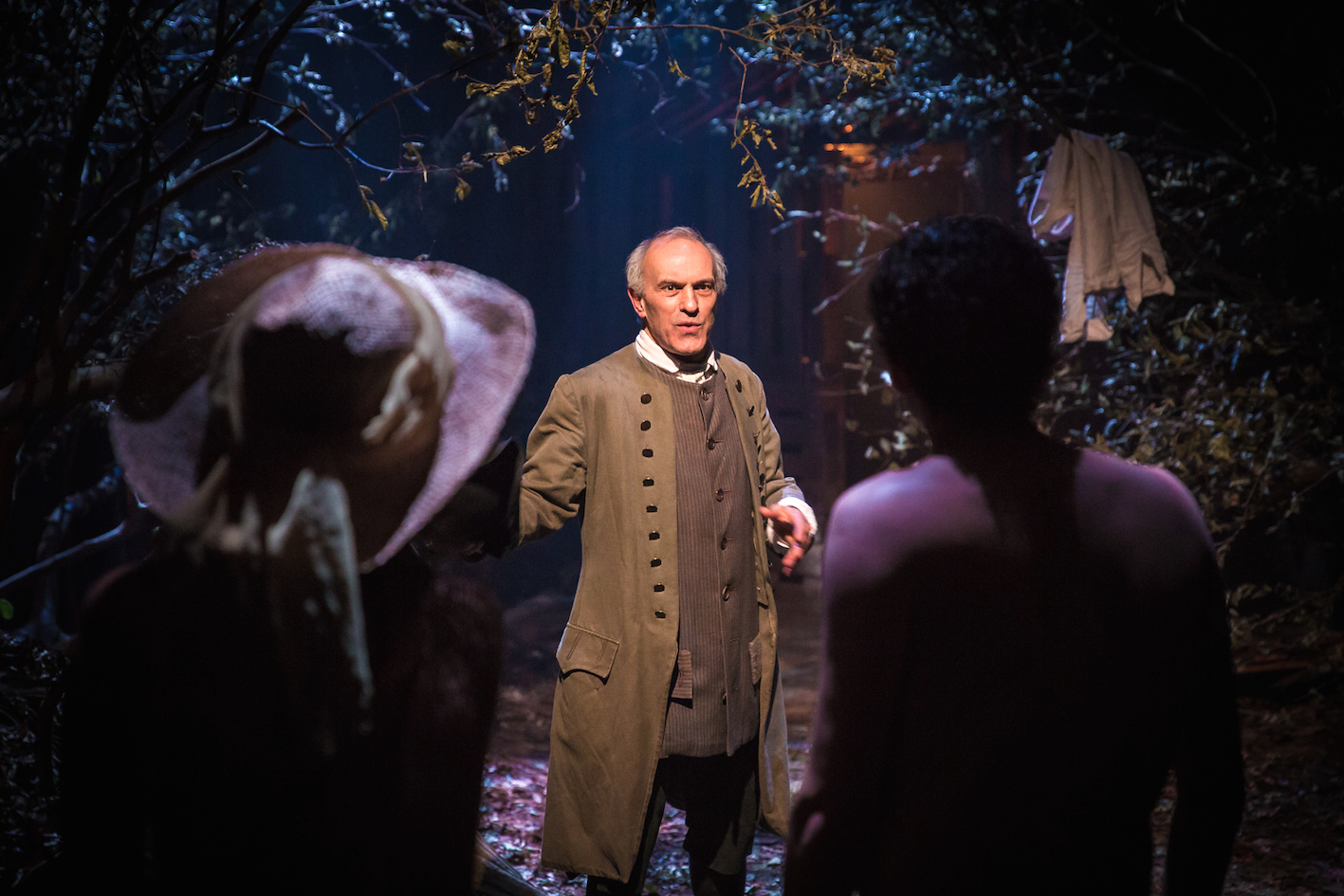 This is Thomas Paine: writer, rabble-rouser, revolutionary. Recently returned from France, Paine (played by Christopher Hunter, pictured right) has just published Rights of Man, a defence of the French Revolution, and is - as Catherine puts it - “a marked man” on the streets of London for his well-known Republican feelings. Without asking any questions about why he is there, the Blakes immediately offer him hospitality, Catherine stretching their dinner of rabbit pie to include him, and William dashing off to spend their last few coppers on wine. Once William works out who their guest is, they also put their clothes back on.
What follows is an intense exchange about the nature of revolution and justice. Sitting around the table in the Blakes’ overgrown garden, Paine articulates his belief that political change must be practical - he wants to end child labour, create better political representation, bring about universal literacy. Blake counters him with wild, metaphysical visions that express his concerns that revolution is merely the turning of a wheel that replaces one kind of tyranny with another. If, as Blake puts it, “opposition is true friendship”, then Blake and Paine are the closest of comrades. All the while, Catherine hovers between the two, providing food and drink, always on the edge of interjecting her own opinion, but never quite managing it.
These great men can't spot the injustice at their own dinner tableJack Shepherd is better known as an actor - on stage in the original cast of Mamet’s Glengarry Glen Ross, and on screen in TV detective drama Wycliffe. First performed in 1989, In Lambeth is just one of several plays he has written portraying significant points in history: he has also dramatised the Cromwellian revolution, and the Chartists’ struggle. After its initial performance, several critics termed this play “charming”, and this production demonstrates why: it’s attractive, to be sure, but it’s also compelling and persuasive. It manipulates your point of view.
In this revival, it is Ruth Sutcliffe’s design that makes the Blakes’ home seem wild and wonderful - the tangle of trees she has created had the audience oohing with delight as they entered the theatre. Tom Mothersdale is impressive as Blake, as earnest when he is swearing from the branches of his tree as when he is disputing politics with Paine. The latter, played by Christopher Hunter, has a slightly jarring American twang at times, but his uncompromising brusqueness is an excellent foil to Blake’s wilder flights of fancy. 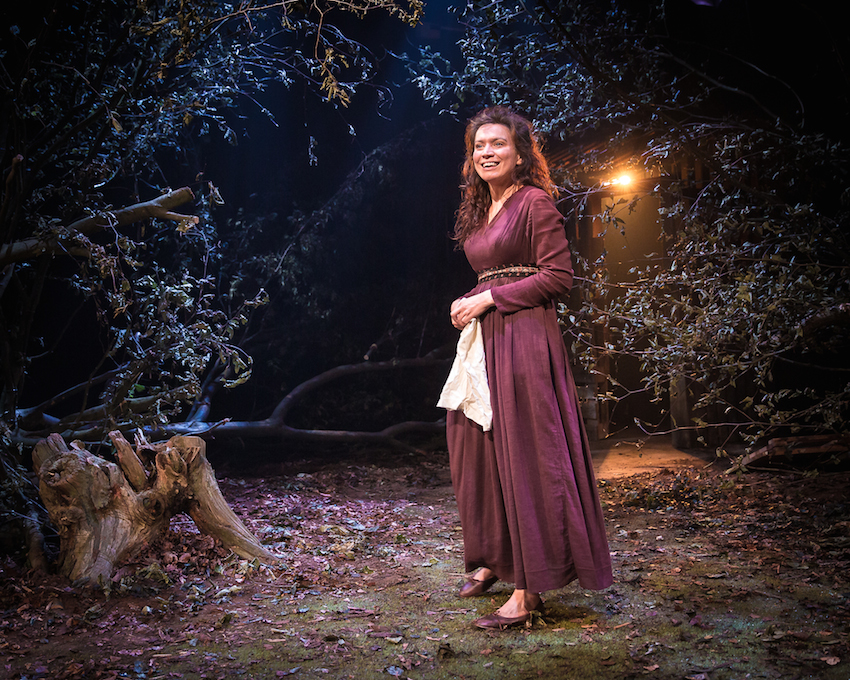 The standout performance of the evening, though, comes from Melody Grove as Catherine Blake (pictured right). Caught between the two great men, she has comparatively few lines, yet is the lynchpin of the whole piece. She serves as a constant reminder that for all their talk of equality, these political radicals aren’t perfect - they never bother to include her, a woman, in their discussion.
Blake admits ruefully that although he embarked on his marriage with the intention of equal partnership, he has slipped back, meaning that most of the “drudgery” falls to her. In real life, Catherine Blake was held up as an example of an “ideal wife”, devoting her entire life to caring for her husband and assisting with his work. As Grove’s superbly contained performance here demonstrates, even history’s greatest revolutionaries couldn't spot the injustice that was sitting at their own dinner table.