The most ambitious musicals spring from the most unlikely sources – you need go no further than Stephen Sondheim to establish that – but turning those musicals from novelty into living, breathing, involving experiences requires very special talent. Back to Mr Sondheim. Everyone who writes in this medium owes him a huge debt of gratitude but some – like composer/lyricist Gwyneth Herbert, the fresh voice behind The A-Z of Mrs P – would seem to have evolved almost in spite of him, from another place altogether. What’s exciting about this show, for all its shortcomings, is the level of ambition and the often dazzling glimpses of accomplishment that it offers us. It isn’t perfect by any means – far from it – but where it dares to boldly go is in itself a reason for celebration.
The story of Phyllis Pearsall – who was credited with the creation of the London A-Z – is remarkable for the way in which her mapping of the London streets ran in parallel with both a changing world – “One foot in front of the other, I’m walking history” – and a sense of finding her own way in it in spite of a patriarchal father whose chauvinistic egoism all but devoured her. The A-Z of Mrs P is essentially about a life spent trying to please him but more importantly about a quest to find the clearest route to herself.
The definition of what constitutes a song is stretched and redefined
It’s a big metaphor to wield and the weight of it at times threatens to overwhelm both Herbert and her brilliant book writer Diane Samuels. But there are moments where the gentle lucidity of the writing – “A child needs a family like a pussy needs a well” – can wrong-foot even the most seasoned explorer of this genre. “Lovely London Town” is not just a song, it’s a cavalcade of images and sensations that any city dweller will recognise and it sits so comfortably at the heart of this piece that it simply “belongs”.
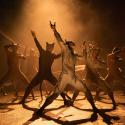
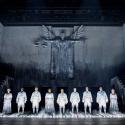
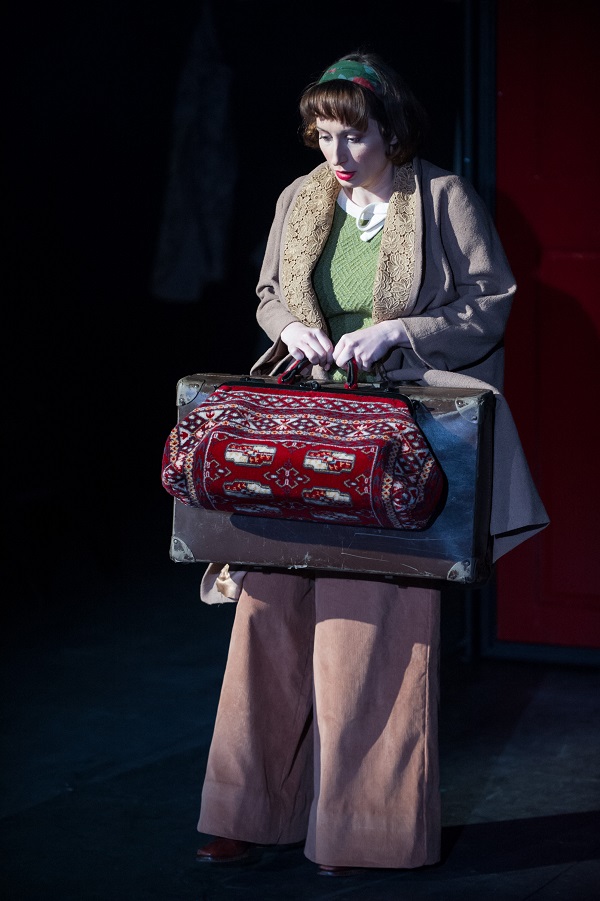 Like all the best musical theatre, the score here is indivisible from the book. And rarely has a score and a book revelled as this one does in the onomatopoeic rhythm and colour of words. History, and Phyllis‘s journey through it, seems to unfold and evolve through myriad exclamations and repetitions and little fragments of melody some of which are ephemeral, some of which go forth and prosper. The definition of what constitutes a song is stretched and redefined; even the show’s four-piece band (orchestrations: Sarah Travis and Gwyneth Herbert) becomes a soundscape of chugging engines and the tick-tock of history marking or passing time. The busyness and invention of Sam Buntrock’s production leaves one breathless at the speed of the journey.
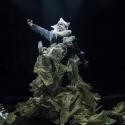
But therein lies a paradox – because the first act is so busy and so dense that it feels much longer than it is. And because of its relentlessness there is no time for the audience to reflect upon, or indeed to care about the evolving characters, leave alone get emotionally involved with them. Act two redresses the balance, not a moment too soon, and the emotional landscape of the piece at last becomes clear. After a brilliant opening sequence chronicling the selling of Pearsall’s A-Z in a way so redolent of Gilbert and Sullivan patter songs the play becomes the thing and Samuels’ book starts to dominate dramatically.
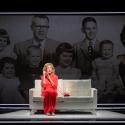
 The disintegration of Phyllis’s mother Bella – a strong performance from Frances Ruffelle – is beautifully countered by the song “Can You Hear Me, Mama?” But no one is heard beneath the thunder of Sandor (“We can become the mapping Mafia”) Gross, a force of nature in the person of Michael Matus – and the harrowing scene where Phyllis makes one last-ditch bid for his approval is terrific writing. Isy Suttie plays Phyllis with a wide eyed spirit and resilience but with the arrival of her crucial 11 o’clock number “Ship Comes In” one wishes there was a singing voice to match the sincerity.
Even so, if you care about the evolution of musical theatre and the new directions one hopes it will take in the future you should give The A-Z of Mrs P a chance. It’s fresh, it’s clever, it seeks to find its own way – and even if, like Phyllis Pearsall, it occasionally takes a wrong turn, there can be no denying the courage of its convictions. I applaud Neil Marcus and Michael Peavoy for developing it. In the words of Phyllis herself: Best foot forward.