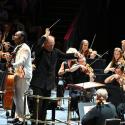
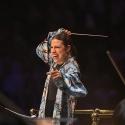
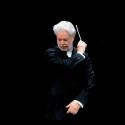
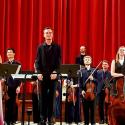
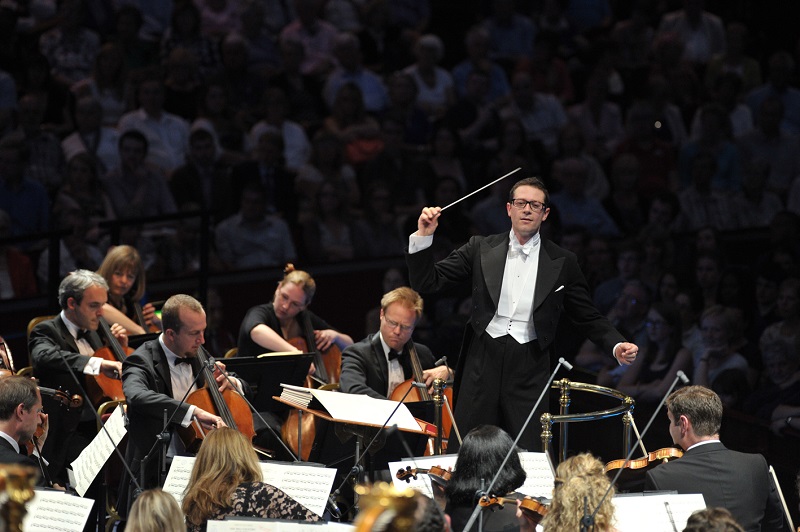
Proms enthusiast that I am, it still isn't often that I leave the Royal Albert Hall with a face that aches from smiling for hours on end. But judging by the endlessly ecstatic applause that greeted John Wilson and his orchestra at the end of every piece (and occasionally during) of the Hollywood Rhapsody Prom, I was by no means the only one.
Expectations are always high for Wilson's outings. His orchestra is the classical equivalent of a rock supergroup - as David Benedict explained in his preview of the programme. And it's not just an orchestra - as the demands of different pieces revealed, there is a big band and an immense percussion ensemble in there too. This year, they brought us faithful reconstructions of film soundtracks from non-musical films from the Thirties through to the Sixties, by composers like Erich Wolfgang Korngold, Bernard Herrman and Max Steiner. As Wilson points out in his programme notes, these fabulous melodists didn't write music that sounded like Hollywood - such was the power of their tunes that it wasn't very long before Hollywood sounded like them.
After the suite from Psycho, Wilson used his baton to re-enact the shower-stabbing sequence
From the first "rat-a-tat, rat-a-tat" of the 20th Century Fox Fanfare that opened this programme, it was clear that Wilson's purpose was to pluck the music out of the background texture of the movies and place it centre-stage. The scores for cinematic greats like Casablanca, Ben-Hur, Citizen Kane and Psycho existed originally to support the script and augment the viewer's emotional response to the action on screen. Hearing the pieces divorced from their original context, we are able to appreciate just how masterfully this music was composed and orchestrated in the first place.
 In the case of Steiner's suite from Casablanca, the devastating contrast between the furious, full orchestra version of the Marseillaise and the "As Time Goes By" piano solo tugs at the heart in a way that even Ingrid Bergman struggled to achieve. The selection from 1951's A Place in the Sun also exhibited this raw emotional power - the high alto saxophone cadenzas in particular, performed superbly here by Howard McGill, convey the suspense and tragedy of love found and lost, even if you've never seen the original film.
Splendid as the music often is on its own, in many cases it is very hard to separate it from the on-screen action it accompanied. Wilson himself seemed to find this at times - after finishing the suite from Psycho, he briefly used his baton to re-enact the shower-stabbing sequence, to the great amusement of orchestra and audience. It was also true of the wonderful arrangement of Scott Bradley's music for the Tom and Jerry cartoons. The helter-skelter strings, exuberant brass and extraordinary percussion evoked the slapstick wonders of the characters' adventures to the point where you expected them to chase each other across the platform at any moment. The percussionists for this piece deserve particular praise - they rang cowbells, blew whistles, tooted horns, popped bubble wrap, smashed plates, snored, shrieked, screamed and bashed their way through a fiendishly complicated score to great effect.
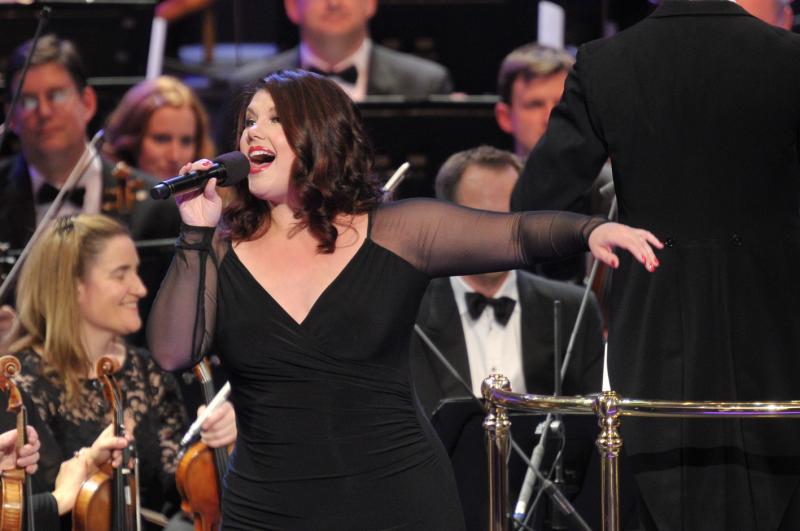 As Wilson has explained, the months of painstaking selection that produced this programme was driven by a desire to "shift the focus back on to the actual players". As such, it is perhaps fitting that it was the vocalists that produced the evening's only disappointments. Soprano Venera Gimadieva made it through "Salammbo's Aria" from Citizen Kane reasonably creditably, but Jane Monheit (pictured above left) and Matthew Heit's Movie Theme Song Medley was reminiscent of cruise ship cabaret. The orchestra valiantly kept up the energy behind them, but by the time they reached the familiar strains of "Que Sera, Sera", the audience had been swayed into a cosy stupor from which only the brassy, defiant themes from Ben-Hur could rescue them.
Nostalgia for the so-called Golden Age of Hollywood is obviously a big part of why Wilson's programmes have been so popular. With this one, however, he has managed to do something more than take his audience on a comforting trip to the movies - he has reminded us of a time when studios devoted money and time to getting the absolute highest quality of music for their films. This investment produced works that deserve to have their moment in the spotlight, even after the cinema projector has gone dark.
- The Hollywood Rhapsody Prom is on BBC Four on Friday 30 August
- Listen to this concert for the next six days
- Explore theartsdesk's coverage of the Proms