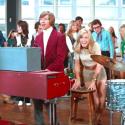
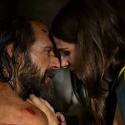
“What if I’ve made a terrible mistake?” Angie (a flirty, engaging Elizabeth Moss) is about to give birth to psychiatrist RD Laing’s baby, and you have to agree that it’s not the wisest plan. She’s confiding in one of the disturbed residents of Kingsley Hall, Laing’s experimental psychiatric community in east London where therapists and patients lived communally, anti-psychotic drugs and ECT were outlawed and LSD (and going to the pub) was part of the cure.
Angie, an American psychologist, is drawn irresistibly to Laing’s charisma, Paisley shirts and velvet suits. She moves in with him and the crazies, though Laing (David Tennant, whose hair looks psychotically fixed in a wind-tunnel effect) seems indifferent – “You still here?” - perhaps because he’s stoned. And he has another family back in Glasgow. But hey, it’s 1967. Who isn’t out of their heads? Julie Driscoll’s “Season of the Witch” (“When I look inside my window/So many different people to be/ It’s strange, sure is strange”) completes the psychedelic picture.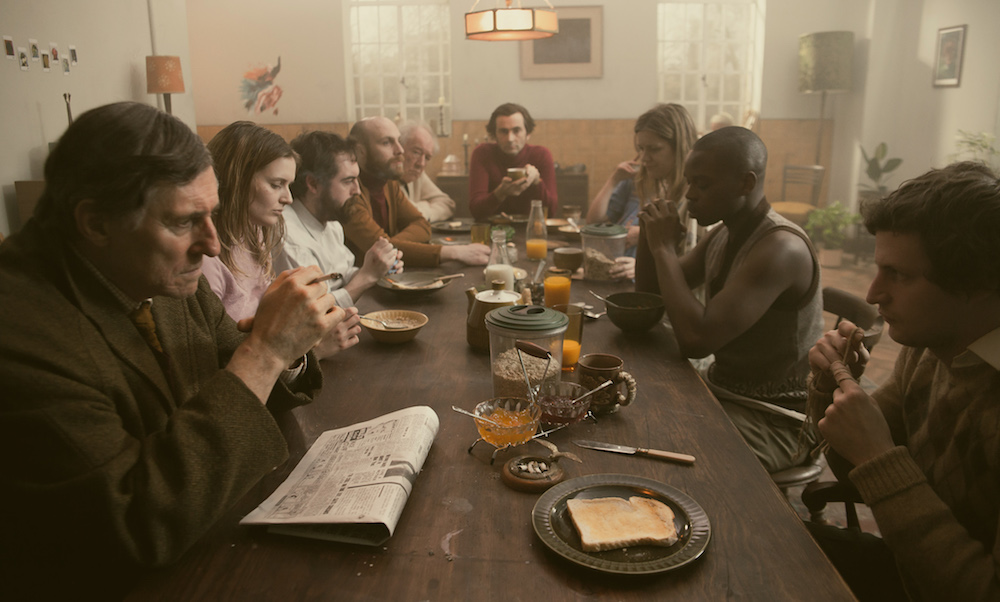 If you were a student when the Dialectics of Liberation congress, rather than the iTunes festival, packed the Roundhouse, then a copy of Laing’s The Divided Self is probably sitting beside Castaneda and Marcuse on your shelves. People with schizophrenia and psychosis, he felt, were reacting logically to an insane world, particularly the nuclear family set-up, and should be allowed the space to explore their visions and mental chaos. And so they do, at Kingsley Hall, with Stanley (a wonderfully melancholy Michael Gambon, pictured above, beside Tennant) reluctantly taking acid – “What have you got to lose?” asks Laing chirpily - and re-living his terrifying childhood traumas. Better than ECT? “I don’t know how to tell him it doesn’t work,” Stanley says sadly to Jim (a brooding Gabriel Byrne), whose delusions come and go more violently, though he’s a poetic soul, given to reciting Wilde: “But strange that I was not told/That the brain can hold/In a tiny ivory cell/God's heaven and hell.” Jim is eaten up with jealousy about Angie’s relationship with Laing, and when the baby is born his madness gets dangerous. Those heavy-duty tranquillisers come in handy after all.
 The film is not totally rooted in fact, which is odd as director Robert Mullan knew Laing well and has written three books on him, including a biography. He says he wants to resurrect Laing’s reputation – by 1987 he had ceased to practice, partly due to allegations of drunken behaviour – and his family life was always problematic. He had 10 children by four different women, none of them fitting Angie’s description, and was no one’s idea of a reliable dad. “I’ve seen what families do to people. I’m not putting my children through that,” is his reasoning.
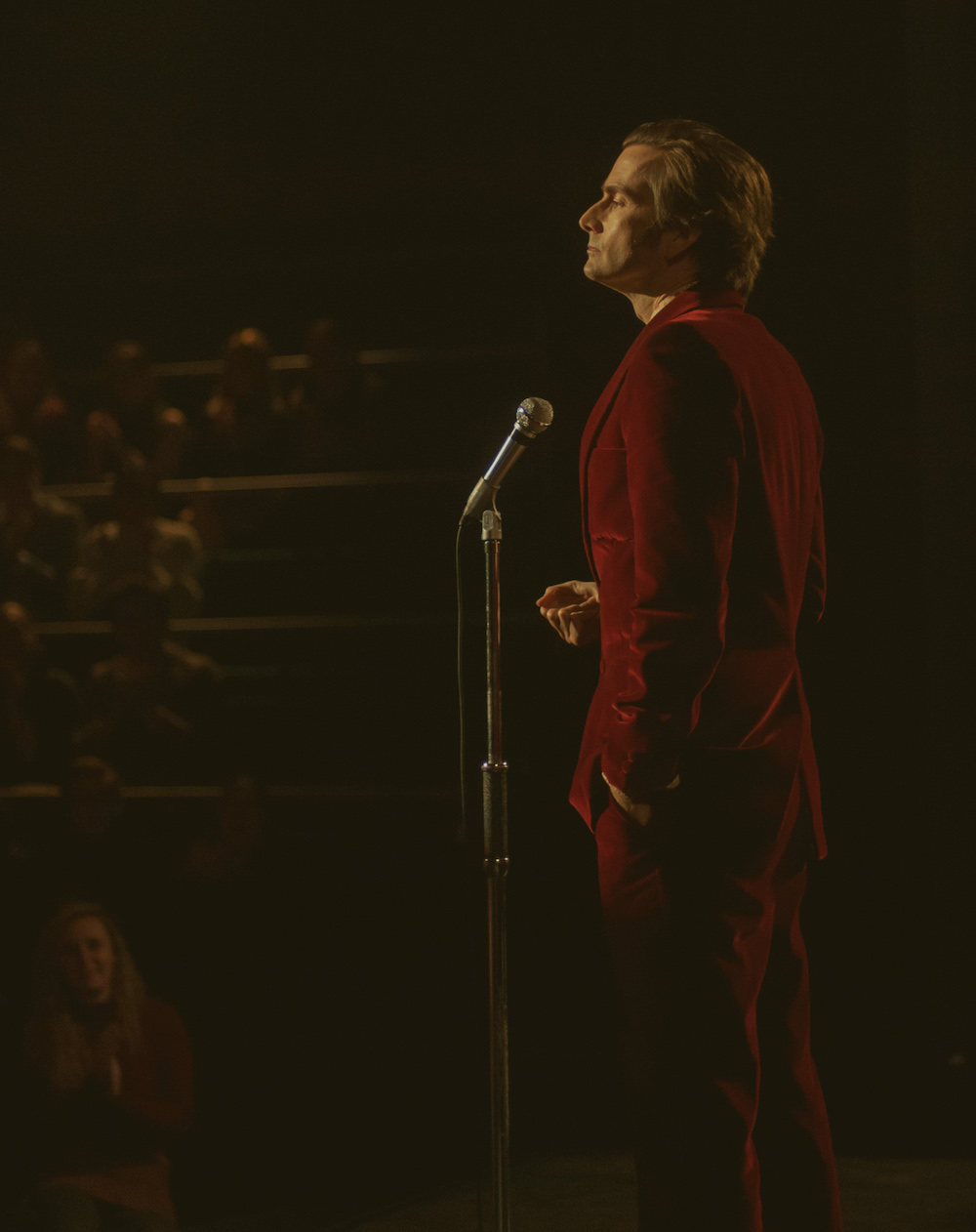
Tennant’s performance is electric and he brings some of Laing’s shamanic brilliance across – during a lecture tour in New York (pictured above), he shuts himself in a padded cell with a young girl who hasn’t eaten or spoken in months. He takes off his trousers, massages her feet and soon they’re ordering pepperoni pizza, much to the consternation of the conventional docs. Back at Kingsley Hall, he allows John, a mute schizophrenic, to shut himself in his room, apparently without food. But lo, after days, or perhaps weeks, John’s suddenly eating porridge for breakfast with the others, explaining that his voices told him to count to a million and then back to zero and now that’s done, he can get on with life. Really?
The film has momentum but you’re left with a feeling of insubstantiality. Laing’s descent into alcoholism and violence at the height of his success isn’t well explained, and the day-to-day workings of Kingsley Hall seem a little glossed over. It can’t all have been partying with celebs and sitting around howling at the moon. “Everyone wants a piece of you. Don’t you get tired?” asks Laing’s exhausted assistant Paul, who is threatening to leave (who can blame him - there’s no time-limit on therapy sessions and Laing’s often away). In response, Laing smashes a vase, lights up a joint and the two gigglingly glue the pieces back together again. Mad to be Normal’s pieces don’t quite fit, but like Laing himself, it’s never boring.