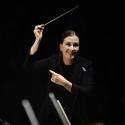
"Mitsuko Uchida plays Mozart" might have been the marketing tag to sell out this first concert in the Scottish Chamber Orchestra's 2017-18 season (despite student and free under-18s take-up, the Usher Hall still wasn't full). "Dvořák Symphony No. 8" was in fact the headline, marking the launch of Robin Ticciati's last series as the SCO's hugely successful Principal Conductor.
That brass ensemble near the opening sounded so fresh and startling in Edinburgh's handsome main concert venue. Berlioz has been one regular Ticciati component, the most surprising success of his SCO tenure, with a one-off Symphonie fantastique among their top recordings together (Mozart with Mitsuko has been another constant, and unusual championship of Dvořák's Fifth in a London Symphony Orchestra concert which could have led to Ticciati's appointment there already augured well for the Czech strand). The conductor's attention to startling detail paid off at every turn, even in the phrasing of the one melody which would ring a bell with audience members of long TV-theme memory. A minor-key episode led by clarinets starts out like a prophecy of Bohemian Dvořák, but gets sidetracked by startling work for timpani and bass drum. And to think the original was completed before Beethoven's death in 1827. Berlioz, like Sibelius, often sounds the most modern composer, sonorities-wise, in any programme.
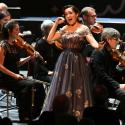
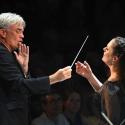
Not that late Mozart is without its constant surprises. His final piano concerto, the B flat major K595 possibly finished in the last year of his life, is a relatively austere affair alongside its predecessors, and how we miss those clarinets. Given that its themes are rarely as warmly personal as in the other late masterpieces, Uchida's characteristic air of transcendental poise, her touch resulting in the usual muted-mezzo air of mystery, didn't always feel appropriate; the high, bright orchestral sound offset it nicely, though (horns exchanging their hybrid instruments in the Berlioz for the real period thing here).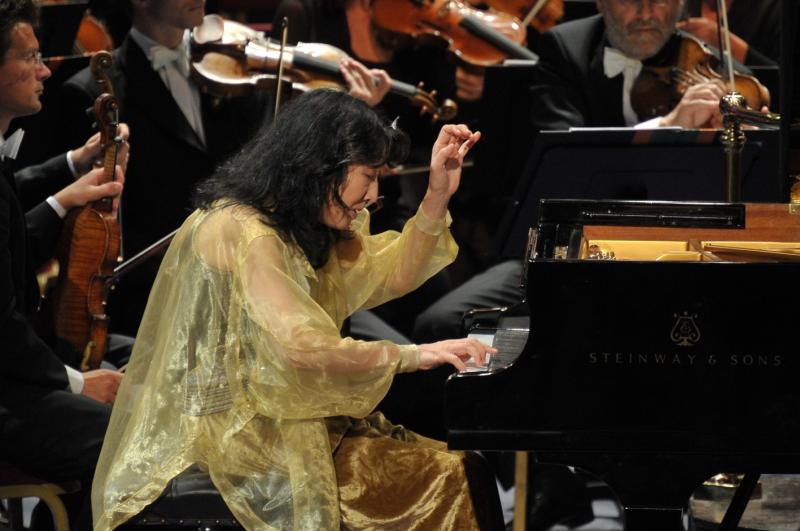 Uchida (pictured above) always works well with Ticciati, and the striking partnerships with one or two woodwind – at a subtly amazing point in the central Larghetto, in fact, with only flute (Alison Mitchell) and lead violin (Benjamin Marquise Gilmore) for company – always made their mark. And the sudden, surprising turns into the minor and a passing sadness never failed to surprise.
In the mostly happy world of Dvořák's Eighth, Ticciati faced competition – in my recent memory, at least – with a delicious, natural and keenly-sprung Prom performance from the BBC Symphony Orchestra and Karina Canellakis (due to visit the SCO later this season, lucky them). Occasionally it felt a little more contrived; the rush of the first movement's main Allegro con brio didn't quite come off at first, causing a momentary co-ordination problem, and a relatively small string body wasn't always a match for Dvořák's thickish wind-and-brass orchestration.
Yet there was certainly more twilight atmosphere, with telling pianissimos, in the woods of the great Adagio, and the novel fast-waltz lift of the Allegretto grazioso really worked, gilded by attractive violin portamenti. Once again the trumpets – albeit only two this time – had their heyday in a blistering "come to the fair" summons at the attacca start of the finale, and its rollicking could not have been a more joyous way of ending Ticciati's first-of-the-last showcase programme.