

The London Handel Festival delivered extra rations at Smith Square Hall on Saturday. A bright, crisp beginning-of-spring afternoon made a fitting backdrop – with sunlight streaming in through the (former) church windows – for Handel’s witty but tender pastoral entertainment, or mini-opera, of 1718, Acis and Galatea.
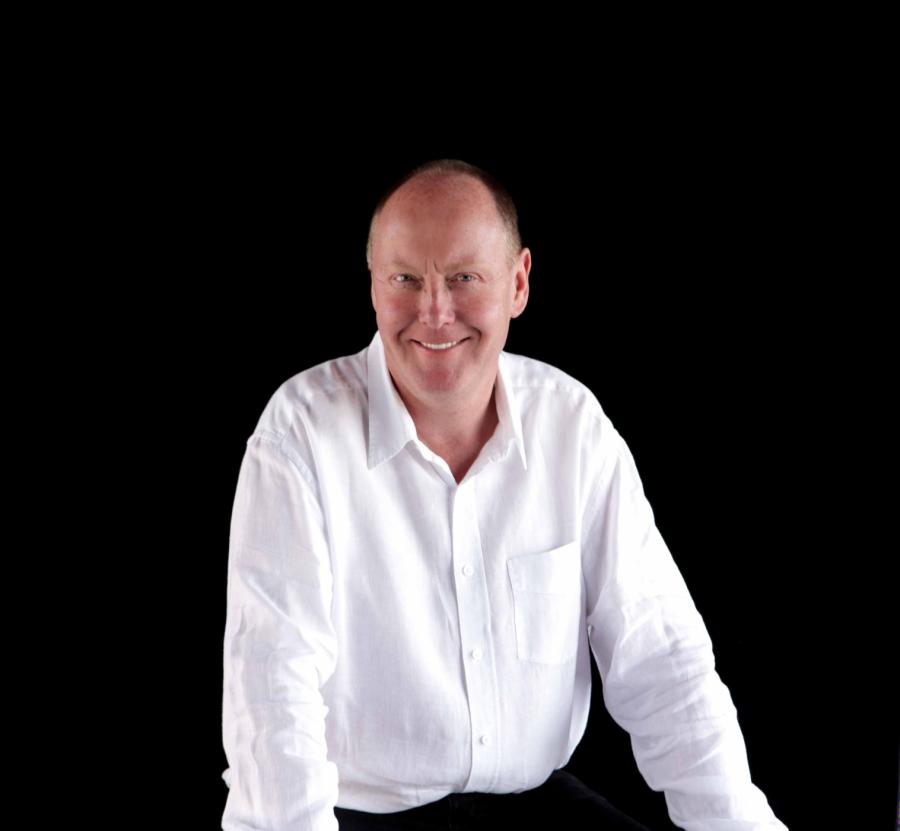
Then, as the shadows lengthened, we returned for the unabashed grandeur and virtuosity of the Ode for St Cecilia’s Day of 1739. The singers and players of Gabrieli (no longer “Consort”) under Paul McCreesh (pictured below by Ben Wright) brought an equal but differently-weighted panache and authority to these contrasting works. With two major statements and no shorter pieces, this day-to-night Handelian epic certainly ravished the ears. But did this hugely generous bill prove not quite as satisfying as a slightly more modest feast? The musical prowess never faltered, however, with delights to savour every step of the way.
With Acis and Galatea, we heard the original version for just five singers who double as a commenting chorus, and a chamber ensemble. With a sly, smart libretto by John Gay (and possible retouches from Alexander Pope), Acis shows Handel playing in a higher literary league than he often did, and the sophistication of the music – artfully mock-heroic, but never simply parodic – matches the wryly knowing text.
As the nymph Galatea and her beloved, doomed shepherd Acis face the murderous wrath of his scary-comic rival, the giant Polyphemus, words and music give us a sort of posh-Cotswolds pastoral, with rural toffs who might shop at Daylesford Organic and chat in gastropubs with David Cameron and Alex James of Blur. Yet the silly story (taken ultimately from Ovid’s Metamorphoses) and not-quite-serious approach nonetheless draws from Handel a torrent of melodic marvels and vocal glories.
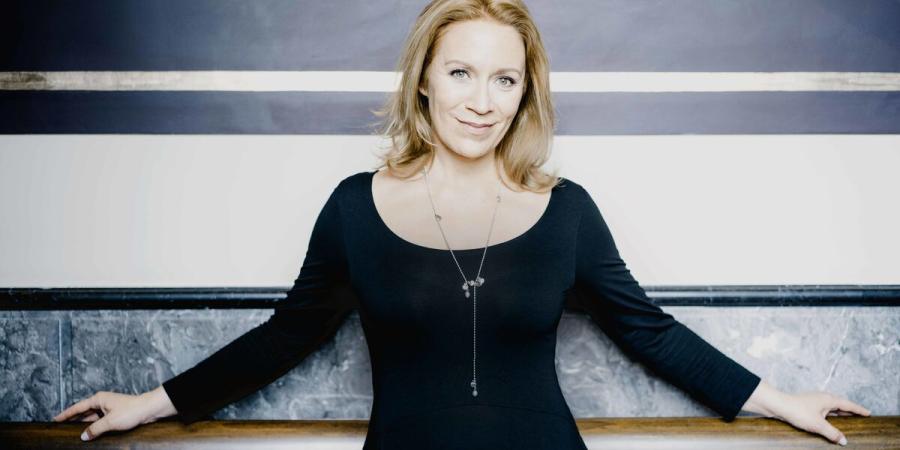
Carolyn Sampson (Galatea, pictured above by Marco Borggreve) and Laurence Kilsby (Acis) both hit that sweet spot between sincerity and mockery, artlessness and sophistication, with unerring aim, and both attractively united the mingled polish and pathos that their parts demand. Jonathan Hanley, as Acis’s fellow-shepherd and life-coach Damon, injected impressive character into the stock role, while bass William Thomas (invariably impressive) lent the funny-sad monster Polyphemus a bruised dignity on top of his deliciously absurd pantomime-ogre antics. A kind of emotional truth intrudes on the courtly fun; we believe that “I rage, I melt, I burn” with thwarted longing, even though the suffering lover is a sort of Baroque Shrek.
The Acis score offers a bumper box of finely-crafted artisanal chocolates, and the handful of instrumentalists provide some of the most luscious fillings. If none quite equalled the spectacular recorder solos of Rebecca Miles as she summoned the birdsong of Galatea’s “pretty warbling quire”, the mellow oboes (Alexandra Bellamy, Sarah Humphrys), rich cellos (Andrew Skidmore, Christopher Suckling) and violins led by Catherine Martin all chipped in with full-flavoured contributions.
The singers in their airs did ample justice to Handel in his astonishingly fertile hit-machine mode, from Kilsby’s endearing “Love in her eyes sits playing” to Sampson’s lament (“Heart, the seat of soft delight”), Archie Inns’s beautifully sung plea (as the swain Coridon) for the rough beast Polyphemus to opt for charm rather than force (“Would you gain the tender creature”) – and Thomas’s surprising lyric ardour, as it overcomes the giant’s musclebound clumsiness, in “O ruddier than the cherry”. Yet all shifted securely into chorus mode for the pieces that show Handel lending this arch entertainment a depth and resonance that might have baffled his patron, the Duke of Chandos: above all in the riveting intensity of “Wretched lovers”. It’s like finding a Ferrari F1 engine fitted to an ice-cream van.
Acis and Galatea alone might have anchored the concert. Yet, after dark, we enjoyed the more formal and ceremonious abundance of the St Cecilia’s day ode. Both halves conjured from McCreesh and colleagues a committed and idiomatic Handelian style – or rather styles – but the mood-change still felt stark. To register the transition, Sampson and Kilsby (as soprano and tenor soloists) donned scarlet and turquoise in place of plain rustic blacks. The Gabrieli players swelled in number, with added – and crucial – trumpets (Neil Brough, Paul Sharp), timpani (Adrian Bending) and organ (William Whitehead), along with a 20-strong chorus.
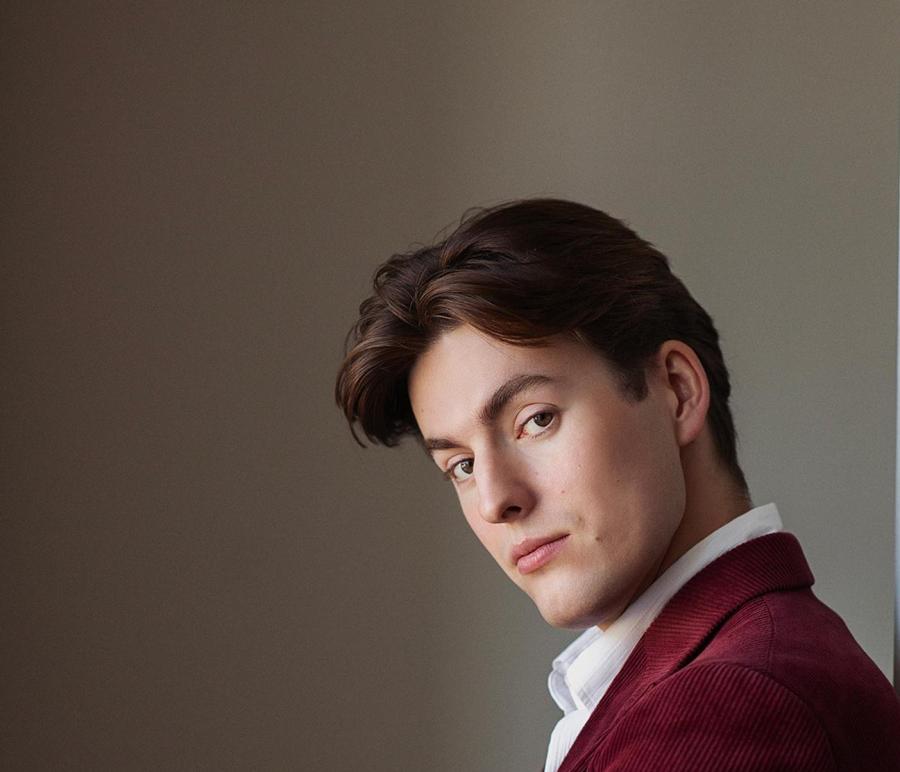
John Dryden’s exultant tribute to the heavenly magic of music again furnishes Handel with a top-drawer text, and he responds with a succession of glittering showpieces. Sampson, in particular, managed to differentiate the more lustrous, blooming and ceremonial tone of the Ode’s numbers from her more innocent Galatea. Kilsby’s tenor (pictured above by Karoline Heller) made a commanding but subtly-shaded guide to the emergence of “heavenly harmony” from the primordial Chaos that Handel (preceding Haydn by six decades) daringly evokes.
The musical climax arrives with Sampson’s aria, “What Passion cannot music raise and quell!”, the lines sumptuously phrased (with more vibrato than in Galatea mode) against the dark, involving cello obbligato of Andrew Skidmore. Trumpets and organ too rose in style to their solo spots, while Katy Bircher’s “soft complaining flute” floated gloriously in from far away to augment Sampson’s lines. In this piece expressly designed to showcase instrumental voices, should they perhaps have come centre-stage?
In any case, when Kilsby, with all the robust refinement of his tone, told us that “Sharp violins proclaim their jealous pangs”, those crunching, pulsing Gabrieli strings most definitely weren’t (sharp, that is). And this double banquet of Handelian dishes ended with a thrilling fugal sign-off. McCreesh lifted the Gabrieli chorus to the mystic splendour of their finale, as “The dead shall live, the living die/ And music shall untune the sky”.



Add comment