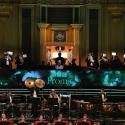
Blame it on the box set. The four Bach Orchestral Suites fit neatly together as a recording project. They used to fill out the four sides of a double LP back in the early stages of the baroque revival. Completists and collectors could rejoice then, and with many more versions to choose from, they still can now. But are these pieces, which were never intended to be played one after the other, varied enough to make a satisfying and convincing concert? Not really.
The first problem is a nagging propensity to hang around in D major. Two of the four suites – so half of the set in the versions normally played these days – remain solidly and stolidly in that key throughout, in order to accommodate the grandeur of a three-piece trumpet section. The solution last night was to keep that pair as far apart from each other as possible, to begin the concert with one, and to end with the other. The Suites each have the same form of a sequence of dances.
Another cunning plan was attempted to bring some variety to this concert. Each of the Suites was accoutred with a short, new pièce d'occasion from a contemporary composer, co-commissioned by the Dunedin Consort and the BBC Proms, and written for the same instrumentation as the Suites. It is a similar programming formula to that used in to another compendium-style and much longer Prom enterprise last season, when the Brandenburg Concertos were paired with contemporary pieces, again with mixed results. Here the brief given to the composers was more constricting, to say the least.
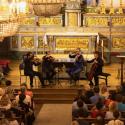
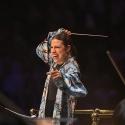
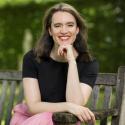
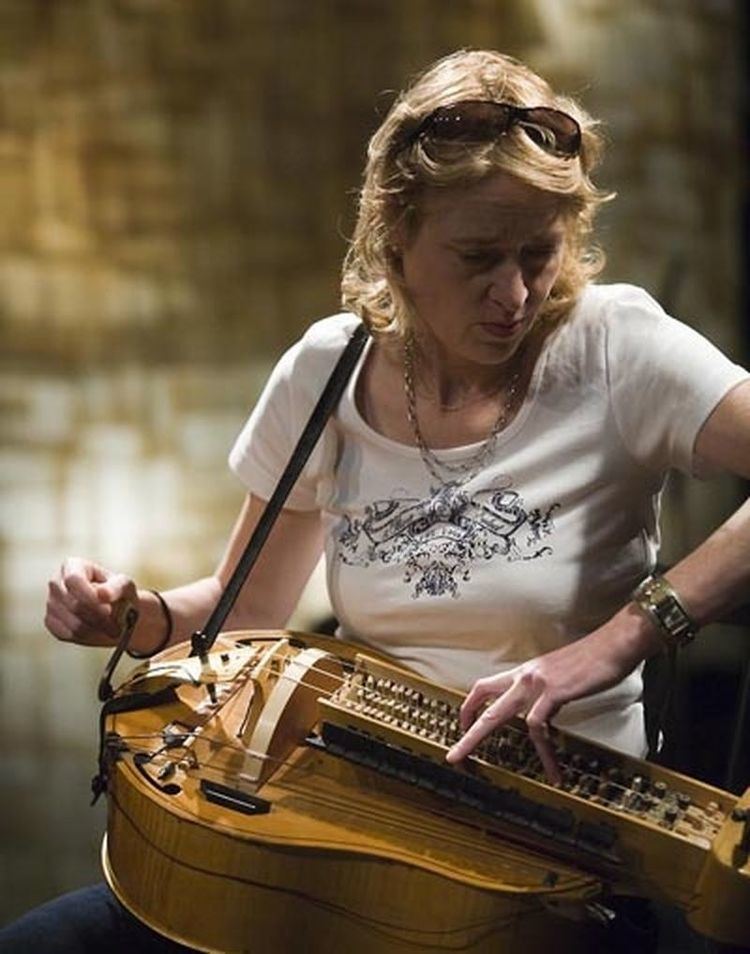 The composers on this occasion were Nico Muhly and Stevie Wishart (pictured right playing the hurdy-gurdy) hose compositions came after the Bach Suites Nos. 4 and 1 in the first half, and Allie Robertson and Stuart McRae, who curtain-raised for Suites 2 and 3 after the interval. The programme timings in the programme for all of these pieces were all given at ‘around two minutes’.
The most flamboyant and mood-breaking of the pieces was Stevie Wishart’s The Last Dance? She juxtaposed string writing with the punch and heft of the "Glorification" scene from Stravinsky’s Rite of Spring with field recordings of the song of the endangered hooded grebe. Another successful piece was Stuart Macrae’s which gave the prominent dotted rhythms of Bach’s overtures a thorough working-over, and also had a passage of eerily rising fourths. It seemed to engage more deeply with Bach than either Nico Muhly’s very slight Tambourin or Allie Robertson’s over-sentimental Chaconne.
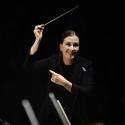
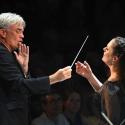
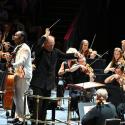
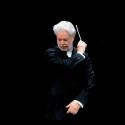
And how was the Bach? Things started shakily. The trumpets were splitting notes at the outset, and that seemed to spread uncertainty and reticence in the band, and might have been what led to some sour oboe tuning. Things did promptly recover, and we could enjoy the many virtues of John Butt’s direction. When he frees up the rhythmic pulse he always does so in a way that feels natural, and he also leads the ensemble with great clarity.
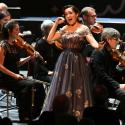
 There were some good moments when solo players were able to take command, but they were all too brief. Bassoonist Joe Qiu (pictured left left by Mon Sirisit) was a strong presence in Suite No. 1. Violinist/leader Matthew Truscott shone when given the first statement of the “Air” from Suite No.3, and Katy Bircher made a vivid impression when briefly given the solo part on her own for the central section of the Polonaise in Suite No. 2. That really was a blink-and-you’ll-miss-it moment; for the rest of the time – and presumably for reasons of balance with the orchestra – the decision had been taken to give the solo part to three flautists playing in unison.
The brevity of these solo moments drew all the attention in on the orchestra and their ability to leave the impression of rhythmic alertness, style and character. The Dunedin Ensemble play well, but there are clearly some continental ensembles which reach higher standards, and there were moments when one simply wanted more from this group. The “Sarabande” of Suite No.2 can be a moment of ineffable calm and beauty; here it never really settled. The final “Gigue” of Suite No.3 can buzz with the excitement of a sprint to the line; it was beset with orchestral raggedness.
Above all, this Prom proved the point that, rather than looking either good on paper or neat in theory, concert programming always needs to prove its effectiveness in the moment. That, above all, is where this particular "Bach Night" in homage to Henry Wood fell short.