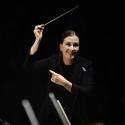
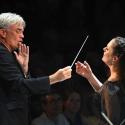
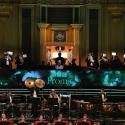
Semyon Bychkov was a surprising choice to take over the Czech Philharmonic last year, a conductor with few obvious connections to Czech music. But on the strength of this visit to the Proms, they make a good team. Bychkov communicates fluently with the players, conveying power and passion, and detail too, but without any overt theatrics at the podium.
The Czech Philharmonic has a burnished tone, well projected and filling the Albert Hall, but more with colour than with weight. There is an elegant and lyrical flow to everything the strings play, which Bychkov is able to harness and shape. The woodwinds are sometimes reedy but always have plenty of character. And the brass can sound nasal, but deliver punch when required. But the defining virtue of the Czech Philharmonic sound is delicacy, a kind of fragility or reticence that adds an extra expressive dimension, and proves as valuable in Shostakovich as it does in Smetana.
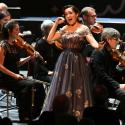
Excerpts from Smetana’s The Bartered Bride opened the concert. The Overture is often taken at breakneck speed, but Bychkov held back, allowing the momentum to build from within each of the string sections. Hard sticks on the timpani brought decisive focus to the proceedings, and colourful woodwind flourishes completed the effect. The Three Dances that followed are more often heard as encores, and here served as a reminder that the Last Night of the Proms is just a few days away. 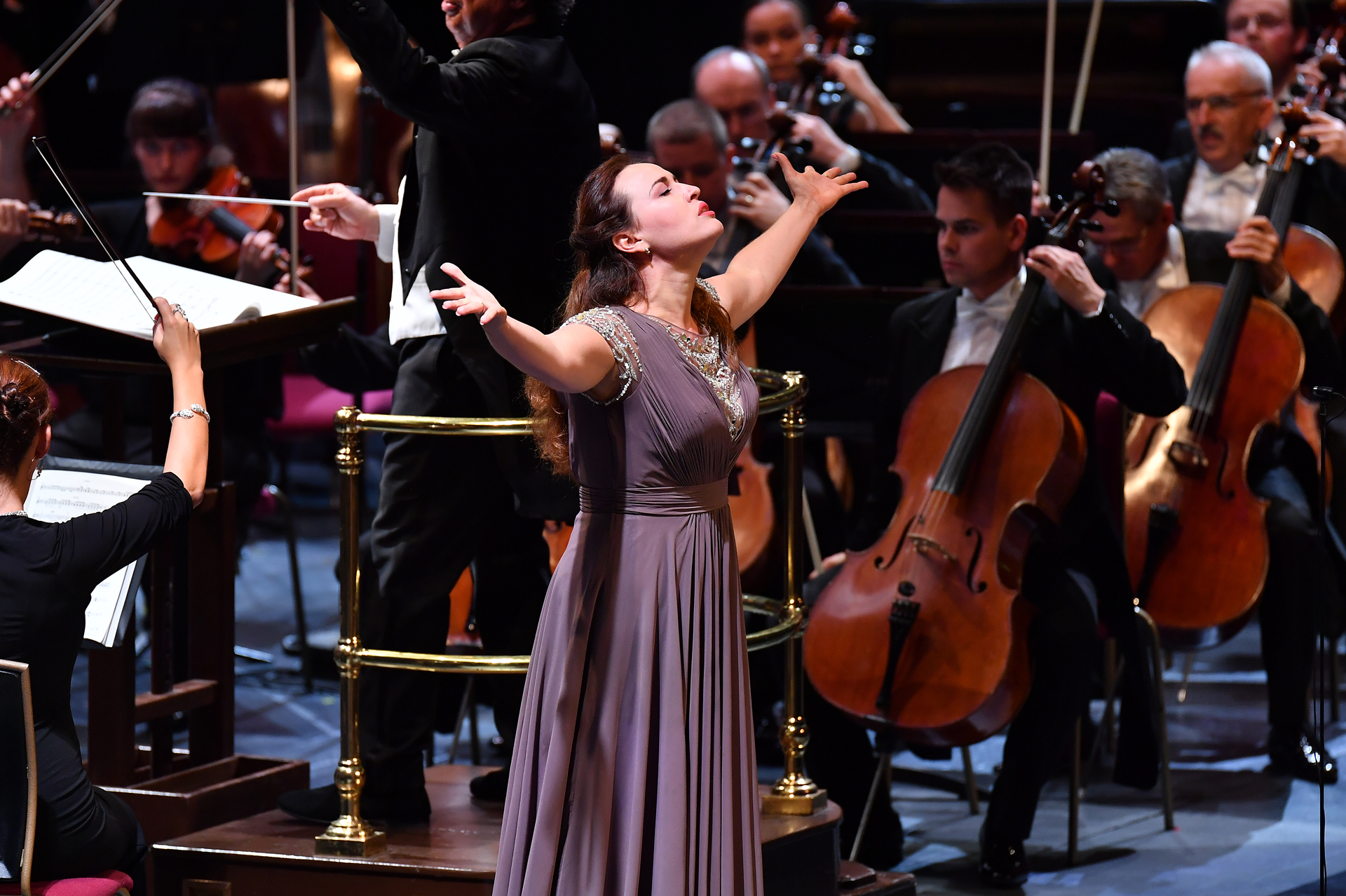 Soprano Elena Stikhina (pictured above) is new to the London stage, but she is a name to watch. Moscow trained, and a prize-winner at several opera competitions in the last five years, she now appears to be pursuing a career in the heavyweight roles, particularly Wagner and Verdi. So Tatiana’s Letter Scene from Tchaikovsky’s Evgeny Onegin might seem a curious choice for her UK debut. That Wagnerian power sits uneasily with the character’s youth and innocence, but with disbelief duly suspended, this was a stunning performance. Stikhina has an ideal combination of clarity and richness to her tone, alto-like in the lower register, but continuing it with ease right up to the top. Her vibrato is slight, and carefully applied for expressive effect – a superlative technique in every respect. Bychkov and the orchestra proved ideal partners, the conductor leaning into the ebb and flow of the impassioned music, and the orchestra responding with suitably lyrical and expressive lines. A special mention too for oboe soloist Jana Brožková, whose light and complex tone defined the orchestral sound here.
Bychkov has a well-earned reputation as a Shostakovich specialist, and the programme informed us that he has previously conducted Symphonies 10, 11 and 7 at the Proms. This performance of the Eighth was ample demonstration of that mastery. As with the Smetana, he rarely seemed to push the music, instead letting the power build from within the orchestral textures. So, in the first movement, our attention was directed towards the blithe elegance of the long violin melody, allowing Bychkov to conjure the dark forces in the lower strings then gradually overwhelm the orchestra with these dark harmonies, a powerful effect.
The inner movements were a showcase the many fine soloist of the woodwind section, particularly the cor anglais. The violas held their own at the start of the third movement, with plenty of weight, but agility too. Bychkov’s mastery of Shostakovich’s musical rhetoric was clear from the way he introduced the belated turn to the major in the last movement. There was nothing triumphant about it, more wearied acceptance, the players delivering the brighter harmonies, but again with their trademark burnished tone, all the details clearly illuminated within the orchestral textures, a clarity that only highlighted the ambiguity and reticence of the composer’s message.