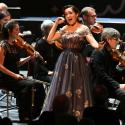
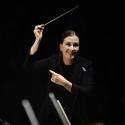
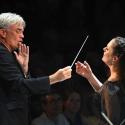
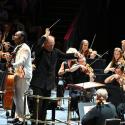
No-one, least of all the players, will forget Semyon Bychkov’s 2009 Proms appearance with the BBC Symphony Orchestra in a poleaxing interpretation of Shostakovich’s Eleventh Symphony. They had already made the history books this Proms season with a searing concert performance of Musorgsky’s Khovanshchina when last night they did it again with a Tchaikovsky Manfred at the same, highest, level as the team's Barbican Francesca da Rimini.
Bychkov is one of those conductors who bring a special, deep-level sound with them. It helps that the BBCSO is in top form after years of training with the late Jiří Bělohlávek and ongoing work with their current chief conductor Sakari Oramo, who seems to enjoy the rare honour of being adored by everyone in the orchestra. The earthy sonorities in which Bychkov specialises opened both Taneyev’s Overture to The Oresteia – one half the pursuit of a grim fate, the other Apollo’s shining redemption for Orestes – and Manfred: in the first instance with writhing double basses, in the second piercing bassoons and bass clarinets protested by jabbing lower strings.
The Taneyev, despite its odd proportions and a feeling of going nowhere until the sacred processional arrives to save the day, kept its dignity by means of the unceasing attention to detailed colour; the interpretation has had a chance to find its way even more clearly since the same team performed it at the Barbican. Rachmaninov’s First Piano Concerto, a shallower interloper, needed a bit more fire in the orchestral ricochets of the outer movements and a less brittle sound in legato from soloist Kirill Gerstein (pictured below by Marco Borggreve), though his transcendental filigree and unstinting clarity were always impressive. Visually, this was a reversal of the Third Concerto performance earlier in the season, with pianist Alexander Gavrylyuk keeping his head down and conductor Thomas Dausgaard watching him like a hawk; Gerstein seemed to do all the watching. But the end results were the same – total cohesion between soloist and orchestra.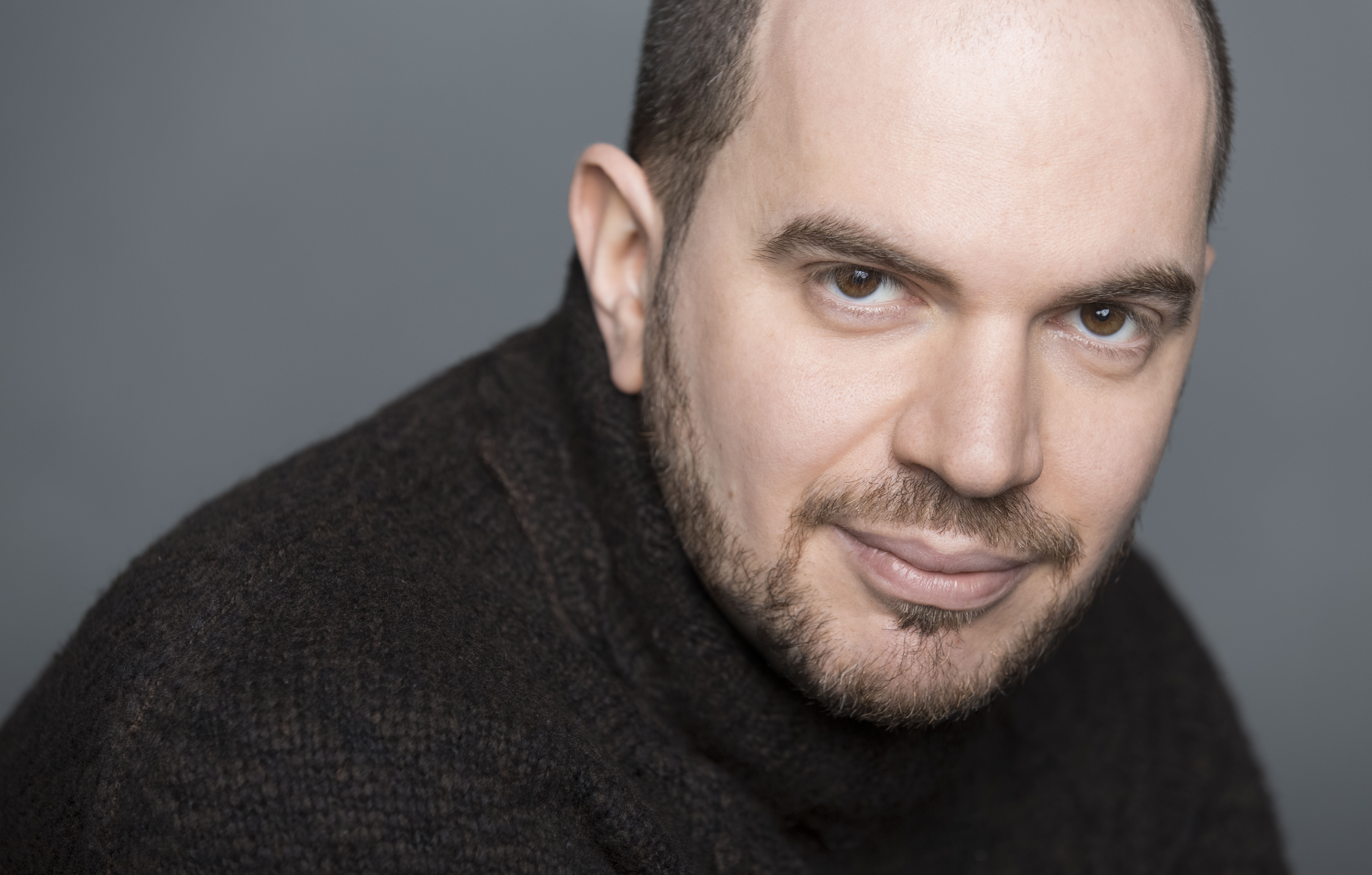 Manfred was unquestionably the main event, though. It has to be Tchaikovsky’s most elaborate score, four-fifths masterpiece until the composer opts for an absurd religious apotheosis which Byron’s tormented wanderer never gets; the better the performance, as here, the more you wish the conductor would follow a naughty established habit of cutting out the organ business and leaping back to a reprise of the thundering tragedy which ends the first movement. Is there room for some other composer to dare a new performing edition and get Tchaikovsky out of the quagmire in which he found himself during the finale’s underground orgy, starting so brilliantly?
At any rate the rest is unimprovable, and in an interpretation like this where both the full body of sound and the finessing made such an impact, you could only gasp at Tchaikovsky’s scaling back for the scherzo – all waterfall glitter with the woodwind making an unusually present contribution, beautiful rainbow and a central vision which serves up a vintage Tchaikovsky melody. The ensuing pastoral was led by an oboist I haven’t encountered in the BBCSO before, Dan Bates; pace Alan Hollinghurst’s question on what I meant by a “feminine” sound from the Royal Stockholm Philharmonic principal the night before, this was a beefier tone, but still capable of sophisticated retreat.
Other unfamiliar players making their mark included first horn Katy Woolley, posing melancholy enigmas in the first and third movements, and guest leader Igor Yuzefovich. For all the inevitable Proms swings and roundabouts in personnel, one thing’s for sure: the orchestra which provides the backbone of the Proms has never sounded better, and with a Sibelius cycle from Oramo promised for the following Barbican season, it’s worth reminding summer visitors that its life outside the world’s biggest music festival is just as vital.