

The Ulster Orchestra’s Prom finished early to accommodate a late-night concert by the esteemed Tredegar Band – but by then, we’d already enjoyed one spectacular brass showcase. Under its justly-praised chief conductor Daniele Rustioni (formerly assistant to Antonio Pappano at Covent Garden), the Belfast-based outfit crackled and glowed in every department but especially at the back, where a robust, assured and often lyrical brass team delighted a virtually full house.
Four mostly familiar and well-loved works; no interval; a closing time of 8.35pm that left the option of a leisurely supper in the warm summer dusk: no one would want all programming to look like this, but it certainly worked a treat on this occasion. In particular, the undivided 90-minute span felt like solid value without any patience-testing ordeals. That, though, will depend on the choice of works.
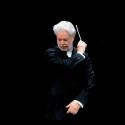
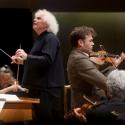
The Ulstermen and women played to the gallery – and stalls, circle and arena – with a buffet of Austro-German Romantic favourites that began with Wagner’s Tannhäuser overture and Venusberg music before proceeding by way of Richard Strauss’s Four Last Songs to Mahler’s Blumine – originally incorporated as a movement in his First Symphony but later detached – and Schumann’s Fourth Symphony. A conservative menu? Perhaps. Delectable? Without doubt. Well-seasoned and stylishly served? In every course. Even if I’ve heard heftier (more Germanic?) horns as Tannhäuser set out on his pilgrimage, Rustioni and his brass found a grace, ease and warmth in the opening hymn that nicely prepared the way for the explosive colour and energy of the Venusberg bacchanalia. 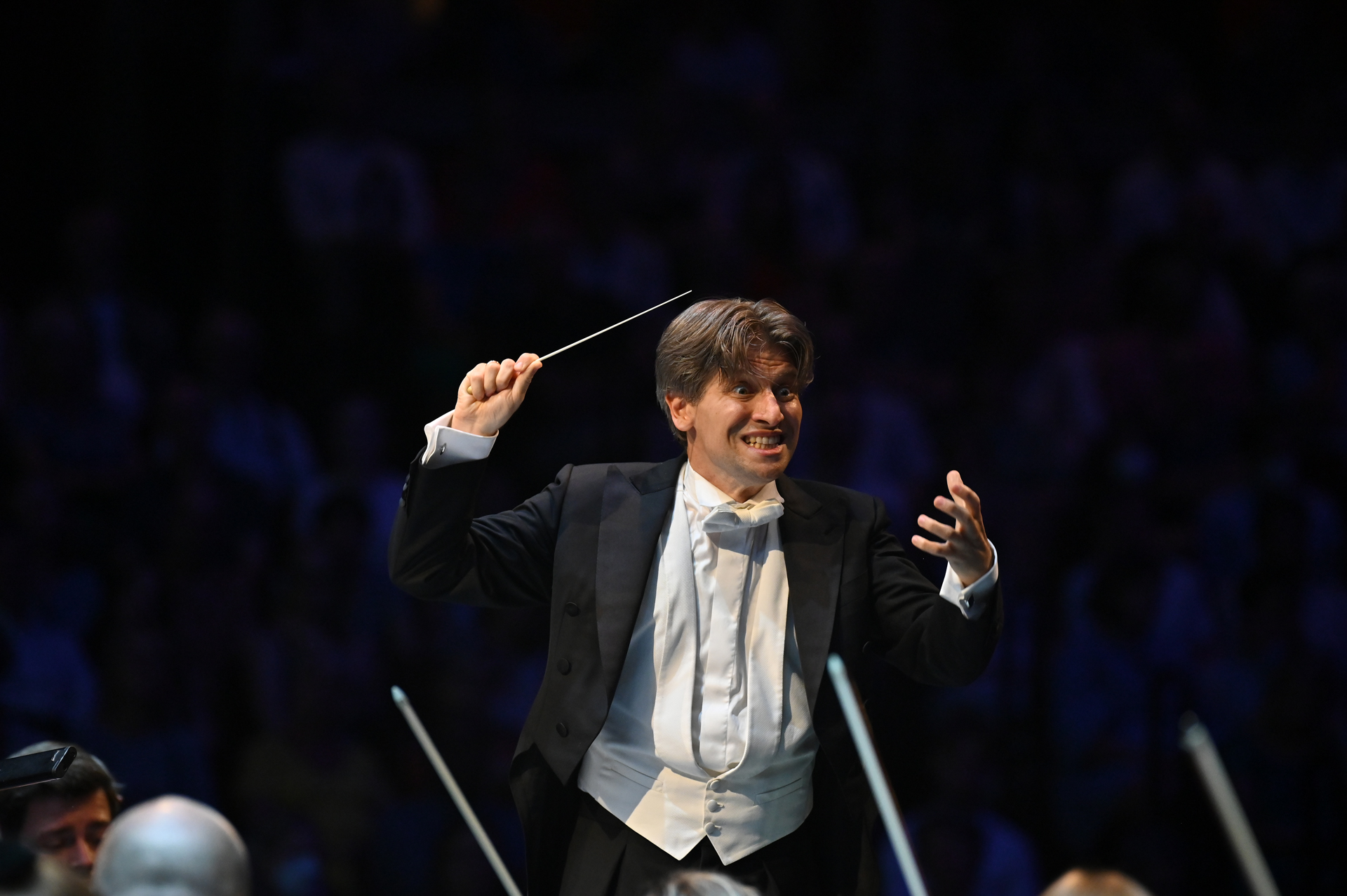 Athletic, even gymnastic, on the podium, Rustioni (pictured above) performed all the drama of the score but these were not mere empty baton-waving gestures: the orchestral textures felt firm and well-defined, with a clarity of articulation, dynamic variation and a strong sense of instrumental dialogue. He gave a savoury, characterful voice not just to the Wagner –with each individual brick nicely pointed in the wall of sound – but the evening’s other items too. The orgiastic ecstasies of the Venusberg communicated a real sensual thrill, while the smoky depth of the Ulster brass and the creamy gloss of their strings came splendidly to the fore as the tempi slowed.
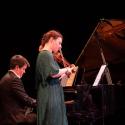
In the Four Last Songs, Louise Alder brought all her radiance of tone, expressive phrase-making and precision of diction to the peerless series of elegies that Kirsten Flagstad premiered here at the Royal Albert Hall in 1950. Of course, full orchestration in a vast barn like this necessarily creates a mood far from the hushed intimacy of the recital room. But Alder (pictured below) managed to make the spaces shrink with the lustrous lower reaches of her soprano, while her top notes glided heavenwards and somehow, without undue strain, cut through the rustling, murmuring forest of the orchestra behind her. Principal horn Paul Klein (in stellar form throughout) achingly captured the wistful solo of “September”, while the orchestra’s leader Tamás Kocsis complemented the soaring rhapsody of the leave-taking voice in “Beim Schlafengehen” with his own gorgeous farewell melody. Enriched with a lifetime’s opera-house expertise, these songs must sound like arias, not just static prayers. Together, Alder and Rustioni conveyed their dramatic pivots of colour and feeling as well as the twilit serenity of the overall effect. Rapt and still, silent at the close, the audience played its part too. 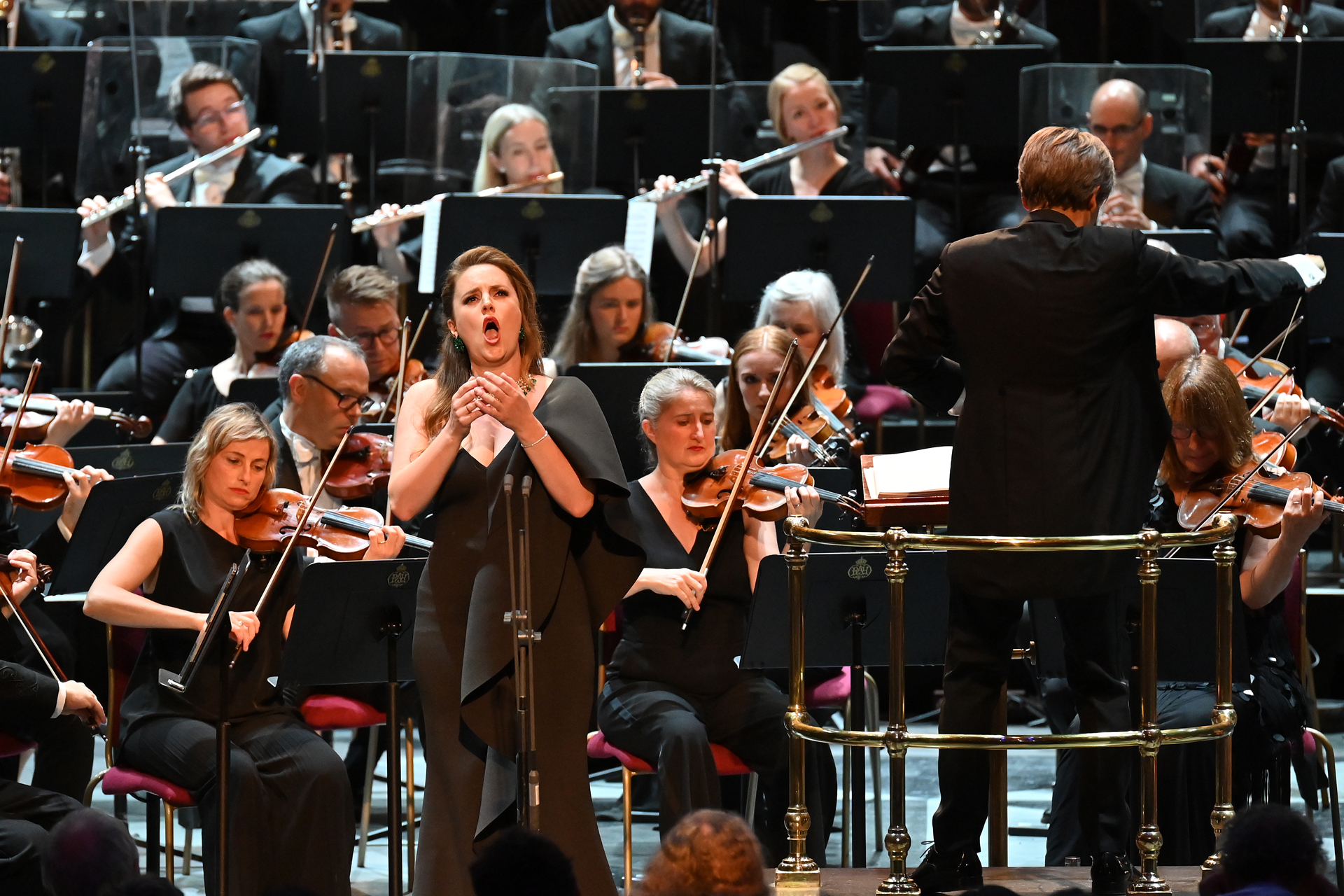 Mahler’s Blumine gave us another brass highlight in the shape of the – superbly delivered – trumpet solo by Tom Fountain that opens and closes the piece. Rustioni’s measured tread never dawdled as the sumptuous serenade unfurled, its sweetness kept just this side of schmaltz by his alert tempi and lucid textures. After this dreamy interlude, Rustioni’s high-impact, high-contrast style found a fitting vehicle in the Schumann Fourth. He converted its choppy, stop-start form into a virtue with playing that turned the abrupt translations and reversals into a wild, exhilarating ride. The Ulster ensemble gave us the revised, 1851, version of the piece: grander, more heroic, and arguably more cohesive, although Rustioni still found plenty of musical somersaults to turn.
From the spring and punch of the opening chords, it was clear that the Ulsters would banish any dull moments. All the way through, the regular (or irregular) shifts between serenity and frenzy, Langsam and Lebhaft, arrived with a delicious sense of surprise, the brass once more stalwart in the rear. The lovely Romanze for cello and oboe that interrupts this hyper-active to-and-fro found effective interpreters in Jonathan Weigle and Chris Blake. And in the finale, Rustioni positively bounced and flew as he unleashed its salvo of stormy climaxes.
Too much stress on the melancholic Schumann can occlude his capacity for joyful exuberance. We had lashings of that genial gusto here. There will be more adventurous Proms this summer, but few that give so much compact and well-packaged pleasure. It’s hard to imagine a neater, sweeter summer night.




Add comment