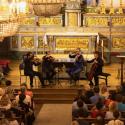
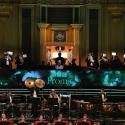
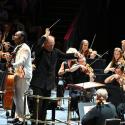
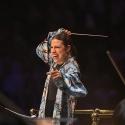
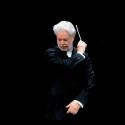
It is interesting to note how, in the space of a few short decades, so-called “period instrument” performances of classical music have moved from edgy experimentation to the mainstream of the tradition. In last night’s Prom, the Orchestra of the Age of Enlightenment (OAE), born in 1986, was paired with the choir of King’s College Cambridge, tracing its origins back to 1441, to largely happy effect.
The programme was dominated by two very different mass settings: Haydn’s Mass in Time of War, marking a period of political uncertainty, and Fauré’s Requiem, offering gentle solace in the face of death. While the Haydn falls squarely in the OAE’s historical time slot, the window of “historically informed performance” has in recent years stretched into “authentic” accounts of early 20th century works, and here embraced the 1889 version of the Fauré.
The OAE were represented by a small number of players, accompanying a choir of just 30, very different from the choral society performances in which these masses, and the Fauré in particular, are often heard in this country. There were benefits and drawbacks to this approach evident in both pieces. The Haydn had leanness and edge in its sound, but lacked the weight to really fill the expanses of the Royal Albert Hall. Our ideas of what feels threatening and disturbing in music have clearly changed since Haydn’s time, but the menace of the “time of war” was largely lacking.
In the Fauré Requiem, lacking the blood and guts of Verdi, a big sound is not required, so was not missed. The orchestra and choir were well balanced but I wasn’t sure about the decision to use the main organ instead of the chamber organ used in the Haydn. There were co-ordination issues in the first and last movements of the Fauré, which might have been obviated.
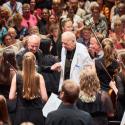
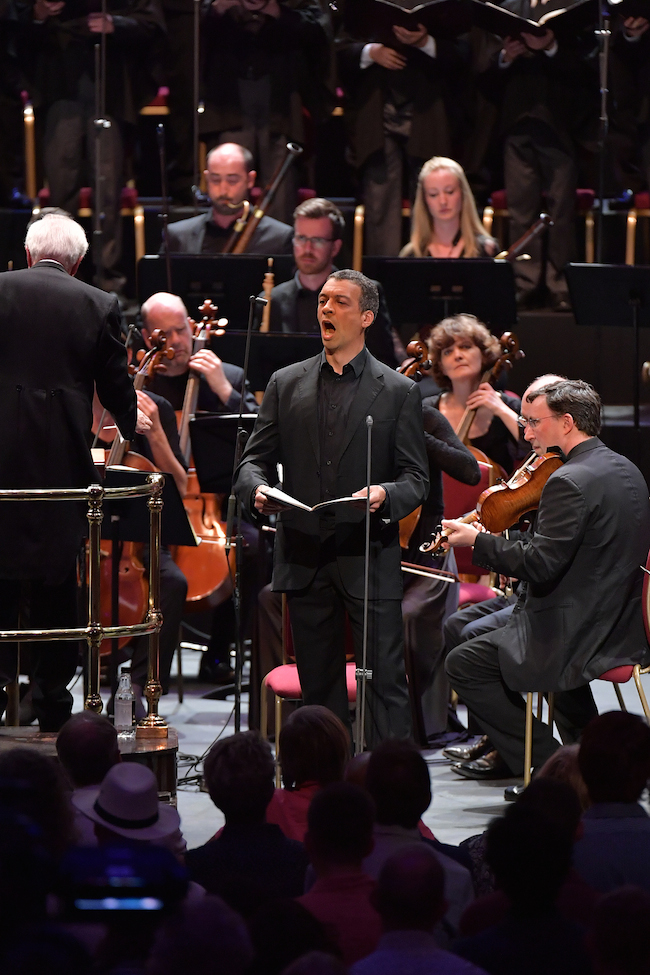 The start of the Fauré was a bit uncomfortable; the orchestra took a few moments to settle, and the choir’s first entry was somewhat tentative. Otherwise the choral singing was good, with some stark, almost medieval sounding passages in the “Offertorium”. The middle section of this movement, the “Hostias”, stays on a single note for longer than seems feasible. It was delivered by baritone soloist Roderick Williams (pictured left) with the utmost musicality, showing a control of tone and colour that was almost miraculous. He also excelled in the later “Libera me”, the most dramatic movement, in which he was restrained, sensibly under-egging the moment but at the same time totally commanding the hall. The central movement of the Requiem, “Pie Jesu”, was taken by a boy treble, Thomas Hopkins. His performance was nerveless, sensitively phrased and showing a variety of dynamics.
Before the Requiem we had two smaller bits of Fauré that could have been omitted without much loss. The charming Pavane sounded out of place on those instruments in that space, and the Cantique de Jean Racine, in an arrangement by John Rutter, sounded Rutterish and a bit saccharine.
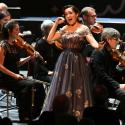
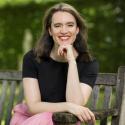
I’ve saved the best for last, although it came first on the night. In contrast with the death and war elsewhere, Mozart’s solo motet Exsultate, jubilate is pure youthful high spirits, dressed in only notional clerical garb. It is an operatic showpiece par excellence, and soprano Lucy Crowe was fittingly celebratory. The 15 minutes’ duration comprised two contrasting arias separated by a recitative, and concluding with an extended “Hallelujah”. The music is perky but elegant, tuneful but virtuosic, and Crowe’s sweet tone contained no hint of operatic overkill. Her high notes in the second aria were beautifully floated rather than blasted, and the glorious top C right at the end was made to sound easy.