As the lights dim the choir turn their backs on the audience. A spotlight picks out a single singer. With one hand aloft he leads the male voices through the “Pater Noster” and “Ave Maria” in a stern and stately plainchant. Then suddenly the full battalion of cornetts and sackbuts, theorbos and recorders burst into the joyful opening of Monteverdi’s Vespers, and we are up and running.
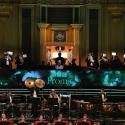
The Vespers, like Bach’s B Minor Mass, was not heard complete in the composer’s lifetime, and may indeed not even have been conceived to have been heard in a single sitting. As Bach did later, Monteverdi seems to have published the Vespers in 1610 as a professional calling-card, demonstrating his varied skills as a composer in order to promote himself on the job market. One way or another it did the trick since, soon after, he landed the plum job of director of music at St Mark’s in Venice.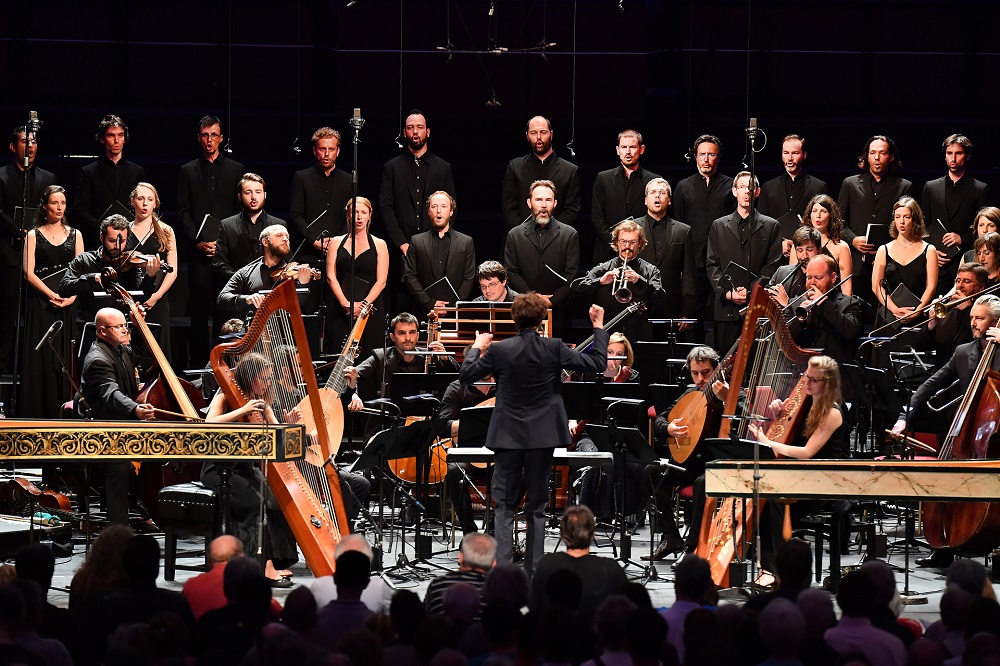 Taking the St Mark’s tradition as inspiration the young French conductor Raphaël Pichon made full use of the spaces within the Royal Albert Hall, with singers variously placed in the gallery, at the extremes of the stage, and by Sir Henry Wood’s statue in front of the organ. (Wood himself gave the first Proms outing for extracts from the Vespers in 1922, on a programme alongside Wagner and Suppé.) Pichon’s modern cori spezzati were well-judged and added variety to the performance, even if intonation was sometimes compromised in singers operating far from the instruments.
The music itself spans a wide range, from polyphonic choral writing, to madrigal-like vocal textures and passages of almost operatic solo writing. To this mix Pichon added a further element: the interstitial plainchant that would have been expected in liturgical performances in Monteverdi’s time. This, he says, “gives a very different face to this piece: something more quiet and contemplative.” They also added some 20 minutes to the running time of the piece, as all the plainchant passages were taken at a crawling pace. While this worked in places – such as at the beginning – it was surprising, given the inventiveness evident elsewhere, that there wasn’t any diversity in approach here.
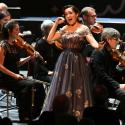
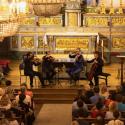
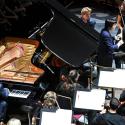
As ever with music of this type, there are many performance practice decisions to be made. The Pygmalion Ensemble played period instruments, and produced a wonderful array of sounds, including a watery, glistening passage for theorbos and harps in the "Nigra sum" movement. The choir was 35-strong, which is midway between the Andrew Parrott ideal of very small forces, and the massed choir approach. It seemed to balance well with the instruments, and the choir had, for the most part, clear diction and excellent ensemble.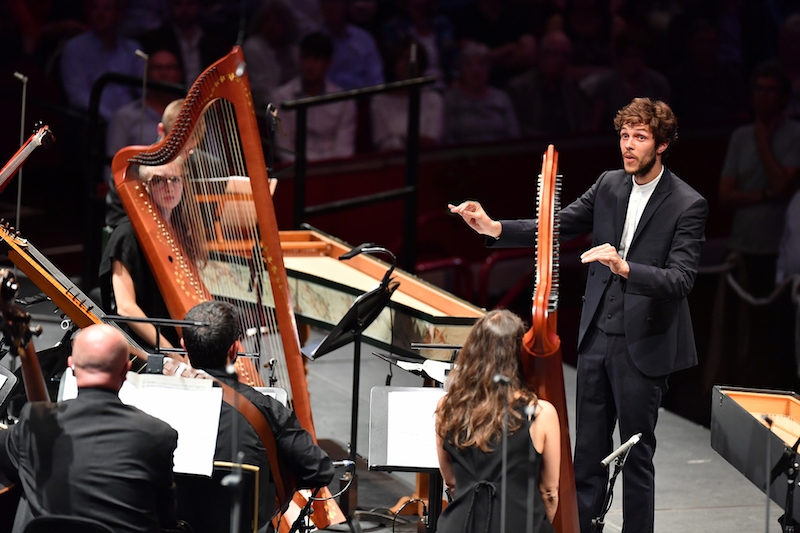 There was a pleasingly democratic approach to solos. The named soloists, when they weren’t singing as such, re-joined the choir, and at other times members of the choir took solos from within the ranks. It is hard to identify all the soloists for praise: the men managed both to look like one another and not much like their publicity shots. But a trio of them gave a stunning reading of the motet “Duo Seraphim”, and there was a wonderful interplay between stage and gallery in “Audi coelum”: “Hear, O heaven, words” with the reply coming back from the heavens.
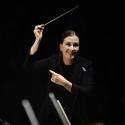
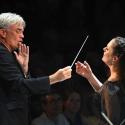
Best of all were the two female soloists, dark-toned Giuseppina Bridelli and the lighter, brighter Eva Zaïcik, who did not blend, but matched each other beautifully in a number of rapturous duets. Pichon (pictured above) was understated and unshowy, keeping his gestures as small as possible, but always completely clear, always moving the music forward, impressively in control.
The final flourish was pure invention on Pichon’s part. After the end of the Magnificat, the usual end of the piece, he returned to the opening toccata, interspersed with more chant, offering a grander ending than Monteverdi provided. Where other decisions – such as the inclusion of chant – could seen as driven by the pursuit of authenticity, this seemed to be a gut feeling to end with a bang. And I can’t be sure Monteverdi wouldn’t have approved.