

The reputation of Nikolai Myaskovsky has long been cast into shadow by the more exportable extroversion of his contemporaries Prokofiev and Shostakovich. Even at their darkest moments, neither of them does Russian gloom quite like Myaskovsky, but the 140th anniversary of his birth offers as good an excuse as any to listen more closely to a composer who operated at the very centre of 20th-century Russian music.
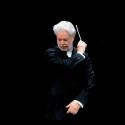
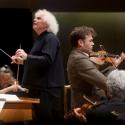
Last night’s opening concert may fairly be said to have unearthed a masterpiece. The Kremlin by Night is a short cantata written by Myaskovsky in 1947 to celebrate the 30th anniversary of the October Revolution. Suppressed after its first performance, it was finally revived a decade ago by the late Gennady Rozhdestvensky (in a performance available on YouTube) but even that inveterate campaigner for the odd and the under-rated couldn’t deliver an account of the work with last night’s ring of authority under the conductor Alexander Rudin (pictured below).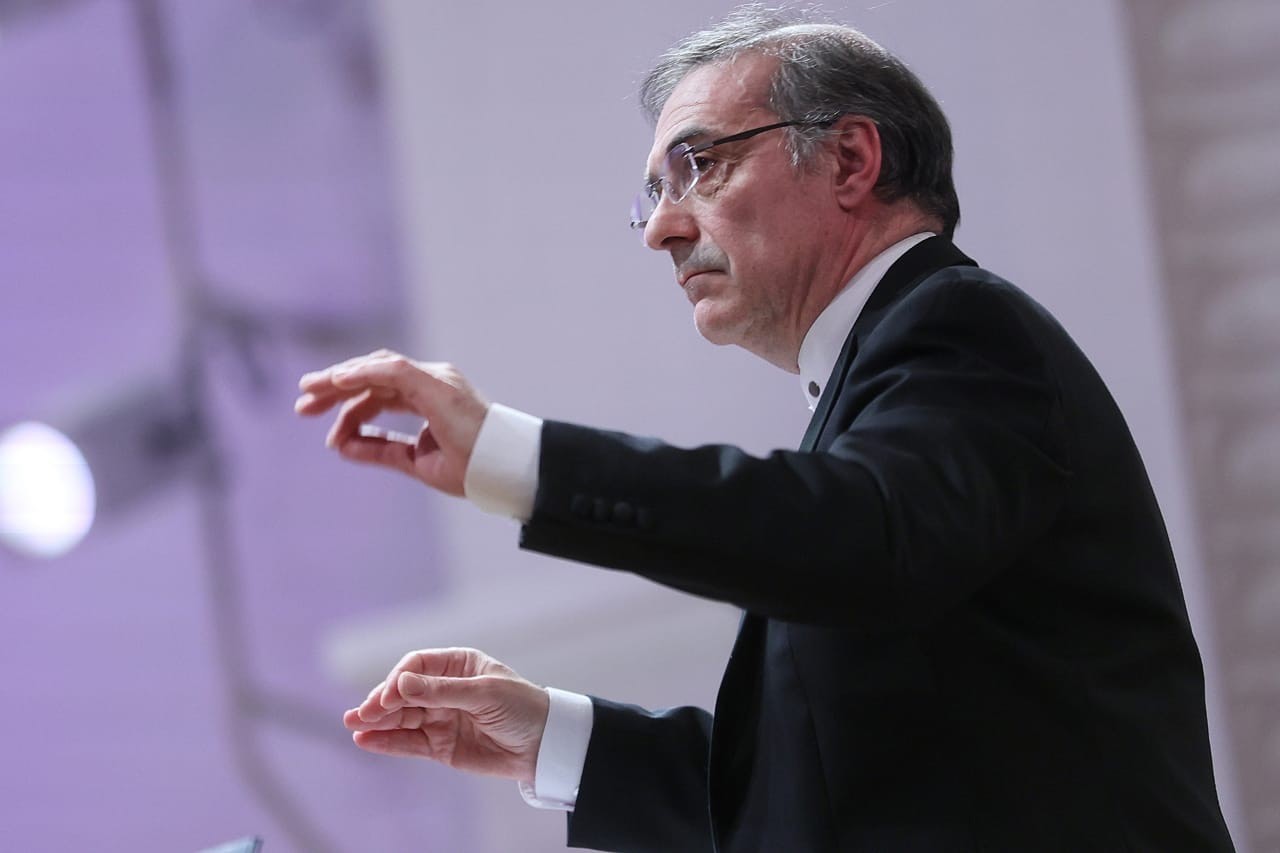 Unlike either of his more celebrated contemporaries, Myaskovsky was ill-equipped or disinclined – probably both – to write music with either his tongue in his cheek or his fingers crossed behind his back. He avoided Party commissions where possible and got on with composing quartets and symphonies. By 1947, however, such ‘Formalist’ tendencies were beginning to attract the censure of the Culture Committee led by Andrei Zhdanov. So he came up with an entirely individual and what must have seemed politically expedient solution, choosing to set a piece of shameless doggerel in praise of Stalin by Sergey Vasilyev. The leader is depicted at his desk in the small hours, inviting everyone from an academic to a blacksmith into his office; he listens while they speak. The wakeful Stalin is finally persuaded to rest from his labours by a female embodiment of History, and the cantata closes with an evocation of dawn over Moscow.
Myaskovsky’s response owes little to his predecessor Mussorgsky’s much-excerpted scene-setting in Khovanschina beyond the simple, sinuous beauty of its main theme. Shostakovich’s summing-up of him as ‘the Russian Vaughan Williams’ is much nearer the mark in the modal-ecstatic opening. The choral writing may be simpler than the English composer’s vision of a New Jerusalem in Sancta Civitas, but it speaks with a similar, mystic intensity, entirely transcending a text concerned with the modern wonders of the Kremlin’s telephone system and the machine parts and rye borne by workers to their late-night audience with Stalin.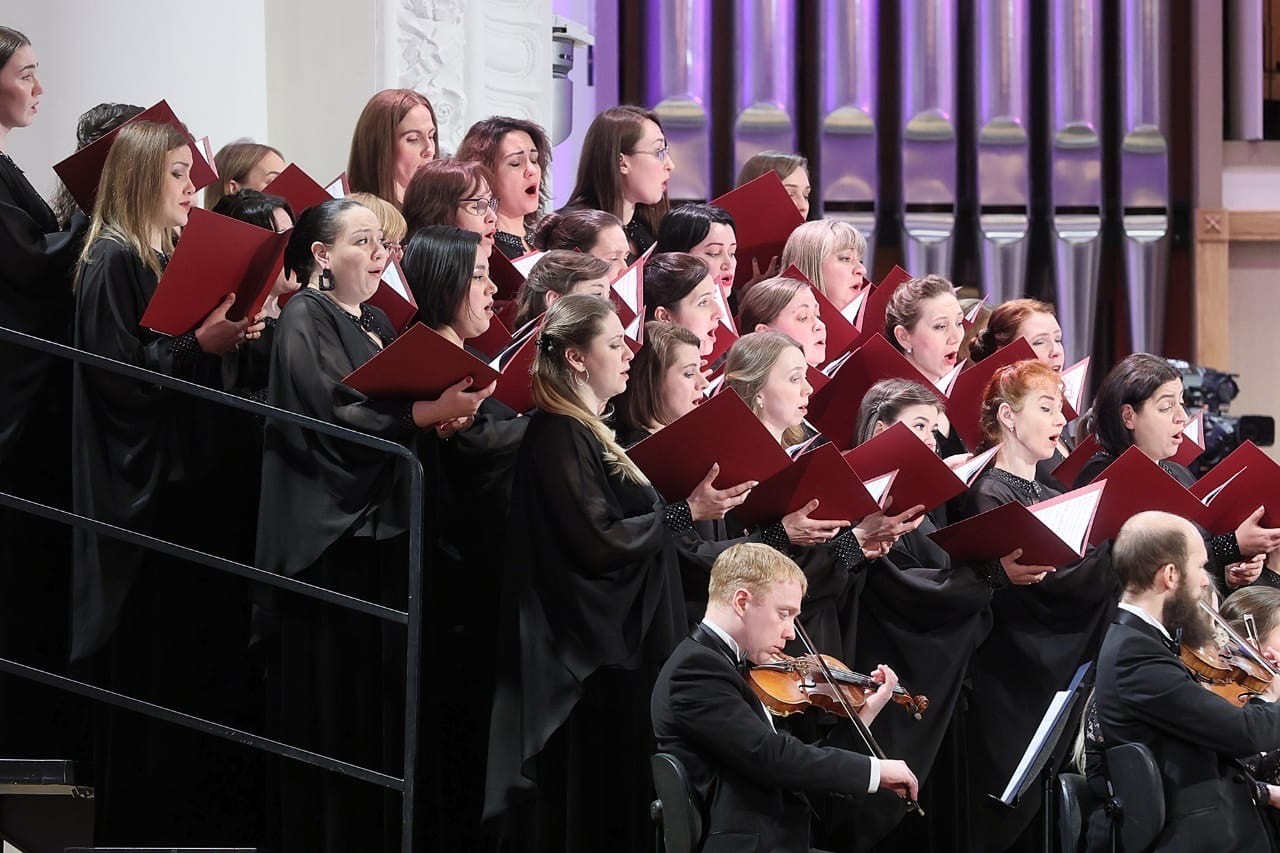 In the eyes of the commissars, Kremlin by Night bombed, ironically as it may seem to us now, through a perceived absence of realism – the right kind of muscular-heroic realism, anyway, rather than the shimmering, deliquescent textures which call to mind Myaskovsky’s Russian forebears such as Liadov and his teacher Glière, but also the European modernists he had esteemed in his youth: Debussy’s Nocturnes and less predictably the expressionist Schoenberg of Pelleas and Gurrelieder. Last night, the Yekaterinburg Philharmonic Choir (pictured above) sang the text with every appreciation of its musical if not literary virtues. Tenor Alexander Trofimov did well with a brief solo, but the star was soprano Klavdia Bashkirtseva as the old crone, hastening Stalin to bed with a quintessentially Russian lullaby – the most Mussorgskian part of the score – and youthfully poised tone.
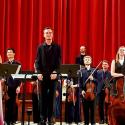
 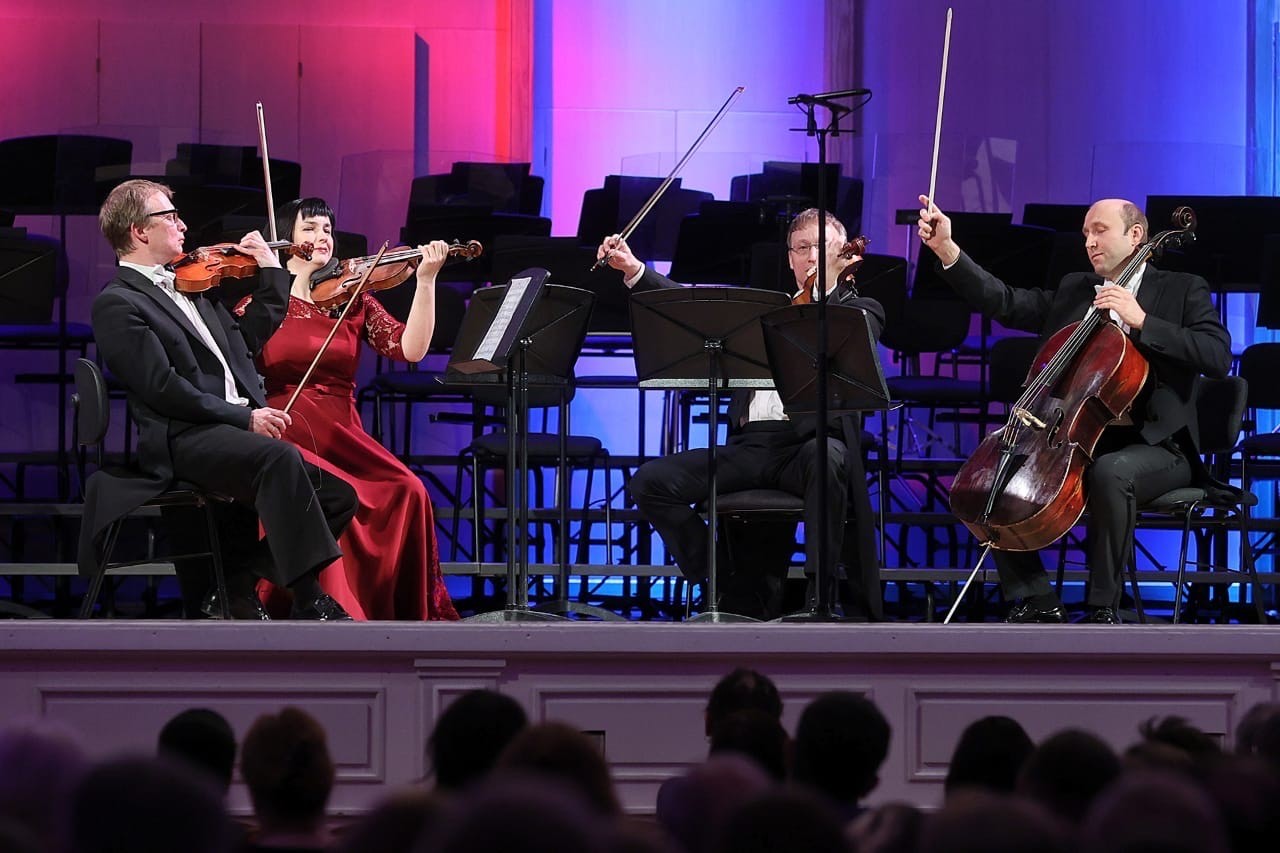 Either side of Kremlin by Night, the performances were stronger on form than finesse. The Sverdlovsk Philharmonic Quartet (pictured above) gave a mostly reliable account of the 13th String Quartet – Myaskovsky’s final work before his death from cancer in 1950 – without false sentiment. After the interval, the Ural Youth Symphony Orchestra played the 17th of Myaskovsky’s 27 symphonies, with Rudin imparting a nostalgic ardour worthy of peak-Rachmaninov to the big slow movement. The symphony suffers from a finale problem, but the concert as a whole sent out a clear signal that second-hand opinions and Soviet-era recordings don’t do Myaskovsky full justice. He taught most of the eminent Russian composers of the next generation – a position of influence that caused him to be singled out for criticism by Zhdanov’s committee – but his voice was his own, a strong and clear one, if inclined to melancholy by both temperament and circumstance.





Add comment