

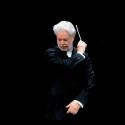
Sir Mark Elder has a penchant for taking on large-scale works in Manchester, from operatic concert performances of Wagner and Verdi to Hollywood musicals. Following that line, he kicked off the new Hallé season with Ravel’s Daphnis et Chloé ballet score in its entirety, described by the composer as “a vast musical fresco faithful to the Greece of my dreams”. We are used to hearing the odd suite, but rarely the whole work.
It calls for large forces for the three parts with 13 scenes and lasts about an hour. Commissioned by Diaghilev, it evokes the glory days of the Ballets Russes and that first performance in Paris in 1912, conducted by Pierre Monteux and featuring Nijinsky and Karsavina in the title roles.
Here, of course, we have the ballet without dancers and a chorus without words. The Choreographic Symphony in three parts, 1909-12, takes us back to the starting point where Ravel began to work on the commission, confronting the dual challenge of religion and eroticism as the love story of the goatherd Daphnis and the shepherdess Chloé unfolds.
The atmosphere is quickly created with echoing horns, followed by a wordless chorus. A flute evokes Pan and the nymphs, giving way to the horn theme for the lovers. The themes are established, the pastoral scene set. Elder inspired a masterful account of the piece from the magical opening to the bacchanalian abandon of the end. He brought out the scale of the work with its colour and rhythms, often sounding like the score for some epic movie, with the chorus sounding like one of Hollywood’s heavenly choirs. And the nuances were all there, from the whispering wind machine to the clash of brass in the pirates’ ferocious War Dance. This is, after all, dance music, both gentle and animalistic, meditative and erotic. Hearing it in isolation, without distraction, is to more keenly appreciate Ravel’s instrumental characterisation as lovers, pirates, satyrs, nymphs and shepherds parade before us. Every instrument has a distinctive role.
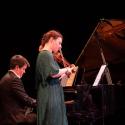
 Preceding the Ravel we had Shostakovich’s First Violin Concerto. It is many years since I first had the thrill of hearing its dedicatee, the late great David Oistrakh, play with the Hallé. Even he found his friend’s concerto testing. Indeed, the story goes that he got the composer to rewrite some of the solo work for orchestra “so at least I can wipe the sweat off my brow”. Here, we saw soloist Victoria Mullova (pictured) wiping the sweat off her neck, face and fiddle.
She gave an exhilarating account of the work, full of passion, precision and power. She showed real understanding of the dramatic shaping the concerto demands, from the deceptively restrained opening Nocturne, played with great delicacy, to the dazzling exuberance of the solo cadenza of the third movement. And in the closing Burlesque we found her skipping along with technical bravura. Elder was alert to her needs, developing the orchestral backing from the early brooding accompaniment to the full throttle of the finale.
This was the first in the Hallé’s season-long survey of Shostakovich’s six concertos for violin, cello, piano and trumpet. With that and the Ravel, the 157th season is up and running with a vengeance.


Add comment