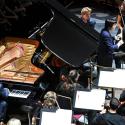
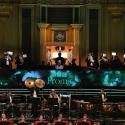
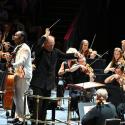
This was a performance laden with contradictions. After last weekend’s gargantuan Grande Messe des Morts, the standard issue Edinburgh Festival Chorus seemed much smaller – but not really small enough. The Scottish Chamber Orchestra was in its augmented format, almost up to symphony orchestra size, but playing in its increasingly popular authentic style with very little vibrato and the crunchy sound of natural brass instruments. Off to one side an organist struggled manfully to be heard on a chamber instrument no bigger than a celesta, and probably quieter. I can appreciate that for a true period performance of Beethoven’s Missa Solemnis the large Edwardian organ built into the Usher Hall would be de trop, but with somewhere between 150 and 200 performers on stage, de trop would be better than inaudibility.
Scottish audiences have become accustomed to the brilliance of the SCO, and in particular the revelatory quality of its playing under its Principal Conductor Robin Ticciati. I don’t have to cast my mind back very far to recall a lithe and joyous account of Haydn’s The Creation (under Harry Christophers) in which this orchestra, soloists, and its own chorus appeared to be cast from the same luminous material. So it comes as rather a disappointment that a prestigious performance in the closing days of the Edinburgh International Festival should prove to be immune to the Ticciati magic.
 Beethoven, of course, did not write easy-listening music for the Missa Solemnis. It is propelled by strong, sometimes dogmatic thematic material peppered with striking dissonances and contrasts of key. The choral writing, in particular, is high and loud, two characteristics that do not show off the Edinburgh Festival Chorus to best advantage. While it can still produce an impressive volume in the big tuttis, it is not a comfortable sound and diction is poor (no 'G' in "Gloria", not a 'Q' to be heard in the "Quoniam"). The quieter moments were good. The tenors did well in the pianissimo "Et incarnatus", but the sopranos were feeble in the "Et vitam venture saeculi" fugue. There was (remarkably for Edinburgh) some noticeable booing from the gods for the chorus curtain call; it makes you wonder what it is that prevents the SCO using its own superb chorus for a work so ideally suited to it.
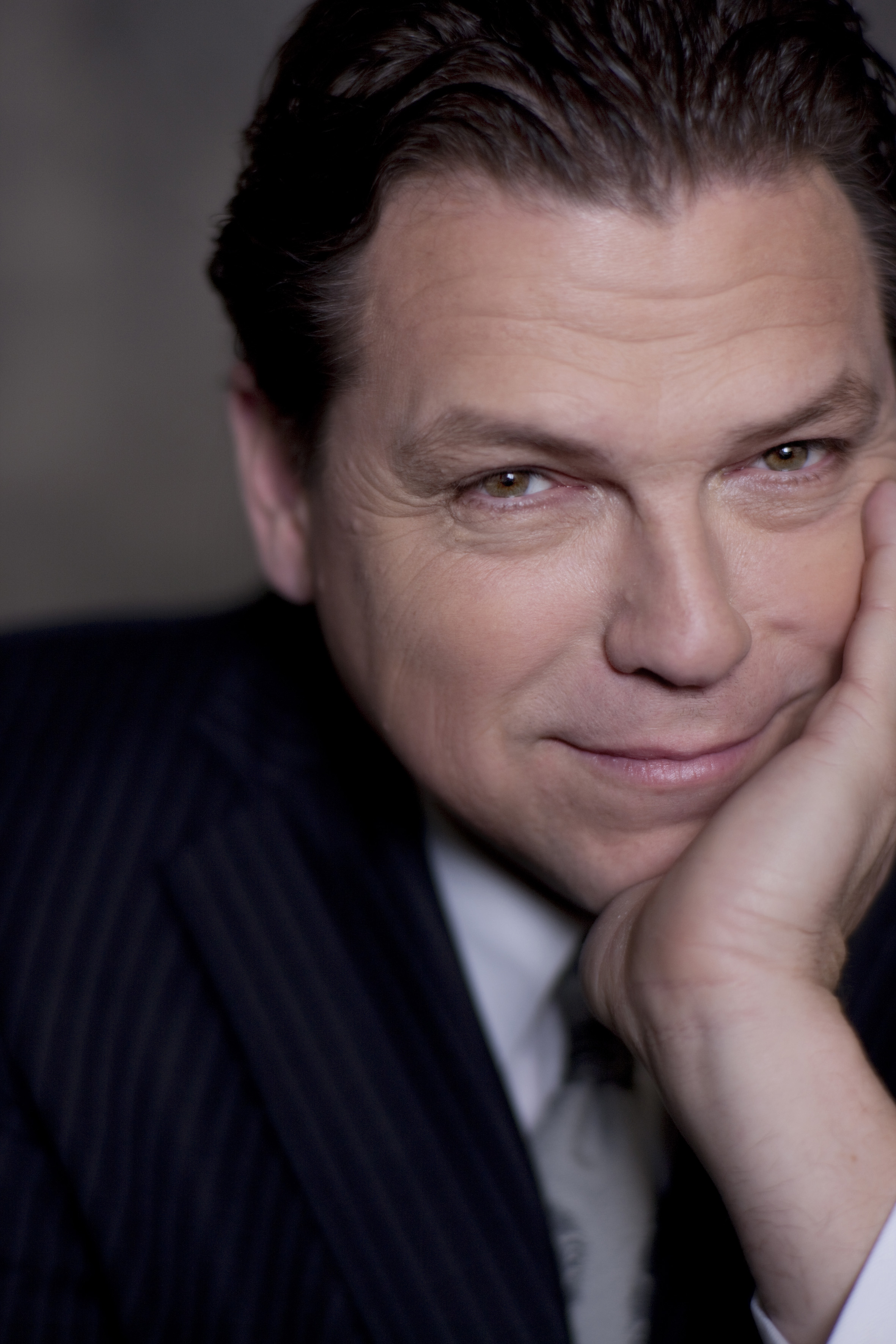
In the struggle to maintain equilibrium between chorus and orchestra, the soloists were left to fend for themselves. The operatic tenor Michael Schade (pictured above left, by Harald Hoffmann) had most to do, and seemed eerily capable of producing a loud, effortlessly high note with his mouth almost closed. He was the most engaged of all the soloists, taking care to watch Ticciati’s beat, moving with the pulse, and generally bringing a sense of performance to his part that was more than just the notes. Soprano Genia Kühmeier was clear in the upper registers but unfocused below, while mezzo Gerhild Romberger came over as rather stately. The bass Georg Zeppenfeld was inconspicuous in the ensemble pieces, though opened up a glorious richness for the short but heartfelt solo at the start of the "Agnus Dei". Had the entire piece matched the quality of sound at this point then we might have been talking about a performance more thrilling than pedestrian.
By convention, critics tend to ignore audience gaffes as an irrelevance, but no one could draw a veil over the fortissimo “Bravo” bellowed a few rows behind me in the stalls as the last note faded. This was so much louder, so much more insistent than the over-eager clapping that occasionally mars festival performances. In a performance whose magical moments were in short supply, even a long silence before the real applause started could not dispel the sense of a moment ruined.