

The Wild Arts Ensemble was founded by Orlando Jopling in 2022 to create a dynamic, pared-back style of performance in which, as he put it, the “costumes, set and props… can be packed up into a couple of suitcases that we can take with us on the train”.
Part of the aim, as with an increasing number of ensembles these days, is to tour in a way that’s more environmentally sustainable, but it’s also resulted in fresh and vivid re-readings of classics that are igniting enthusiasm around the country.
This production of the Messiah is currently the jewel in their crown, a supple, energetic interpretation that thrillingly delivers the story as if the performers have just discovered it. Semi-staged by Tom Morris – the visionary theatre maker who co-directed War Horse and took the helm for Touching the Void – it’s an evening that captures the sense of anticipation and revolution in the air when word started to circulate about a baby born in Bethlehem.
Jopling has structured the production for eight singers and a versatile ensemble of instrumentalists. In the perfectly formed surroundings of Chichester’s 11th-century cathedral, the evening began with Edward Hawkins’ charismatic bass encouraging us to try to imagine the “confused, broken world” in which Handel’s Messiah was originally composed. As wry laughter rippled across the nave, the overture began, with the singers walking down the aisle as if intending to bring each one of us personally the news of hope with which the oratorio opens. Tenor Guy Elliott delivered the opening Comfort Ye with a simultaneous sense of excitement and compressed rage, while the musicians underscored his message with nimble fluidity.
 There were moments when some of the singers seemed to struggle a little with the cathedral’s acoustic, but these were fleeting, and were more than compensated for by the dynamism that characterised the evening as a whole. This Messiah was a constant battle between revelatory light and Stygian gloom, and there was no mistaking the drama when Hawkins emerged in the cathedral pulpit to sing “For Behold Darkness,” his voice resonating like the roar of a winter sea. Here there was truly the sense of the confused, broken world he had described at the evening’s opening. When the chorus broke into “For Unto Us A Son is Born” the contrasting feeling of sunlit optimism was truly exhilarating.
Like a Messiah that’s been injected with Ozempic, there’s absolutely no excess flesh on this version – Jopling has, for instance, disposed of the orchestral endings to the arias so the choruses respond instantly to the message from the soloist. He’s also lost the four opening bars of the “Hallelujah Chorus” so that listeners are almost ambushed by it, a risky move that paid off in Chichester as audience members rushed from the aisles into the nave to get closer to the eruption of excitement.
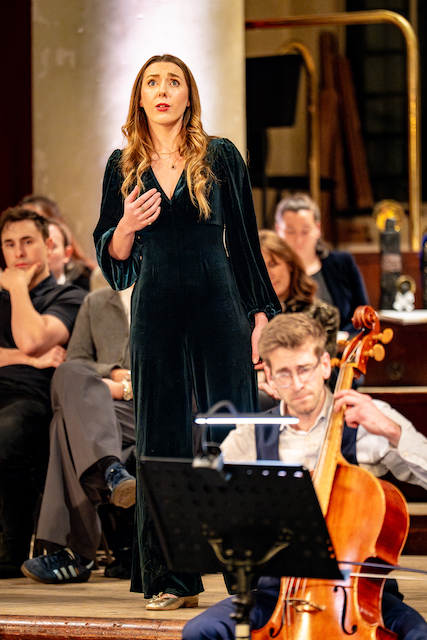
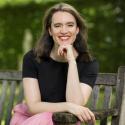
There were many exquisite moments of stillness too, not least Lucy Hall’s ravishing delivery of “There were shepherds”. Her warm, resonant tones evoked an idealised pastoral calm in a recitative that was quickly succeeded by gilded ecstasy as angels appeared, here accompanied by trumpets played from the cathedral’s Arundel Screen.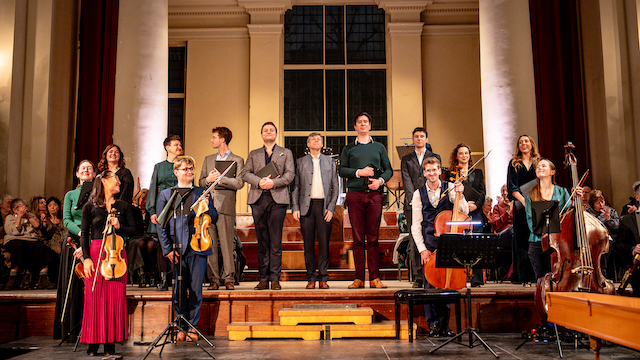 I had brought with me a teen who’s something of a Handel-sceptic, so it was encouraging to see at the interval that he was as fired up as everyone in the audience. After the optimism of the Christmas story, we were plunged into the events leading to the Crucifixion, which for my money contains some of the most stirring music in the entire oratorio. Once more Hawkins shone as he declaimed “Why do the nations?” in tones that seemed to come from the depths of the earth. Soprano Natasha Page (pictured above) really came into her own with the soaring sweetness of “I Know That My Redeemer Liveth,” bringing a full-blooded sense of cathartic relief to her message.
The singers' delivery of “Since By Man Came Death” was as moving as I’ve ever heard it, tilting from gravity to ebullience and back again. Then the trumpet played out from the pulpit as bass Timothy Nelson proclaimed that “the dead shall be raised” with a vigour that rang up to the cathedral’s vaulted ceiling. The final chorus, Worthy is the Lamb, was as filled with elan and blazing colour as the striking John Piper screen behind the performers. As applause filled the cathedral, we happily realised that since this exuberant Messiah came in at two hours and 15 minutes rather than the usual three, there was also more than enough time to hotfoot it through the streets of Chichester and get the train to be back in London by midnight.



Add comment