Trouble. Overly honest. Too opinionated. Ultimately get killed for refusing to let go of their principles and kowtowing to the status quo.
I didn’t ever expect myself to be writing about the similarities between Carmen and Jesus Christ, but then I suppose that presenting the unexpected and inspiring audiences to think about art in new ways is what the Edinburgh International Festival’s meant to do. “Rituals that Unite Us” is this year’s theme, in Festival Director Nicola Benedetti’s second year in the role. Like all good themes it has both depth and breadth. Of course, the art of coming together to experience live performance is a ritual in itself, but the festival’s events are linked in deeper ways too. As well as rituals, stories, characters and figures unite us in our human experiences too, and tales of someone who is persecuted for being true to themself most of us can relate to in at least some way.
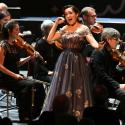
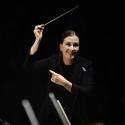
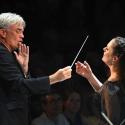
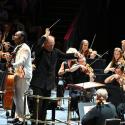
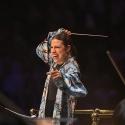
This year’s Usher Hall programme began with an exhilarating performance of Argentinian composer Osvaldo Golijov’s La Pasión según San Marcos, a vivid retelling of Christ’s passion composed in 2000 to mark the 250th anniversary of Bach’s death. This is an incredible piece, with fiery Latin American melodies and Afro-Cuban rhythms igniting the Biblical narrative of Jesus’s death and crucifixion, and its performance on Saturday was astounding. 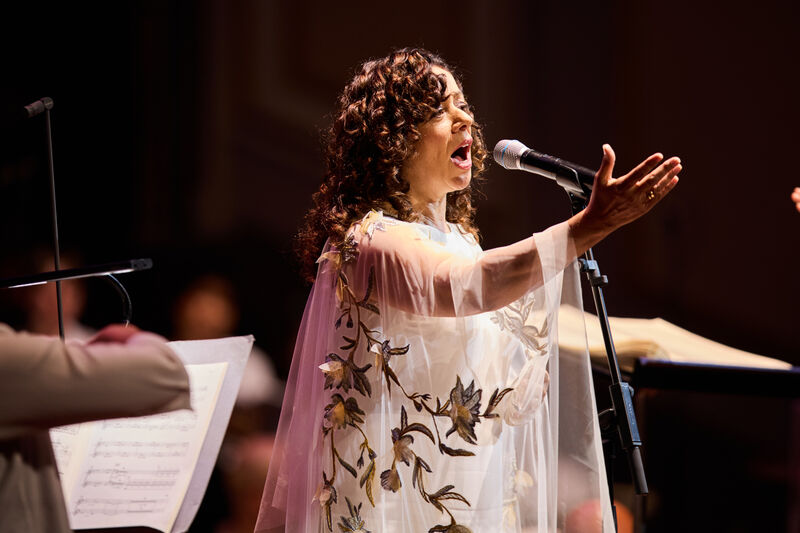 The ritual of remembering Christ’s passion can take many forms, though the ones we’re probably most familiar with are observing the events of Good Friday with stillness and reverence. Had this been a devotional performance during Holy Week it might have felt a little out of place - but as an opening to an international festival such as this it was nothing short of brilliant. Soloist Luciana Souza (pictured above) - who sings in both the jazz and classical traditions - delivered with a raw honesty, conveying a real human anguish in the final “Kaddish” (Prayer for the Dead). Singers from Schola Cantorum de Venezuela provided a robust sound while the National Youth Choir of Scotland performed with their signature precision, their movements as the angry crowd as flawlessly coordinated as their singing. Conductor Joana Carneiro was in full control of the work’s swung and snappy rhythms, as she seamlessly directed the singers alongside a fine band of musicians made up of the Orquestra La Pasion, led by Gaonzalo Grau on piano and Cajón, plus musicians from the Royal Scottish National Orchestra.
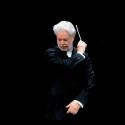
EIF’s opera programme began the following night, with a classically staged Carmen from Paris’s Opéra Comique, and our very own Scottish Chamber Orchestra in the pit. It was perfect from start to finish, with impassioned solo singing, excellent ensemble work from the choruses and dazzling orchestral playing. The production was not trying to do anything clever nor say anything new about this much-loved opera, but with musicianship of this quality, it doesn’t need to. 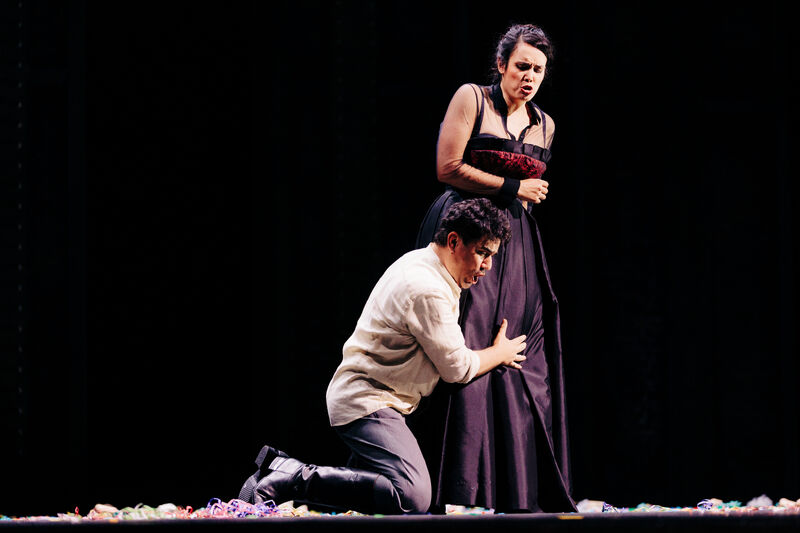 French mezzo Gaëlle Arquez (pictured above with Samir Pirgu) is a natural Carmen, commanding the role with sultry seductiveness, most notably in her rendition of the Seguidilla at the end of the first act. Albanian tenor Saimir Pirgu wonderfully captured the lovesick and jealous emotions of Don José, while Elbenita Kajtazi gave a gentle strength to the role of the meek, mild Micaëla. Both choirs - French chamber choir Accentus, who formed the adult chorus, and children’s choir la Maîtrise Populaire de l’Opéra-Comique - had a polished blend and on-stage synchronicity. The SCO, under the baton of Opéra Comique music director Louis Langrée were truly sparkling, with a special nod to principle flute André Cebrián’s nimble and bright playing.
Both these performances showcased EIF doing what it does best: bringing international and home-grown artists to a global stage to celebrate wonderful art. Let’s hope the rest of the festival carries on in the same vein.