

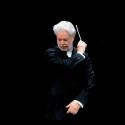
As Sir Mark Elder begins his penultimate season as music director of the Hallé, it’s clear that his command of, and communication with, the orchestra are as complete and purpose-driven as ever. It’s the first Thursday series concert of the new season, and at last a full set of concerts is in the offing, after three years of interruption and adaptation, but change is in the air.
The orchestra’s new leader, Roberto Ruisi, takes his place and there are some guests in other principal roles as well. But this is still very much the orchestra Elder has moulded, with the sound he crafted and at least two distinctive solo voices which have been a key part of that for years.
We heard it first in Smetana’s "Vltava," from Má vlast. The mighty river’s progress began with precision in articulation and grew to rich string tone and generous expression. The brass sound was rich and the rhythmic life of the episodes exhilarating. Elder stuck firmly to his tempo as the tension built, making the switch to major tonality for the big tune a greater contrast than often heard; the coda beautifully paced through to the end of its fade-out.
The London-based virtuoso Pavel Kolesnikov was soloist in Rachmaninov’s Third Piano Concerto. His is a distinctively varied and flexible touch, often relaxed and mellow, glorious in melodic flow and incisive when stirred. Between them he and his conductor made the opening movement a slow-burn thing, a journey that began in dreamy, almost throwaway mood, with a hint of lament. It was to be different later.
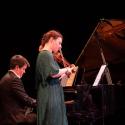
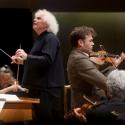
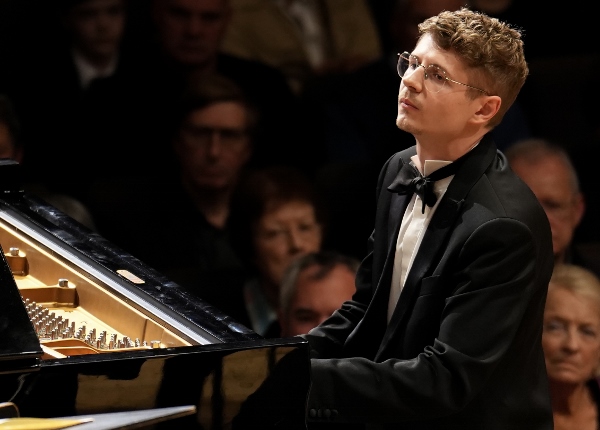 Kolesnikov (pictured right) is happy to withdraw from the limelight for certain periods of time, and one of the virtues of this performance was to hear the orchestral colours in the score vividly realized as they were uncovered. But he found a well of passion in his solo passages and then spell-weaving contrasts of tone and power in the lyrical episodes, the warm sound of the Hallé strings reinforcing his efforts, and Elder varying the pulse from steady tread with a touch of eloquent rubato in the second subject. By the end of the movement that wistful opening had become something both more knowing and more resigned.
Bitter-sweetness characterized the Intermezzo, with D-string feeling from the violins, and the finale rattled along, the welter of notes no difficulty for Kolesnikov, who was also happy to wallow in nostalgia when the moment came. The last pages were electric in their intensity from both soloist and orchestra, with neatness and passion united and a great, striding presentation of the last big tune. (Kolesnikov rewarded the enthusiastic audience with a little encore, in his dreamiest manner: Chopin's Waltz in A minor, op.19).
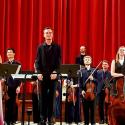
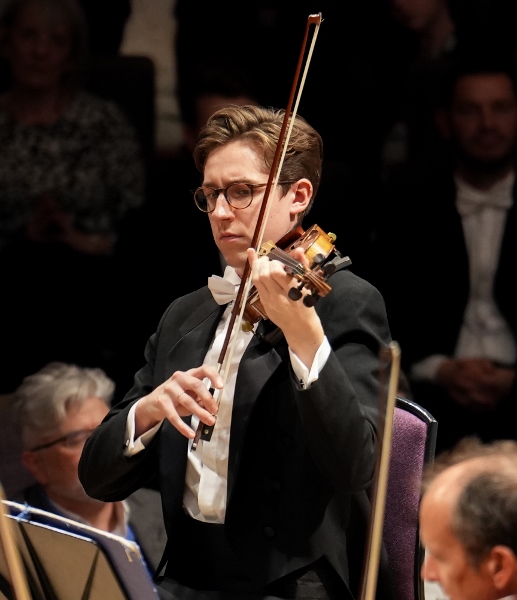 Richard Strauss’s Ein Heldenleben is a big favourite in Manchester and has been for years. It happened to be a fine introductory opportunity for Roberto Ruisi (pictured left) to show what he is made of in the delicate and brilliant violin solos in which Strauss portrayed his lifetime’s companion, Pauline. After the no-nonsense self-assertion of the piece’s opening (surging strings tone and sounding brass), these made a real foil, as Ruisi drew sweetness and tenderness from them, without self-assertion in the pyrotechnics but as quicksilver and emotional as the characterization could demand. The large orchestra forces were prepared for all requirements, raucous and relentless when necessary, and blended and smooth when bidden. The horn and trumpet-trombone choruses were particularly effective, while the tutti strings were capable of fire and fury, too. The Hallé’s principal horn, Laurence Rogers, and principal oboe, Stéphane Rancourt, have long been bright facets of its collective sound, and in these works their many contributions stood out with distinction.




Add comment