This recital had looked so good on paper. The charismatic Dutch violinist Janine Jansen, with Itamar Golan at the piano, would bring all the brooding darkness of late '60s Shostakovich to life, and would then charm and finally dazzle in Ravel. In the hall on the night, and in particular in the second half, she didn't quite live up to such expectations.
The Shostakovich Violin Sonata of 1968 was written for David Oistrakh, after the composer had lived through periods of illness and severe depression. It is a very bleak work indeed. It also has a strong performing tradition by violinists who absolutely believed in its stature. Recordings of performances by the dedicatee Oistrakh, with the composer at the piano, from shortly after it was written, and by the more mercurial but equally persuasive Gidon Kremer from a few years later are readily available. Jansen went further with it: her range of dynamics, and the sheer scale of her sound in the angrier and more forceful passages saw her really set her mark on the piece. Her clear sense of line and the shape of the performance as she built intensity in the first movement were mesmerising. Golan attacked the insistent mechanical rhythms of the Allegretto second movement with venom.
The most ambitious structure is the third movement, and here again, the sense of narrative was utterly convincing. The Bach chorale-like episodes of the opening – a rare moment of calm – came across vividly. Both players played their petulant solo episodes with brutal attack, and the desolation of the final pages had the audience's attention spellbound right through to the closing tremolandi, and indeed for about half a minute beyond. The audience held its collective breath, waited as Jansen slowly lowered bow and then violin, and greeted this impassioned performance with the cheers it deserved.
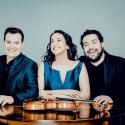
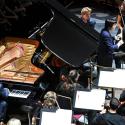
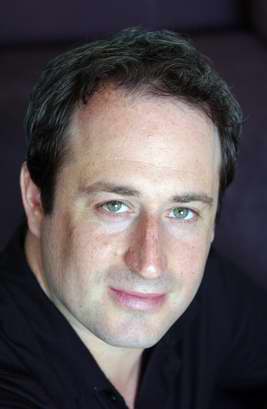 The second half was more problematic. The piano overpowered the violin in too many places in the Ravel violin sonata, although the BBC's engineers will have probably found a better balance for radio than we were able to hear in the hall. Golan's repeated expressive hesitations came across as rather mannered. They disrupted the flow of the first movement, and there is certainly nothing to suggest in the score that they are either needed or wanted. The second movement, the Blues, needed less arm-weight from Golan (pictured, right), fewer acerbic accents from both players, and simply more of a smile.
Jansen at last dispensed with the sheet music for the Ravel Tzigane. She inhabits this work, and her show-stopping virtuoso speed-work was delivered with panache. Golan took the volume down in the lighter passages where Ravel imitates the cimbalom, but again drowned her in the louder passages. Is there a tongue-in-cheek side to Tzigane, as some commentators have suggested? Last night the question didn't even get raised: there wasn't.
The single encore was the earliest work of the evening, Ravel's Pièce en forme de Habaňera from 1907, where – at last – Golan's habit of the expressive delay fitted the language and the context well.