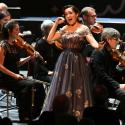
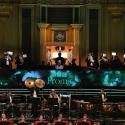
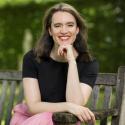
If only the Last Night of the Proms could just be about the music. If it were, then the story which I would want to tell would be about Janine Jansen. A crowd which mainly turns up to wave its vast array of flags, to bounce its beach-balls and generally to step free from the shackles of adulthood, was mesmerised into a concentrated hush by the magnetism of the Dutch violinist. She drew the huge audience right in to her playing. She made the cavernous Royal Albert Hall feel like an intimate space. She tamed the crowd and (almost, briefly) silenced the bronchially challenged.
But the Last Night, particularly this year, has had other agendas swirling furiously around it. A claque of Westminster politicians chose to put identical markers down a few days ago, annexing the four Proms in the Park in each of the home countries (an idea which Nicholas Kenyon introduced in his first season in 1996) to do a bit of last-minute lobbying for the No campaign in the Scottish referendum.
And then there's the BBC trying to get the statistics for this accessible and ambitious festival with affordable ticket prices out there into the public domain. Those statistics are that the Albert Hall over the season has been 88% full, slightly down on the best of recent years. More than half of all concerts in the Hall were sold out. There were 33,000 first-time ticket buyers, and “more than 9,400 under 18s attended concerts across the season, an increase of over 1,000 from last year”.
But back to the night and the music. It was a cleverly contrived programme, in which the mood was allowed to shift considerably. One of the best twists and turns was the inclusion of John Tavener's Song for Athene, a very smart and effective piece of programming. It gave a moment of hushed concentration, and an opportunity for the excellent BBC Singers to step deservedly into the limelight. They delivered Tavener's hypnotic melodic lines suspended over the drone very convincingly, and reminded listeners of the moment in the Princess of Wales' funeral when this piece touched the whole nation. Another clever moment came right at the end, when Britten's 1961 arrangement of the National Anthem with its re-harmonized a cappella first verse produced a quiet theatrical coup..
 I very much enjoyed the opener, Velocity from Gavin Higgins.The short piece from this young, very English composer – he describes himself as "100% Forest of Dean" – was billed as an "opening fanfare", but felt far more substantial than that. It was an orchestral showpiece in which the different sections of the orchestra enter into civilised conversation with each other
Malcolm Arnold's Peterloo, with new words for chorus by Tim Rice, didn't work for me. Whereas the BBCSO's percussion was vivid and created atmosphere, as a piece it felt as if it was trying too hard to be an alternative anthem, defining a few national virtues. But it simply doesn't have a memorable enough tune to do that job, and the new lyrics had that similar replaceable feel to those of Brecht's alternative 1950 words for a putative new German national anthem, the very short-lived and virtually forgotten Kinderhymne. One name, however, which should have got much higher billing is that of Ben Parry, a highly skilled choral arranger.
"Popular Song" from Walton's Facade showed off what superb wind principals the BBC Symphony Orchestra has. From flautist Daniel Pailthorpe's first statement of the theme to the last safe landing with Graham Sheen's bassoon, this was classy playing.
Taillefer by Richard Strauss from 1903, written for a huge orchestra, three soloists and chorus was exactly the kind of rarity which Straussophiles had been calling for this year. As Graeme Kay's programme note explained well, it is a possible stylistic precursor for Schoenberg's Gurrelieder. Certainly, the title role is a high tenor required to sing in the same unforgiving tessitura as Waldemar in the Schoenberg work. John Daszak delivered it well. Heldenleben-lite (Kay again) feels an accurate description. Helen Vollam on first trombone was on superb form, and the third vocal soloist Elizabeth Watts left her mark both with her radiant tone and with her hair: a Battle of Hastings-inspired beehive creation.
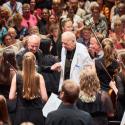
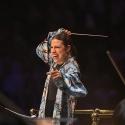
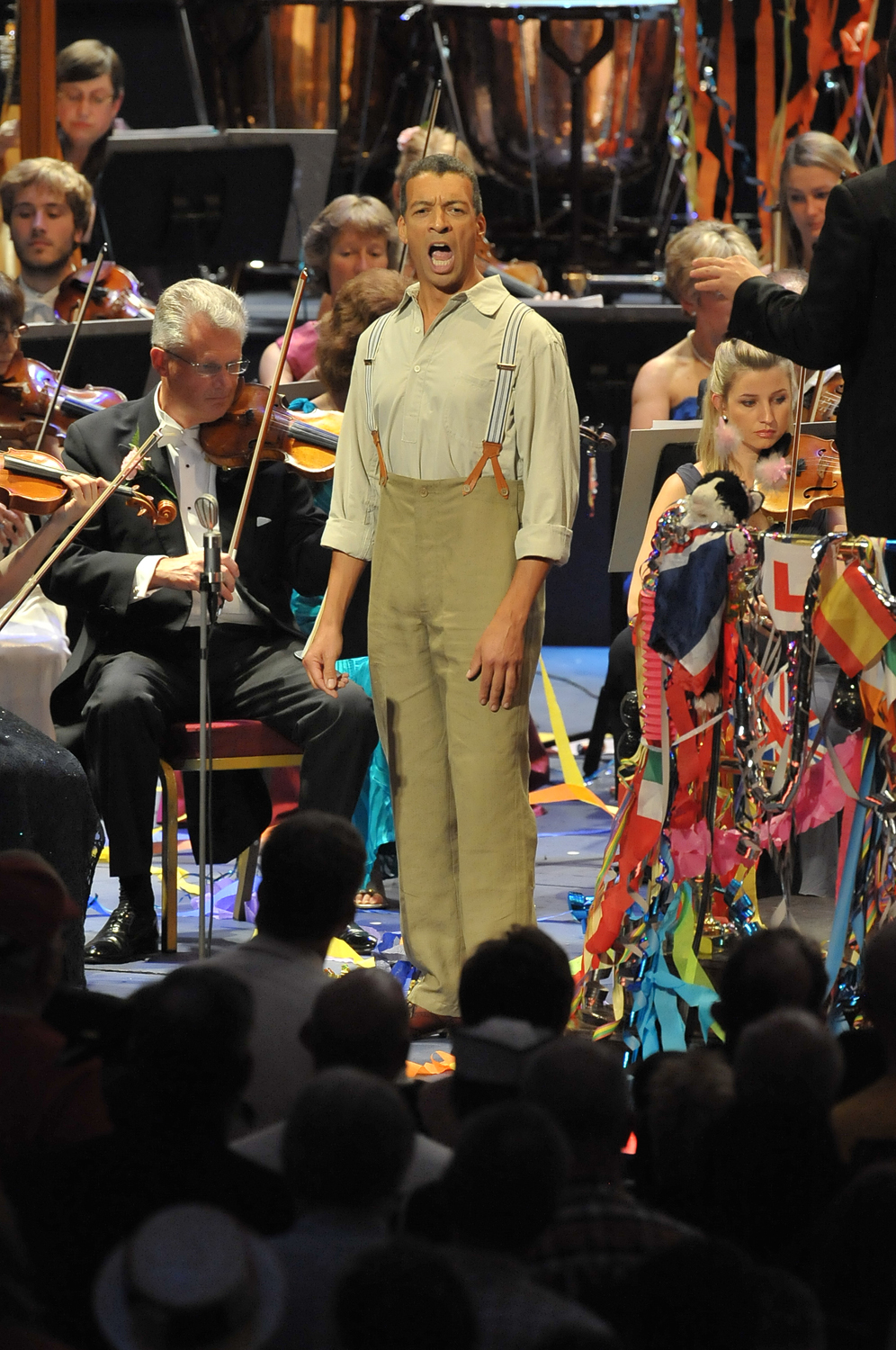
 Roderick Williams appeared in three guises and in three different costumes. He dealt well with the role of William Duke of Normandy (aka the Conqueror) in Taillefer, sung in completely idiomatic German. He was back at the end to deliver Rule, Britannia, but had his very best moments in the spiritual Joshua Fit the Battle, and in Jerome Kern's Ol' Man River (pictured above in costume) .
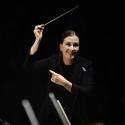
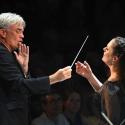
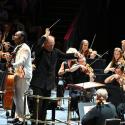
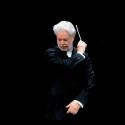
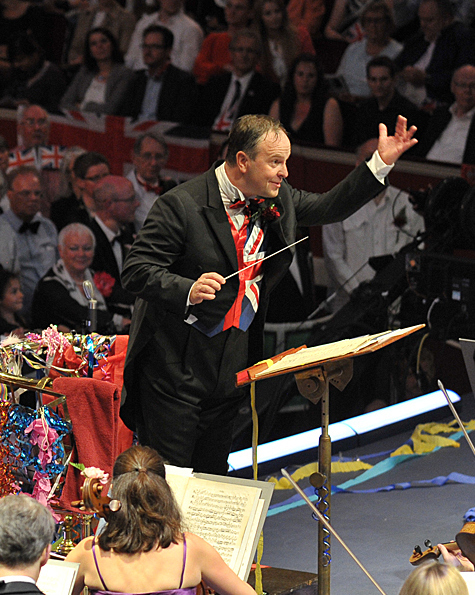
For me, however, Janine Jansen's performances of the Chausson Poeme and of the Ravel Tzigane, stole the show. Her playing of the Chausson was impassioned, characterful and totally convincing. Sakari Oramo's pacing, his completely persuasive understanding of the shape let the story unfold wonderfully. He seemed to have the whole orchestra breathing with the soloist. The piece can often feel like a meander, but this was a reading to convert Chausson-sceptics. It also shows how well the BBCSO responds to its new principal conductor (pictured above).
Coughing episodes unfortunately marred both the Lento e misterioso opening and what Debussy once called the "gentle dreaminess" of the close. But this was a performance to savour. After Tzigane, Jansen performed a celebratory encore, La Cucaracha, in which Sakari Oramo joined her on second violin. It was both funny and touching. So for all its shortcomings, there were moments enough in this Last Night to bring an impressive 2014 season to a decent close.