You go to a concert, three-quarters of it popular classics – also great masterpieces – having been told you have to hear a brilliant young cellist, and into the bargain you also discover a remarkable conductor and an orchestra on top form shedding transcendental light on the familiar. So everybody’s happy.
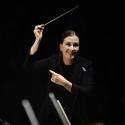
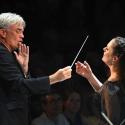
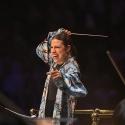
The finale of Stravinsky’s Firebird ballet tends to produce communal ecstasy, but like the recent London Philharmonic performance of Mahler’s Second Symphony under its principal conductor Edward Gardner, which brought an entire audience to its feet within seconds, the interpretation, in this case of Stravinsky’s 1919 Suite, was in any case remarkable. Conducting a Royal Philharmonic Orchestra on gleaming form in the Russian and French works on the programme, Elena Schwarz began the evening with very clear definition in Doreen Carwithen’s 1954 tone poem Bishop Rock, impressions of the Scilly lighthouse. It sounds like generic film music, and indeed Carwithen composed over 30 scores in that genre. It also sounds like something Walton might have kept in his bottom drawer. But with lively turns of phrase, the brass yet to settle, it served just fine as a curtainraiser, and credit to ABO Trust Sirens, promoting music by women composers throughout history, and the William Alwyn Foundation for their support.
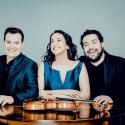
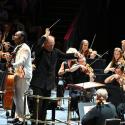
From extroversion with a dash of pastoral idyll at the midpoint to the introspection of Elgar's Cello Concerto, and all credit to 24 year old American of mixed Bulgarian and Chinese parentage Zlatomir Fung, cannily chosen as the RPO’s 2023-4 Artist in Residence, for keeping much of it so inward. In-your-face romanticism has been the order of the day since the classic du Pré recording, but since hearing Lynn Harrell play it as, mostly, a private confessional, I’ve been much more hooked on the concerto as a more restrained slice of Elgar the melancholic. 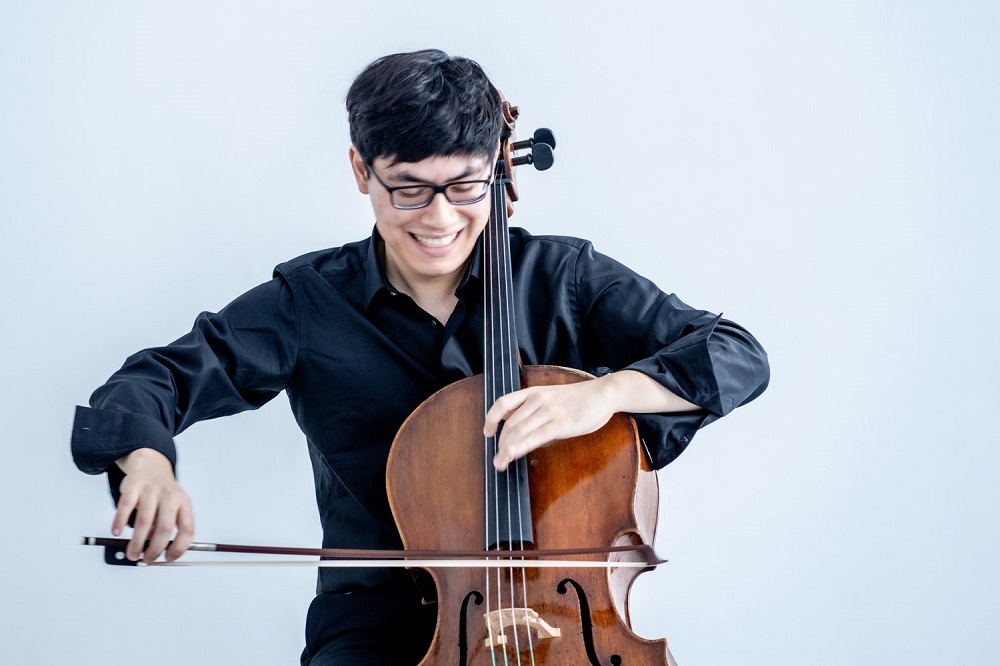 A few balance problems – horns too loud for the soloist in the first movement – were offset by Fung’s collegial work with the violins, dialoguing especially with trial leader Samuel Staples (it's not good enough, RPO, to make the reader go online for the orchestral personnel, especially as there were quite a few different musicians onstage last night. If any of the names singled out below are wrong, complain to the orchestra). Eschewing much swoony portamento, and faery-fleet in the dream- scherzo, Fung’s greatest revelation was to make what often sounds as dark treading water before the final reminiscence of the Adagio theme truly anguished, as if Elgar can’t pull himself out of his slough of despond.
A further profoundly musical surprise came in his encore. Debussy’s Syrinx sounding utterly spontaneous and apt even in the lower register of the cello. Its rightful instrument, the flute, came to the fore after the interval as magically as I’ve ever heard it in the deep soul of principal Emer McDonough in Prélude à l'après-midi d'un faune. Complemented by John Roberts, making the fullest, meatiest sound I’ve heard from a London orchestral oboist, this turned out to be in full accord with Schwarz’s probing depths. The afternoon languor and playfulness don’t often make me moist-eyed, but this performance, capped by the discreet tings of two sets of Chinese cymbals, absolutely did.
Likewise the Firebird Suite. So often is the complete ballet performed in concert that I’d forgotten the different orchestral touches of the 1919 highlights parade (though surely the trombone glissando in the middle of the Infernal Dance, which I always miss in the reinstrumentation, is an interloper from 1910? If so, the Suite is all the better for it). Moving from the Debussyesque discretion of the earlier stages – the Frenchman greeted the 1910 premiere with "what do you want? You have to start somewhere" – to more full focus attack in the whirring of the ogre’s forces at the command of the Firebird.
Schwarz made two further arresting gambits with a very slow Berceuse, highlighting the fine bassoon solo of Richard Ion and the swooning of divided strings, and the quietest possible transition to the light-filled finale, ushered in with perfect nuance by first horn Alexander Edmundson. You thought first, what amazing masterpieces Debussy and Stravinsky served up in their relative youth, and only second, what top-notch performances.