

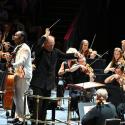
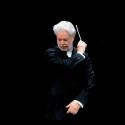
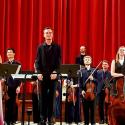
Second performances are even more valuable than premieres, composers say, when it comes to launching a piece into the world. Spare a thought, then, for Jan Ladislav Dussek, who has had to wait over two centuries for this prize to be awarded to his Mass in G – really, a Missa solemnis – of a scale to rival Beethoven’s example. It was revived last night for the first time since its premiere in 1811 with exemplary spirit and dedication by Academy of Ancient Music forces under Richard Egarr.
Like Beethoven, Dussek was a composer primarily for and at the piano. He flourished as a touring virtuoso through the cultural capitals of Europe – which in those days included St Petersburg – turning out showpiece concertos and up-to-the-minute crowdpleasers such as “The Naval Battle and Total Defeat of the Dutch Fleet by Admiral Duncan” which doubtless went down a storm with London audiences in 1797.
The Mass, as you might expect, raises its gaze to higher things. Dussek wasn’t a fervent believer, but he applied all his art and craft to following in the footsteps of Haydn, Beethoven and Hummel when commissioned by Prince Nicolaus of Esterhazy to produce a Mass honouring his wife’s name-day. The 15-minute opening Kyrie gives notice of Dussek’s ambition to outstrip them all. It’s a typically volatile work in time and temperament. Monumental Baroque cadences sit cheek by jowl with modulations that would make Beethoven blush, yet the Mass is no tatterdemalion assemblage: this is the sound of Dussek more familiar from his always bold and trend-setting piano sonatas. He could have taught Berlioz a thing or two about outlandish orchestration, such as the architectural elements of flute, viola and double-bass in the Christe, building space from sound.
Not unlike other oddball Czechs such as Zelenka and Reicha, Dussek is an impatient gardener, hardly waiting for one idea to take root and bloom before digging it up and flourishing another, though upward rushing semiquaver scales in the solo writing form something of a leitmotif – Dussek’s right hand hard at work on the keyboard – and the Mass comes briefly to rest on a lovely soprano aria planted in the middle of the Credo, with florid writing owing something to the heroines of the Mozart/da Ponte trilogy, channelled into a stream of contemplation anticipating late Schubert and winningly sung on the night by Stefanie True (pictured below). Helen Charlston, Gwilym Bowen and Morgan Pearse completed a well-matched quartet of soloists. Egarr’s direction accentuated and occasionally exaggerated Dussek’s high contrasts of colour and dynamic. Before the hour was up, we had perhaps had enough and more than enough of attention-grabbing accents and horn blasts like exclamation marks. Even so, such devices belong to an endearingly rustic tradition of Czech Mass writing, with four-square sign-offs – that’s all, folks – which show the dissolute and cosmopolitan Dussek returning to his roots one last time.
Dussek’s Mass had eaten up the lion’s share of rehearsal time to judge from some tentative entries and scrappy playing in the second half. Full marks to the AAM for enterprise, however: scarcely more than a handful of the audience can have encountered Beethoven’s music for Egmont beyond the overture. Now, with the 250th anniversary of his birth around the corner, is a perfect time to revive the lot, all 45 minutes of songs and entr’actes. The subject itself never grows old. Two centuries on there remains no more powerful musical declaration of freedom in the teeth of oppression than Beethoven’s response to Goethe’s play. Chen Reiss sang prettily, first dashing and then lovelorn as the girl who has won the Dutch nobleman’s heart, hinting at the trouser-role defiance and passion that would achieve full expression in Beethoven’s only completed opera, which was in the process of transition from Leonore to Fidelio as he wrote up Egmont in 1810.
Once Beethoven’s music had become more in demand than Goethe’s play, first Friedrich Mosengeil and then Franz Grillparzer (a favoured poet of Schubert) devised a poetic paraphrase. On this occasion Stephen Fry delivered an uncredited English narration based on Grillparzer, setting the scene in Brussels before filling in the story of Egmont’s defiance of his Spanish overlords and eventual execution. He struck the right, confiding tone, by and large, though a little cautious when speaking over the orchestra in the melodrama which finds Egmont cast into a dungeon (in another echo of Fidelio) and stopping short of the oratorical fervour finally demanded as the hero meets his fate and exhorts his countrymen to rise up in revolution. It was rather the AAM who met Beethoven at the barricades with playing of raw and unbridled passion.




Add comment