Most classical concert reviews focus on prominent orchestras and opera companies at major venues. But beyond the likes of the Barbican and the Royal Opera House, there are whole strata of musical life where smaller scale ensembles and amateur choirs provide a vital live music experience in less exalted venues.
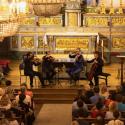
The Conway Hall in London is one such venue, whose offering goes beyond music – it embraces art, lectures, community events and even monthly atheist "services" – but whose main hall has a pleasant acoustic for its regular Sunday concerts.
Last Sunday’s was given by the Fibonacci Sequence, a flexible, mixed chamber group beginning its 25th year of music-making. Led by founding artistic director and pianist Kathron Sturrock, they played an enjoyable programme of chamber music for piano and wind instruments to a hearteningly well-filled hall.
They began with Poulenc’s late flute sonata, whose first movement belies its “malincolico” marking being, in the hands of flautist Ileana Ruhemann and Kathron Sturrock, by turns charming, wistful, meditative and animated. The hypnotic second movement showed the players in close understanding and excellent balance, and the finale, a neoclassical jeu d’esprit, had suitable dash, with Ruhemann’s sound bright and focused.
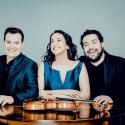
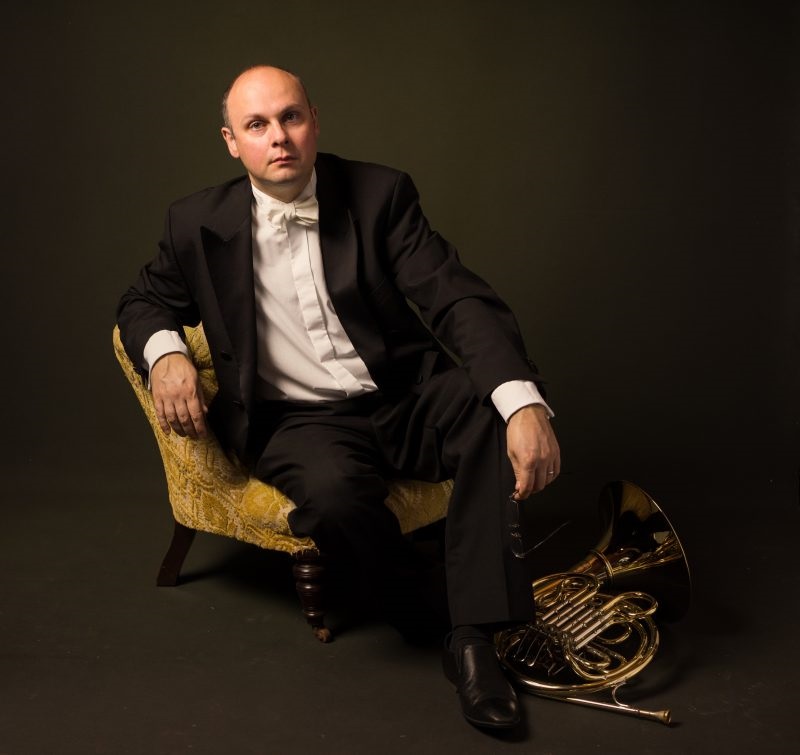 Mozart’s Quintet for piano and winds dates from 1784, when he was in his Viennese pomp and riding high in popularity. It is a delightful piece, and one of which Mozart was particularly fond: tuneful, spirited, witty and warm. The Fibonaccis captured all these aspects in playing that was stylish and characterful. Horn player Richard Bayliss (pictured above by Pip Bacon) was outstanding, as throughout the programme, whether in lyrical solo moments or as the musical glue at the heart of the texture. I also enjoyed Sturrock’s stylish playing of a part which is mostly accompaniment, but has occasional concerto-like passages.
She took a solo at the start of the second half: Mozart’s Fantasia K397, popular with student pianists for its mercurial character and occasional virtuoso flourishes. Mozart never came up with an ending – it would presumably have led straight into a sonata that he never wrote – and Sturrock eschewed the usual hack coda, preferring to reprise the opening material. It would have been braver, more authentic – and, for me, more satisfying – to have ended where Mozart ended, albeit on a dominant 7th. But, this aside, Sturrock’s playing was stern when it needed to be, generous in the melodic sections, and generally well crafted.
The finale was Poulenc’s Sextet, dating from the 1920s when Les Six were the toast of Paris. Like Mozart’s Quintet it is young man’s music, vibrant, impulsive and utterly good-natured. Anthony Pike’s clarinet was impish and rhythmically precise and once again Bayliss was the star. At times Poulenc threatens to slip into kitsch, but saves himself by always keeping enough acid in the mix.
The last movement, from rollicking along like a silent movie, suddenly hits a desolate coda which gradually becomes a radiant chorale. It is a miraculous passage, and the Fibonaccis did it justice, oboist Christopher O’Neill bringing a suitably piquant edge to the ensemble’s final chords.