In the delirious and exhilarating Sephardic dance that finished their concert devoted to the Jewish, Muslim and Christian music of Jerusalem, one of the Apollo’s Fire fiddlers seemed to be playing – so my companion spotted – some Led Zeppelin riffs.
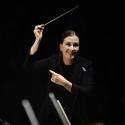
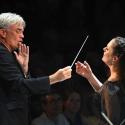
The night before, however, the Bach Double Violin Concerto had skipped and flown through St Martin-in-the-Fields with bravura elegance as much as rhythmic drive. Much-acclaimed winners of a Grammy award, Apollo’s Fire, led by Jeannette Sorrell (pictured below by Mal Henoch), don’t do feeble “fusion”. They stage vital and vivid encounters between neighbouring traditions. Their performances highlight, and celebrate, close kinship without reducing any element to bland and inoffensive multi-culti slop.
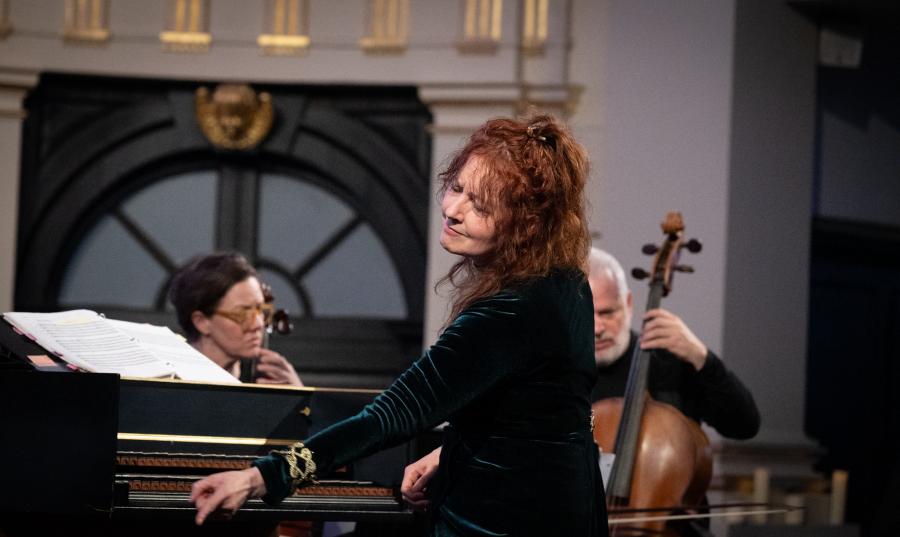
On Friday night, they cleverly braided Baroque double concertos (Bach, Telemann, Vivaldi) into a tournament of virtuosic instrumental rivalry inspired by the fencing etiquette of the era. Sorrell, directing from the harpsichord, read out extracts from swordsmen’s rulebooks between the musical bouts. A late-night “baklava bash” in the Crypt wove songs and pieces from Sephardic, Ashkenazi, Ottoman, Palestinian and Armenian sources together into a moving and intimate version of Levantine cabaret. Then, on Saturday, their “O Jerusalem” programme – with a 20-strong choir augmenting players and vocal soloists – united the sounds of the holy city’s four quarters between around 1300 and 1700. It delivered an irresistibly big-hearted, but musically always adroit, tribute to musical and cultural multiplicity.
As recorder ace and singer Daphna Mor put it (pictured below by Sisi Burn), childhood trips from her home near Tel Aviv into the Old City had enchanted her with “the sheer possibility of a pluralistic society”. With just a little, thoroughly justifiable, onstage editorialising (Sorrell’s father was a Holocaust survivor), Apollo’s Fire kept that flame alive in what they acknowledged as the toughest of times. Music of this exuberant but expert quality will always outshine well-intentioned ecumenical words – although the words too successfully hit their mark. Oud virtuoso Ronnie Malley – an absolute star of the St Martin’s concerts – quoted the wisdom transmitted by his Palestinian, Jerusalemite forbears: “Whoever comes to you with peace in their heart is the true believer.”
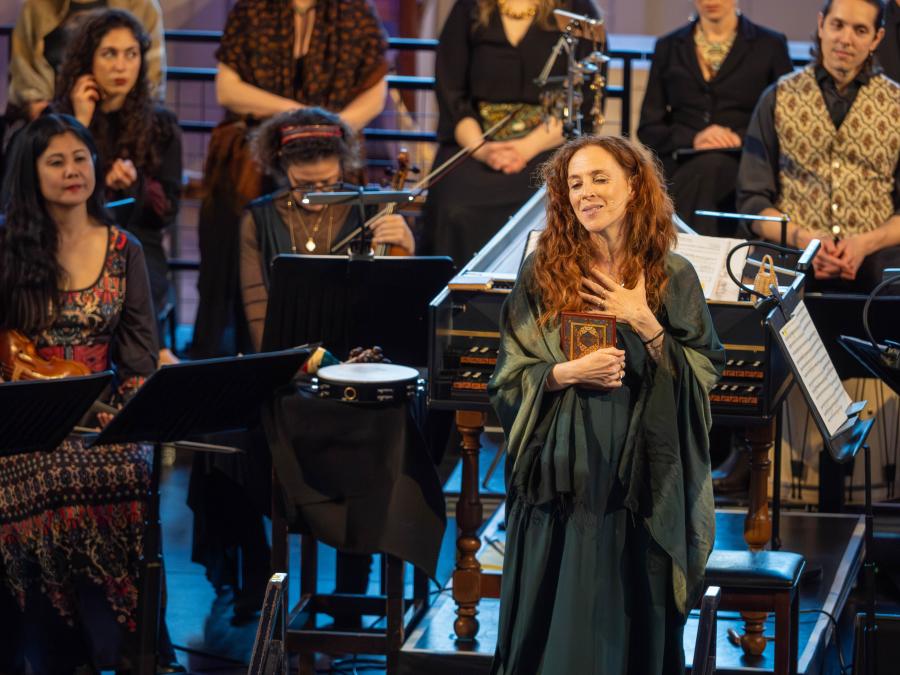
“O Jerusalem”, with its fabulous tapestry of Greek, Italian, Sephardic, Palestinian and Armenian pieces both ceremonial and lyrical, proved a unique and memorable event. Its quest for echoes, parallels and dialogues quickened the mind and ravished the ear. An example: the second half began with a muezzin’s call to prayer, impeccably sung from the gallery by Malley. When we later heard extracts from the Monteverdi Vespers of 1610 (most of all, the Gloria Patri and Lauda Jerusalem), the sound worlds of Venice – and Mantua – tilted decisively to the east. Such aural cross-currents made for a magical mix.
It would be misleading to over-stress any contrasts between the Baroque and the Levantine evenings. In the Bach, in Vivaldi’s Double Violin Concerto, or in Telemann’s delicious joint outing for recorder and “traverso” flute (Daphna Mor and Kathie Stewart), the playing exhibited a polish to match its pulse and punch. Alan Choo soared as violin soloist (pictured below with Davina Clarke by Mal Henoch), his dash and drive matched by a physical agility that saw him bounce, leap and twist around the stage like some sweet-toned, hyperactive musical sprite.
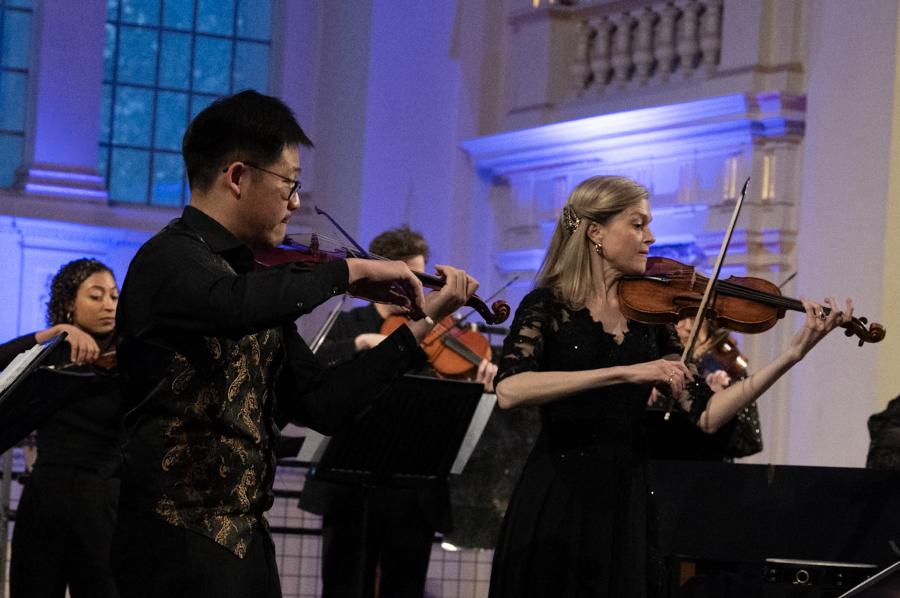
In the Bach, his skittish energy was grounded by the graver, denser tone of Bohan Cicic: one of a handful of guest players borrowed from the English Baroque Soloists. That duo felt like a proper conversation, if not quite a fencing-match. When Choo played alongside colleague Davina Clarke in the Vivaldi, however, their joyous togetherness banished any thoughts of duelling.
Sorrell made the lesser-known suite (1706) from Marin Marais’s Alcyone sparkle. With its stately chaconne, wildly atmospheric storm music (complete with wind machine) and jolly sailors’ dance, thoughts of Purcell inevitably came to a British listeners’ mind. Marais puts “art” music in the company of more popular or demotic forms: an affinity Apollo’s Fire explored in their initially sombre, then ferociously stomping, approach to Vivaldi’s La Folia. Arranged as an ensemble piece, with increasingly ecstatic violins (Choo and Emi Tanabe) interrupted by William Simms’s melodic thug of a guitar, the courtship dance showcased a pulsating verve that dragged Baroque style back into the tavern and the street.
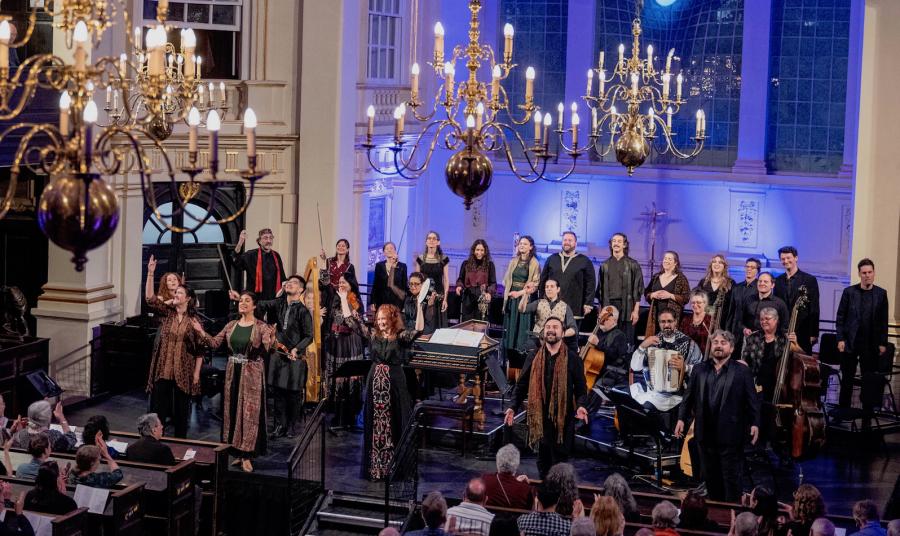
The Crypt cabaret delivered close-up pleasures in abundance: Tina Bergmann’s hammered dulcimer; plangently lovely Sephardic and Armenian songs; Ronnie Malley’s brief history of the oud and its migrations, with snatches of flamenco, “Greensleeves” and the Buena Vista Social Club along the way. Then, in “O Jerusalem”, these sounds and timbres and modes did not so much combine as align in a great family gathering, where different accents and styles never cancelled out the overwhelming drive to harmony.
Poignant individual voices alternated with collective choral splendour: the spellbinding Greek Orthodox chant (Agni Parthene) led by mezzo Aryssa Leigh Burns; the Sabbath hymn gloriously delivered by Jeffrey Strauss; Sophia Burgos's wrenchingly tender Sephardic lullaby; Lucine Musaelian’s otherworldly Armenian prayer. The orchestral playing moved seamlessly between solemn, sacred gravitas and rapturous festive excitement. Meanwhile, those patches of Monteverdi – notably, Jacob Perry’s beautifully phrased “Nigra sum” – reminded us that this sumptuous Levantine soundscape stood alongside, not apart from, music as it developed further West.
Instrumental flavours both subtle and intense (Mor’s recorder and shawm, Malley’s oud, Bergmann’s dulcimer, thrilling percussion solos from Anthony Taddeo) made this a Jerusalemite banquet to relish and remember. Apollo’s Fire have recorded a CD of much of this programme (on Avie Records): buy it, give it, and help to spread the love that made it.